The Nasdaq Composite fell 5.5%, while the Nasdaq 100 lost about $2.5 trillion in market value. AI data-center costs and regulation are at the heart of the selloff.
Money no Sofá Global Newsroom | Reported November 6, 2026; editorial review November 7, 2026 | Original reporting synthesis and analysis.
THE STORY
A market can erase trillions in a single session without a single data center shutting down. On November 5, the Nasdaq Composite dropped 5.5%, while roughly $2.5 trillion in value vanished from companies in the Nasdaq 100. Investors were not suddenly declaring AI useless. They were asking a much less glamorous question: when will the huge bills for chips, power, data centers and financing turn into enough earnings to justify the price? The answer matters even to savers who have never bought an AI stock directly, because technology giants sit inside many ordinary investment funds.
WHAT MATTERS
Investors abruptly reassessed the price of artificial intelligence. The Nasdaq fell 5.5% on Thursday, November 5, Reuters reported, erasing roughly $2.5 trillion in market value. The headline number captures a change in what investors are prepared to pay for future profits. It does not mean that $2.5 trillion in cash disappeared from bank accounts.
IN 30 SECONDS
The AI boom has required investment in chips, data centers, electricity, cooling and networks. Revenue may keep growing, but the timing and size of returns are uncertain. New concerns over potential regulation and local opposition to data-center projects added pressure after the US midterm election results.
THE NUMBER THAT MATTERS
5.5% is the Nasdaq’s reported decline on November 5. Index movements are not household losses by themselves, yet they affect retirement funds and diversified accounts that hold large technology stocks. Investors should distinguish daily market value changes from realized losses.
WHAT HAPPENED
Reuters described a selloff stretching across the technology sector as political uncertainty collided with questions about AI capital expenditure. Large companies are committing money today for products and services whose profits may arrive years later. The immediate question is no longer whether AI matters; it is who captures enough margin to justify the size of the buildout.
WHY IT MATTERS
Technology weights are substantial in many broad market indexes. Someone who holds a low-cost index fund may own more AI-related risk than the fund’s name suggests. The second link runs through power: a data center can create demand for electricity, grid upgrades and real estate before its customers generate sufficient revenue.
MONEY CONSEQUENCE
For investors, examine exposure by company, sector and theme, not just by number of funds. For workers, distinguish volatile equity headlines from evidence about actual hiring and pay. For communities, data centers bring investment and jobs but can also create pressure on local grids and water resources; costs and benefits depend on project details.
CONTEXT
Markets often overshoot in both directions. A sharp decline can reveal a repricing of risk without establishing that the underlying technology has failed. Companies selling chips, cloud capacity and software have different revenue models, so the financial impact will not be uniform. Growth in AI adoption is also not the same as a guaranteed return for every shareholder.

THE $2.5 TRILLION FIGURE IS A MEASURE OF MARKET VALUE
The November 5 selloff was extraordinary in scale. Reuters reported that the Nasdaq 100 index fell 6.4%, wiping roughly $2.5 trillion from the combined market capitalization of its constituents. The broader Nasdaq Composite lost 5.5%. Those two figures describe related but different indexes, and they should never be swapped without explanation. Market capitalization is the market price of outstanding shares multiplied by the number of shares. When quoted share prices fall, the aggregate value falls with them, even though a corresponding pile of cash did not leave the financial system. Some investors sold and realized losses; others held their investments and saw lower paper values. The distinction is more than technical. A retirement saver who owns the same companies through an index fund may be affected, but the actual impact depends on holdings, position size, purchase price and how the market develops. The headline captures a repricing of expectations, not a census of personal losses.

WHY THE MARKET SUDDENLY QUESTIONED THE AI BILL
Artificial intelligence has moved from experimental software toward a capital-intensive industrial system. Large language models need computing power, and computing power needs chips, memory, electricity, networking, cooling, buildings and land. Many of those costs are paid or financed before the underlying AI service earns its full expected revenue. That creates a timing problem. A company may announce a large supply contract, yet shareholders still need to know when capacity will operate at scale, what fraction customers will use and how much financing costs during construction. The latest market drop intensified questions already present for months about whether the buildout is proceeding faster than demand and profitability can comfortably support. The technology can be genuinely useful while individual investments remain overpriced. A forecast of tremendous AI adoption is not the same thing as a guaranteed return for every company supplying it.

POLITICS ADDED AN UNEXPECTED LAYER OF RISK
The selloff followed US midterm election results that changed expectations for Washington’s oversight of large technology companies and data-center expansion. Reuters reported that the Democratic sweep revived concerns about stricter scrutiny, especially in communities already debating power demand and the environmental consequences of large facilities. Investors also had to consider how a change in political control might affect approval timelines, tax incentives, procurement and regulation. But election results do not automatically cancel existing construction contracts, and regulatory proposals do not become law when campaign results are announced. The responsible interpretation is that uncertainty increased and investors demanded a different price for risk. Project by project, the real questions remain whether permits are in place, customers have signed enforceable agreements and financing can be sustained under a range of policy outcomes.

CHIPS, CLOUDS AND ‘NEOCLOUDS’ ARE DIFFERENT BUSINESSES
The phrase AI stock hides very different economic models. Chip designers depend on demand for computing components. Semiconductor manufacturers invest in expensive fabrication equipment and capacity. Large cloud platforms sell infrastructure and software services to businesses. Smaller specialized cloud providers, sometimes called neoclouds, may rely more heavily on external financing or a small group of large customers. Data-center developers face building costs and local infrastructure constraints. A setback in one part of the chain does not necessarily have the same impact on all the others. A supplier can make money selling equipment to a project that later struggles to earn a return. The project owner may have financed much of the facility, while the hardware supplier received payment earlier. Investors therefore need to locate the risk along the chain rather than treating every company mentioning AI as a single business.

THE CREDIT MARKET IS ALSO VOTING
Reuters highlighted widening credit-default-swap spreads for CoreWeave during the selloff, a signal that traders were reassessing the cost of protecting against credit risk. That information matters because AI infrastructure isn’t always funded exclusively with cash generated by the same businesses. Firms can borrow, issue securities or structure financing around contracts and equipment. Higher borrowing costs increase the hurdle any project must clear to deliver attractive returns. They can also put pressure on companies that depend on refinancing debt before revenue catches up with expenses. Stock-market declines and credit-market stress are different mechanisms. A company can be solvent while its shares fall sharply, and a rising borrowing premium does not establish that default will occur. But the combination can narrow strategic options, especially for firms with large commitments and limited current cash flow.

DATA CENTERS HAVE PHYSICAL LIMITS
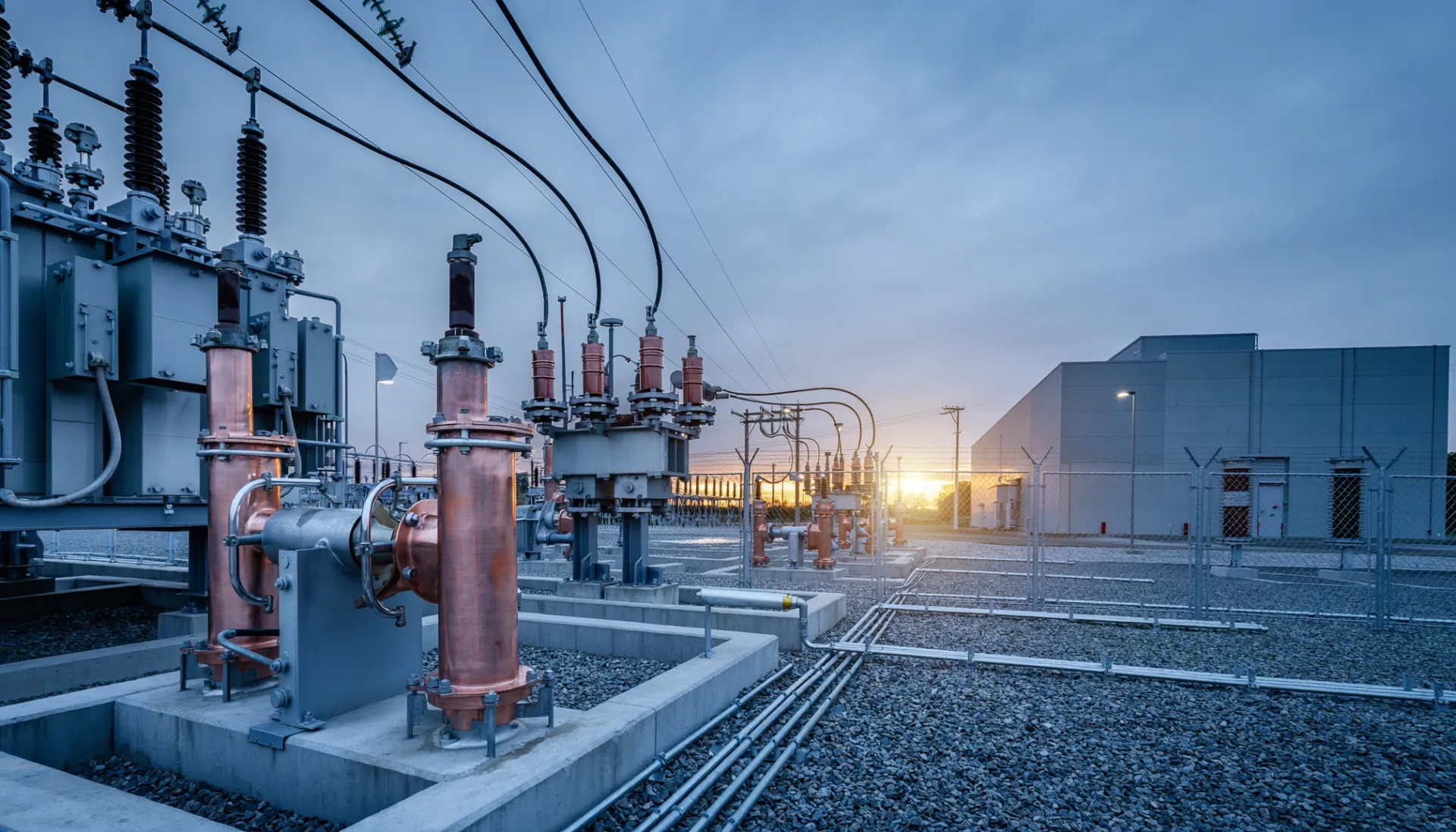
The AI industry often talks in the language of rapid exponential growth, but physical infrastructure obeys a slower calendar. Transformers must be delivered; power connections approved; buildings constructed; cooling installed; networks tested; and customers brought online. Power capacity is not the same thing as available compute capacity. A large megawatt figure can indicate the size of a project without revealing how much equipment is installed, how much has been contracted or when it will earn revenue. This distinction becomes especially important when companies announce multibillion-dollar agreements. A binding contract can reduce some demand uncertainty, but delays, equipment availability, financing costs and operating expenses remain. The financial question is not only whether a facility can be built. It is whether it can be built at the agreed cost, commissioned on time and sold at prices that justify its capital requirements.

THE HOUSEHOLD CONNECTION IS THROUGH FUNDS, JOBS AND ELECTRICITY
Many people own exposure to large US technology firms through broad retirement and investment funds, without holding a stock labeled ‘AI.’ Their exposure may be larger than they assume if a handful of technology companies account for a meaningful share of their fund’s value. But the link to ordinary people is not limited to financial markets. Data-center expansion can create local construction demand and specialized jobs while also increasing pressure on electric grids, water systems and permitting. Whether costs appear in household electricity bills depends on local rate design, utilities and the contracts negotiated by project developers. Workers also face a mixed picture: AI investment can support hiring in one region while automation changes staffing needs elsewhere. A careful money story should map these channels instead of assuming that the market’s daily loss translates into an equal reduction in wages, consumer spending or energy reliability.

READ THE FINANCIAL STATEMENTS, NOT ONLY THE DEMO
An impressive AI product can generate publicity without immediately generating a proportionate financial return. Investors should examine revenue growth attributable to AI, operating margins, capital expenditure, depreciation, free cash flow and obligations to suppliers. The timing of cash matters. Capital spending can reduce near-term free cash flow even if the company expects years of future earnings. Conversely, a fast-growing business may fund investment from existing operations more comfortably than a smaller company that needs debt or repeated equity issuance. Compare announced capacity with operational capacity and booked revenue; compare run-rate targets with revenue actually recognized. The business model is more important than an isolated press release announcing a partnership. Without these distinctions, readers are vulnerable to mistaking a very large contract value for cash already earned.
THREE REASONABLE SCENARIOS AFTER THE SELLOFF
In a more favorable scenario, real demand for AI services continues to grow, companies commission planned capacity on schedule and margins eventually validate part of the original excitement. The selloff would then look like a severe repricing rather than a fundamental industry retreat. In a middle scenario, customers adopt AI at a healthy but slower pace, while developers selectively delay projects, restructure financing and compete harder on price. Earnings continue growing at some firms and disappoint at others. In a higher-risk scenario, expected utilization fails to materialize quickly enough, construction costs rise, debt refinancing becomes more difficult and some companies face asset write-downs or painful restructuring. None of these paths can be assigned reliable probabilities from one dramatic market day. The signals are future earnings, contracted revenues, actual cash flow, project delivery dates and credit availability.
WHY SELLING EVERYTHING ISN’T A FINANCIAL PLAN
A major selloff naturally produces anxiety, especially for people approaching retirement or holding money they need soon. But acting on fear without knowing one’s actual portfolio is rarely a sound strategy. Start by looking through broad funds to the underlying holdings. If several investments all own the same major technology names, the portfolio may be less diversified than its account statements suggest. Then separate money needed for essential spending in the near term from savings intended for long-term growth. Rebalancing can be appropriate when the allocation has moved beyond a predefined plan, but a day of volatile prices does not automatically make every AI-related investment unsuitable. The right response depends on risk capacity, debts, cash reserves and time horizon, not the size of the headline loss alone.
THE QUESTION THAT STAYS AFTER THE MARKET CLOSES
Thursday’s decline raised a bigger question than whether the Nasdaq will recover tomorrow. Can the companies financing the AI economy convert an enormous construction program into durable cash flows without passing unacceptable costs to customers, lenders or communities? The answer is unlikely to arrive in a single earnings season. It will emerge through utilization rates, electricity and cooling costs, price competition, financing and the everyday value people find in AI products. Market participants can change their valuation in hours. Building the infrastructure, winning customers and proving the profitability of that infrastructure takes considerably longer. That is why the most useful measure of the AI boom is not the excitement around an announcement. It is the money earned after the bills are paid.
FRIDAY’S REBOUND DOESN’T ERASE THURSDAY’S REPRICING
US technology shares rebounded on Friday, November 6: the Nasdaq Composite gained about 1.1%, according to the Associated Press. It still finished the week down roughly 3.4%. The contrast is useful. Thursday’s 5.5% Nasdaq Composite selloff and the roughly $2.5 trillion decrease in Nasdaq 100 constituent market value describe the November 5 shock; they do not describe Friday’s close. A one-day recovery does not prove investors have resolved the questions about AI spending, borrowing costs or data-center returns.
Associated Press — November 6 market close
WHAT TO WATCH NEXT
Watch earnings guidance, AI revenue separately from capital spending, energy contracts, financing costs and the implementation rather than simply the announcement of regulation. Also watch next week’s US inflation release and the Federal Reserve outlook, which can change the discount rate investors apply to future profits.
WHAT YOU CAN DO
List the top holdings of your funds, identify duplicates across accounts, and determine the risk level needed for money you may spend soon. Avoid treating a volatile trading day as a personalized buy or sell signal. A concentration check is more useful than predicting tomorrow’s close.
ASK NOVA AND MONEY TOOL
Money Tool: AI Portfolio Concentration Checklist. Ask NOVA: “How much of my savings depends on the same AI companies, even through diversified funds?”
Turn the story into a money decision.
Ask NOVA about this storyCheck my investment concentration
Educational tools only. Verify important decisions and avoid sharing passwords or account credentials.
RELATED READING
OPTIONAL RESOURCE — UNDERSTANDING THE ECONOMICS BEHIND AI
Independent reading about the business models and costs of artificial intelligence, not a recommendation to buy a particular stock.
Explore books about AI business strategy. Alternatively, see the MNS digital guide The AI Shopping Advantage (an MNS-owned product, not an independent endorsement).
Commercial disclosure: If you purchase through an eligible Amazon link, Money no Sofá may earn a commission. The linked MNS product is sold by this publisher. You never need to buy either product to use the news or the free official resources linked above.
FACT CHECK: WHICH NASDAQ INDEX LOST WHAT?
The November 5 closing figures refer to the Nasdaq Composite’s 5.5% decline and a roughly $2.5 trillion market-capitalization decline among Nasdaq 100 constituents. Market-capitalization changes are not the same as cash outflows or realized investor losses. Some Reuters dispatches during the session reported smaller provisional totals; use the closing result for the headline.
Reuters — November 6 global market themes
SOURCES
The headline is only the start.
Ask Nova what this story could change in your budget, savings, debt, investments or next purchase.