Lula wins in Brazil as Justice Cristiano Zanin's last-minute extension of voting hours sparks a dispute. What investors and households should watch next.
Update · October 29: Brazil’s debt numbers reveal the harder financial test
Brazil’s Treasury said federal public debt reached R$9.383 trillion in September, up 0.97% from August. Interest expenses of R$89.5 billion drove much of that increase, according to Treasury data reported by Reuters. These September debt figures predate the October 25 election: they are not a direct result of the vote.
Separately, following market turbulence after the election, the Treasury bought back R$31.6 billion in inflation-linked and fixed-rate bonds over October 26–27 to help restore liquidity and orderly trading. An official said on October 29 that conditions had improved and no further extraordinary purchases were then necessary. Liquidity support is not debt cancellation and does not eliminate the fiscal challenge.
What changes for international readers? Brazilian sovereign bond yields, currency volatility and fiscal credibility influence the financing conditions of Brazilian companies and foreign investors. Households can eventually feel effects through loans and imported prices, but timing and scale are uncertain. Ask NOVA: How do higher bond yields affect a fixed-income investment or a loan?
Source: Reuters, October 29, 2026, Treasury debt report; Reuters, October 29, bond-buyback remarks. Original election coverage follows below.
Brazil has chosen its president. Now comes the bill.
October 26: Brazil’s markets react to the election
Closing figures, verified October 27: Brazil’s Ibovespa fell 13.9% on October 26, its steepest daily drop since March 2020; the real weakened about 8.1% against the U.S. dollar, Reuters reported. Trading was temporarily halted and Brazil’s Treasury cancelled scheduled bond auctions. These are closing-session outcomes, not simply the intraday 10% decline discussed below. Market participants are watching fiscal policy and appointments; one session does not prove a lasting currency or investment trend. Reuters market report, October 26.
What it means for you: Imported goods, foreign-currency obligations and financing conditions may eventually change, but timing depends on pricing, contracts and policy responses. Ask NOVA how an exchange-rate shock could affect a household or business budget.
Brazil’s Superior Electoral Court confirmed Lula’s reelection with 64,256,232 votes, or 51.79% of valid ballots, against 59,826,041 votes for Flávio Bolsonaro (48.21%). The result was confirmed Sunday night; the financial-market reaction unfolded on Monday, October 26.
Reuters reported that Brazil’s benchmark Ibovespa fell 10% in Monday trading, triggering a 30-minute exchange halt. The real also weakened sharply and interest-rate futures rose, with investors reconsidering fiscal risks and earlier expectations of a different electoral outcome. These were reported market conditions during the session, not a prediction of where prices will close or go next. Read the October 26 market report.
What it means for your money: Currency moves can eventually affect imported goods, while shifts in interest-rate expectations can influence the cost of credit. Neither impact is automatic. Watch fiscal policy, appointments, inflation data and the central bank before drawing lasting conclusions from one volatile day. For international readers, Brazil-linked businesses and foreign investors also face currency translation and financing exposure.
Ask NOVA: How could a weaker real or higher borrowing costs affect my budget and investments? | Money Tools
Luiz Inácio Lula da Silva won reelection on Sunday, October 25, defeating Senator Flávio Bolsonaro in a tense runoff and securing an unprecedented fourth term as president of Latin America’s largest economy. The next question is not simply who won. It is what Brazil’s political decision means for inflation, interest rates, the currency, businesses and ordinary household budgets.
Lula, of the Workers’ Party (PT), took roughly 51.8% of valid votes, compared with about 48.2% for Flávio Bolsonaro, according to Brazil’s electoral authorities. The victory came after Lula finished behind Bolsonaro in the October 4 first round — a reversal that makes this election historically significant. The official announcement was reported by the Brazilian Chamber of Deputies and Agência Brasil.
For global readers, the significance reaches well beyond Brasília. Brazil is a major agricultural and commodity exporter, a vast consumer market and an important player in emerging-market finance. How its government handles spending, investment, taxes and trade will matter well outside its borders.
A comeback that changed the race
In the first round, Flávio Bolsonaro led with 47.03% of valid votes, while Lula received 45.16%. Three weeks later, the president had turned the result around. It was the first time in Brazil’s recent presidential runoff history that the candidate who came second in the opening round went on to win, according to the Chamber of Deputies.
The outcome is also a reminder of how divided the electorate remains. Lula has a clear victory and a renewed mandate. His opponent retains a huge political constituency. Neither reality disappears on election night.

The voting rules changed in the middle of election day
Brazil’s runoff also delivered a major legal controversy: Supreme Court Justice Cristiano Zanin ordered voting hours extended from 5 p.m. to 7 p.m. on October 25, as polls were closing. The last-minute change, made in response to reported disruptions in public transportation, raised urgent questions about equal access to the ballot, the authority to adjust election procedures and how such orders could be implemented nationwide.
Lula’s campaign had complained that reduced bus services in several cities were preventing voters from reaching polling stations and sought an extension. Flávio Bolsonaro’s campaign had also requested more time from the Superior Electoral Court (TSE), citing heavy rain and travel difficulties in several states. The requests were not identical: Lula’s side then took its case to the Supreme Court, where Zanin issued the emergency order. Agência Brasil documented both campaigns’ requests.
The initial ruling sought an extension nationwide. But many electronic voting machines had already been closed at the scheduled 5 p.m. deadline. Zanin subsequently clarified that voting could continue until 7 p.m. only at polling stations that had not yet closed; ballots from closed machines would still be counted. The TSE said it would resume receipt of polling-station reports, vote tabulation and public results after 7 p.m. Read the electoral court’s official clarification.
Flávio Bolsonaro challenged the move, arguing that changing voting arrangements during the contest undermined fairness, and said he would seek to annul the election. The political allegation that the rules were changed “in the middle of the game” refers to this real, late alteration to voting hours. Whether the order was legally justified, or disadvantaged particular voters, is a separate question that requires evidence and judicial assessment; the extension alone is not proof of fraud or that the winning candidate’s margin was changed.
Even TSE president Kassio Nunes Marques said the unexpected decision created operational difficulties and was without precedent in his experience. He also stated that the court had taken the necessary measures and that the tabulation had not been altered by the judicial order. See Agência Brasil’s account of his remarks.
For investors, this is more than a political argument. Disputed election procedures can add a layer of institutional uncertainty to the fiscal, currency and market questions Brazil already faces. But it is crucial to distinguish the documented timeline, the opposition’s challenge and what the electoral authorities say about the vote count.
One winner. Five economic questions.
1. Can the government convince investors on fiscal discipline?
Brazil’s public finances will be central to how markets interpret the new term. Investors will look for credible spending choices, a sustainable debt path and clarity on the economic team. A political victory does not erase fiscal constraints. Markets usually reward predictable rules more consistently than campaign slogans.
2. Where do inflation and interest rates go next?
The cost of money affects virtually everyone. Higher interest rates can make loans, mortgages and business investment more expensive. Inflation eats into purchasing power — particularly for households that spend a large share of their income on food, transport and utilities. The central bank’s decisions will depend on economic conditions, not election results alone.
3. What happens to Brazil’s real and the dollar?
The exchange rate reflects more than domestic politics. Fiscal expectations, global dollar strength, commodity prices and international risk appetite all matter. A weaker real can raise the cost of imported goods and inputs; a stronger currency can ease some price pressure but create challenges for exporters. Anyone promising that this result automatically means a rising stock market or falling dollar is skipping the difficult part of the analysis: evidence.
4. Can Lula govern with a powerful opposition?
Winning the presidency is one contest. Passing legislation is another. The next administration will have to negotiate with Congress, where conservative and opposition forces remain influential. Tax changes, spending priorities, business regulation and other reforms will all face the political arithmetic of votes in the legislature. This tension was also highlighted in Reuters’ election coverage.
5. What does the result mean for international trade?
Brazil’s relationships with the United States, China and other trading partners will remain critical. Agriculture, energy, metals, manufacturing and technology rely on global demand and cross-border capital. The biggest risk is assuming international relationships can be reduced to a single leader’s election-night victory. Trade policy, tariffs, diplomatic choices and market conditions will determine the real impact.
The market story is also a family-budget story
Headline politics can feel distant from daily life. The connections are not distant at all. Exchange rates feed into prices. Interest rates affect credit-card balances, home purchases and small-business financing. Fiscal decisions influence confidence and the government’s room to fund public services.
For a family, the useful questions are practical: Can the monthly budget withstand higher borrowing costs? Is expensive debt being paid down? Is there enough emergency cash for a surprise expense? For an entrepreneur, it means checking the resilience of cash flow, supplier costs and customer demand before making a large commitment.
None of that changes just because a favored candidate won or lost. Financial decisions deserve a cooler head than election-night emotion.
Brazil’s next four years will also be shaped by AI
Beyond the familiar debates over rates and budgets, the new administration inherits a structural challenge: the pace of technological change. Artificial intelligence and automation are reshaping professional work, customer service, logistics and small-business operations.
Brazil cannot rely on yesterday’s productivity model while the global economy moves toward new tools and skills. Policies that expand access to digital education, encourage entrepreneurship and help workers adapt may matter as much to long-term living standards as any short-term market reaction.
What investors and consumers should watch now
Don’t trade the headline. Watch the decisions. A sensible checklist for the coming weeks includes the new administration’s fiscal commitments, economic appointments, congressional negotiations, inflation data and central-bank signals. Global markets will also react to forces that have nothing to do with Brazil’s ballot box.
For ordinary readers, the test is simpler: will economic policy improve the ability to earn, save, borrow responsibly and build a stable future? That is the metric that turns politics into everyday reality.

The vote is over. The real test starts now.
Lula’s fourth term, beginning in January 2027, will be defined by more than an extraordinary electoral comeback. It will be judged by his ability to navigate a divided country, preserve economic credibility, manage public resources and create opportunities in a fast-changing global economy.
Brazil chose its president. Now Brazil has to make the numbers work.
That’s the Money no Sofá lens: politics matters because money, work and opportunity matter. The winning speech lasts one night. The consequences last years.
Further reading: Read our Brazil-focused coverage in Portuguese and our earlier analysis of the runoff’s economic stakes.
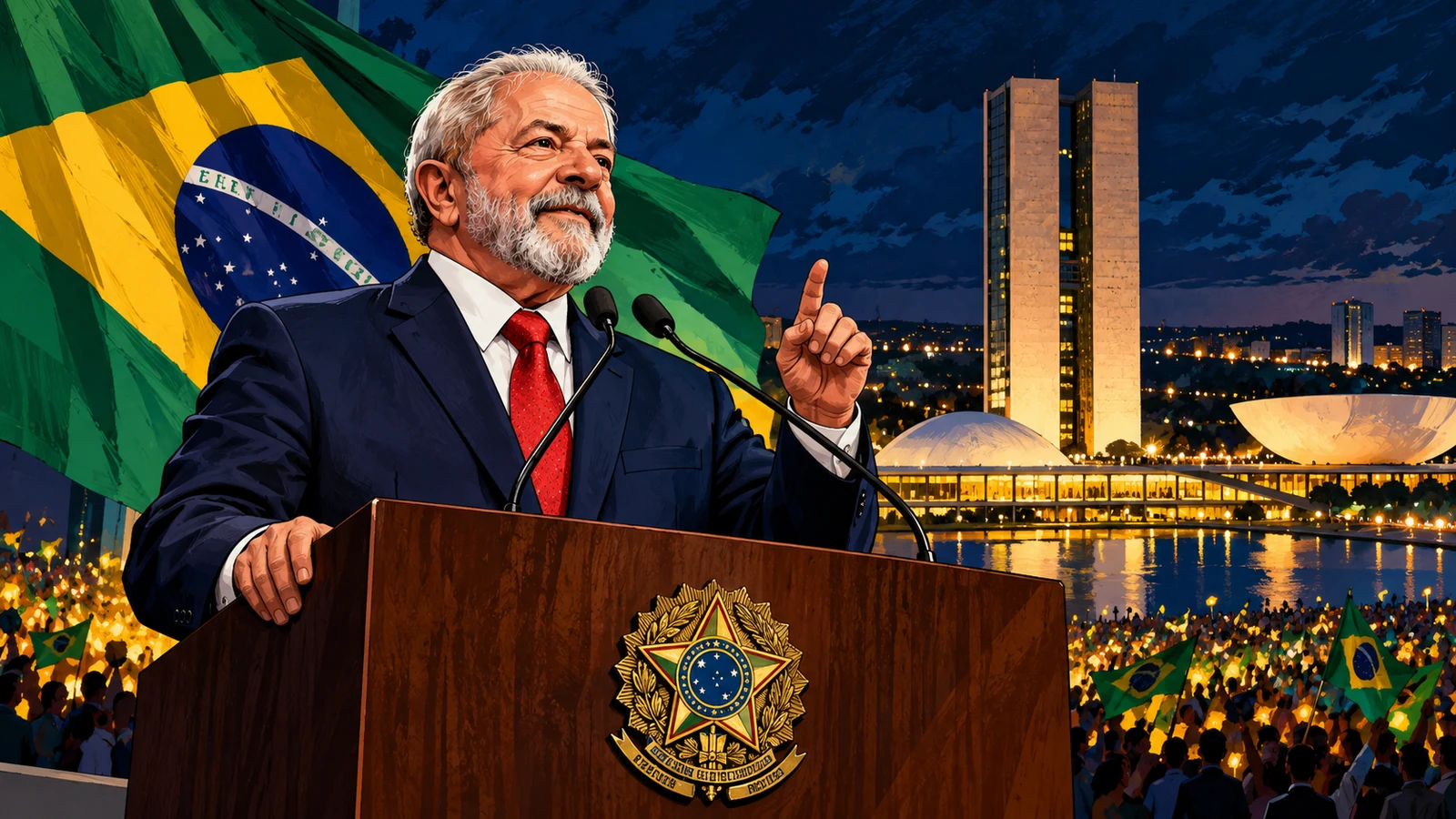
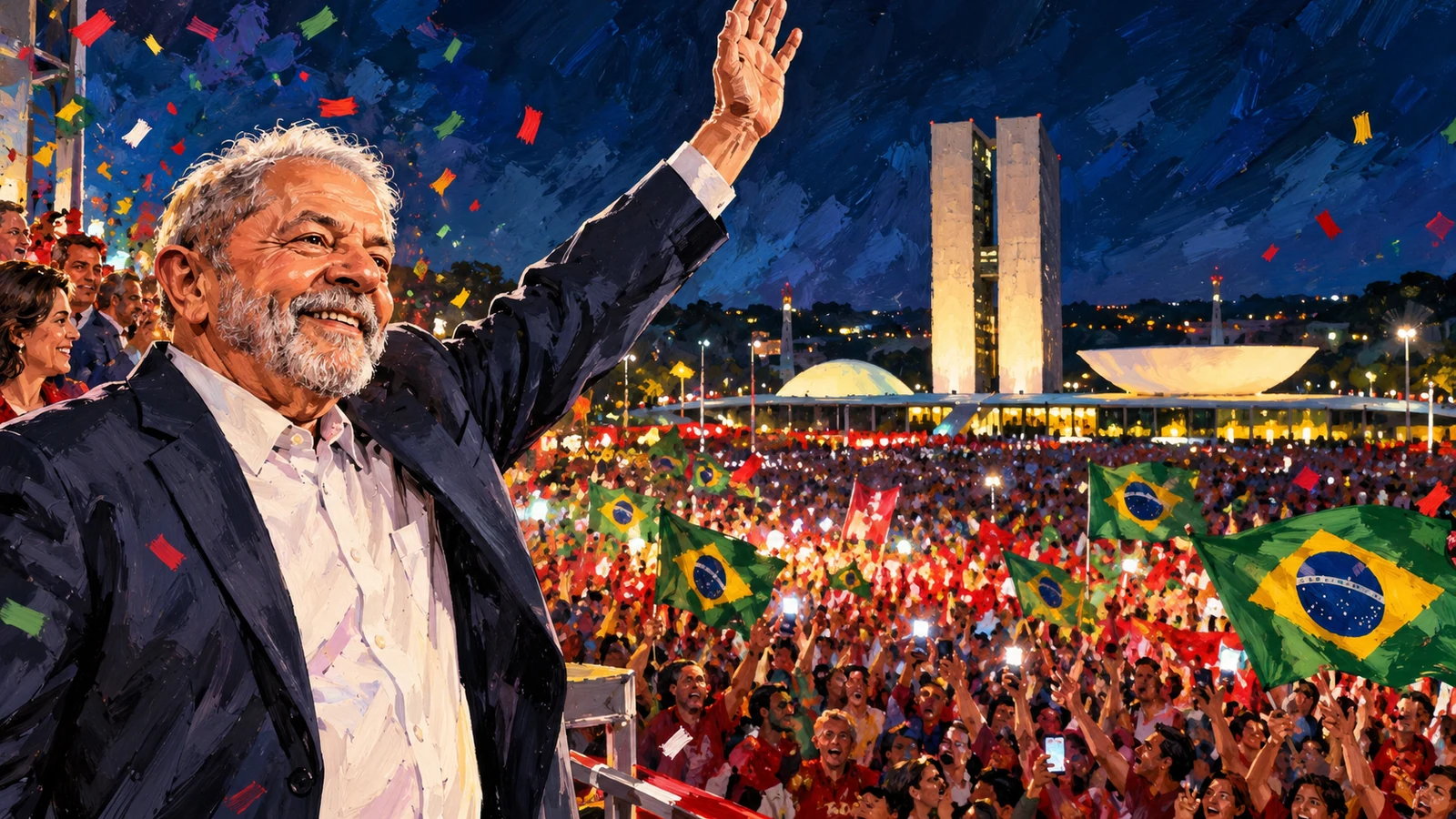
Visual disclosure: Illustrations accompanying this article were generated with AI for Money no Sofá. They do not depict verified moments from election night.
MONEY NO SOFÁ — Sofá tranquilo. Cabeça ligada. Business hardcore.
The headline is only the start.
Ask Nova what this story could change in your budget, savings, debt, investments or next purchase.