
More jobs. But debt still takes a large share.
Brazil has more people working and a stronger average paycheck. That does not automatically make families financially comfortable. Recent official figures show why international investors should look at employment and household credit together.
In 30 seconds
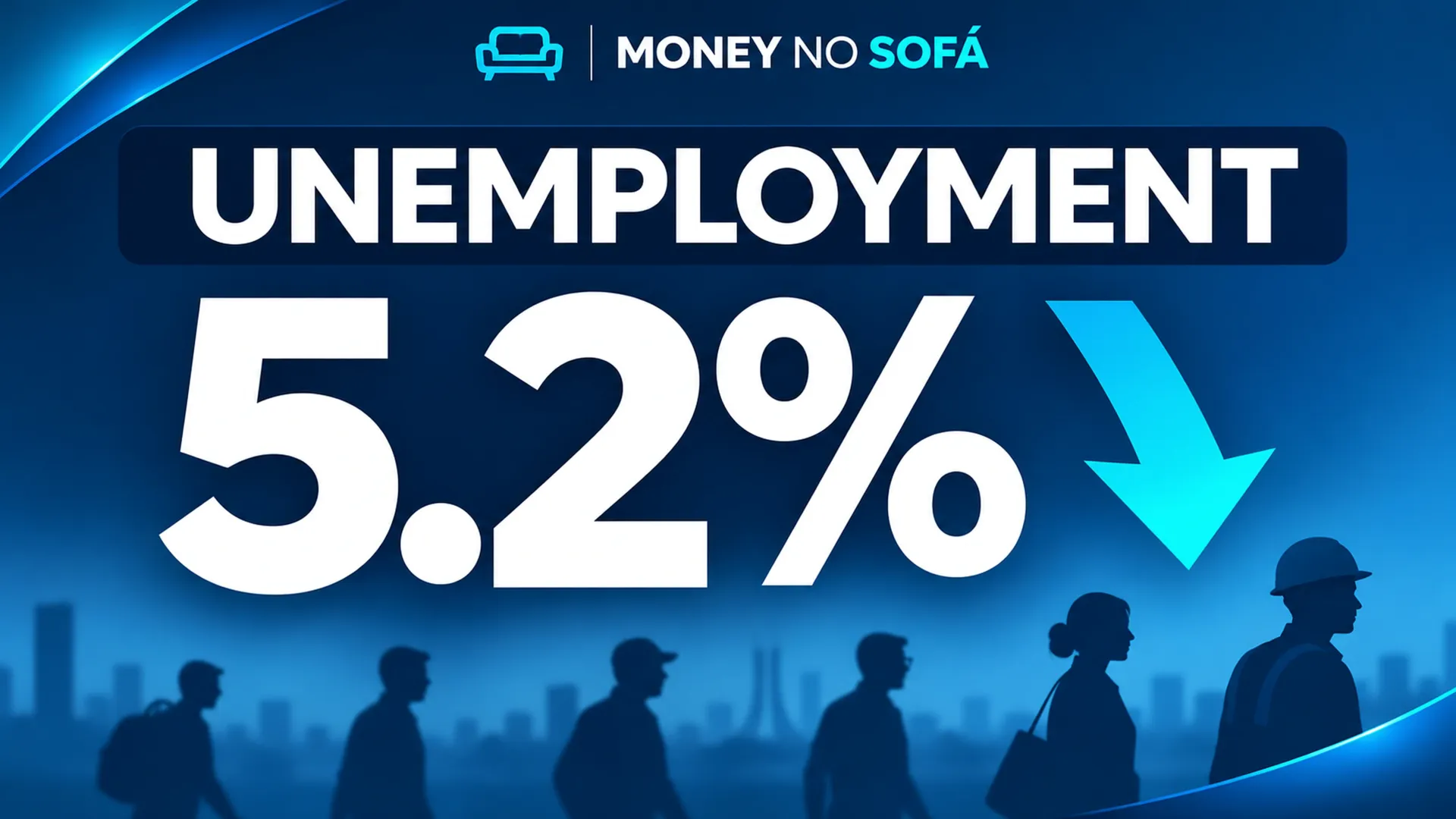
Brazil’s unemployment rate fell to 5.2% in the July–September 2026 quarter, its lowest reading for a third quarter since the IBGE survey began in 2012. Average usual real earnings reached R$3,790 per month among workers. But the central bank’s latest credit data showed households’ debt-service commitments equal to 29.0% of its defined income measure in August, with household indebtedness at 50.1%. These indicators cover different reference periods, populations and definitions; they describe a tension, not evidence that employment growth caused indebtedness.
The number that matters: 29%
The central bank’s 29% commitment measure estimates the portion of household income used for servicing debt under its methodology. It is an aggregate ratio, not proof that every household spends precisely 29% of income on loan payments. Another central-bank statistic, indebtedness at 50.1%, measures outstanding debt relative to income; it does not mean half of earnings is paid to lenders every month. Mixing the two leads to an exaggerated claim about the cash people have available.

The labor-market improvement is real
According to the IBGE, unemployment was 5.4% in the prior quarter and 5.6% in the third quarter of 2025. About 5.6 million people were unemployed in the new survey period, and the total number working reached roughly 103.6 million. Average real usual earnings were up 3.6% from the same period a year earlier. Those gains matter: work is a foundation for the ability to pay expenses, save and repay debts.
But an average is not every paycheck, and a job does not cancel existing loans or card interest. Workers can be earning more and still face a high monthly repayment burden, especially if credit accumulated during a period of expensive living costs.
The credit side tells a different story
The Banco Central do Brasil reported household indebtedness at 50.1% in August, up 1.2 percentage points over the year, and debt-service commitment at 29.0%, up 1.4 points. The delinquency rate on unsecured/free-resource credit to individuals reached 8.1% in September. That 8.1% is specific to a defined segment of bank credit; it is not the delinquency rate for every Brazilian borrower or every type of loan.
Brazil’s high borrowing rates make the mix of debt products crucial. Revolving credit-card debt, overdrafts, personal loans and longer-term secured loans can have very different costs. If a family only looks at the headline loan balance, it may miss the interest expense that makes repayment harder.

Why the global audience should care
Brazil is one of the world’s largest consumer markets and a key economy for banks, fintechs, retail and international brands. Stronger employment can support consumption, while debt-service obligations can limit how much extra money households can spend. This matters for cross-border investors trying to understand whether revenue growth will translate into cash collected by businesses.
There is no simple political shortcut to this analysis. The data arrive at different times and reflect labor demand, inflation, interest rates, credit conditions and household choices. It is misleading to attribute all of them to a single election result or government announcement.
Who is affected?
- Families: loan payments compete with food, rent and emergency savings.
- Retailers: higher employment can support sales, while credit stress may constrain discretionary purchases.
- Banks and fintechs: lending growth must be evaluated with delinquency and repayment capacity.
- International investors: household cash flow helps explain consumer demand beyond headline GDP and wage growth.

The MNS lens: an income ratio is a starting point, not a verdict
A useful personal debt review begins with net monthly take-home income, all required debt payments, the actual interest rates and essential living costs. The official 29% statistic is not a safe personal target: one family with a low rent and stable income may manage a given debt ratio differently from a family facing high housing, childcare or health costs.
If repayment is becoming difficult, identify expensive balances, avoid taking additional revolving debt to meet routine expenses and explore documented renegotiation options. A debt consolidation offer only helps when its total cost and repayment conditions improve the household’s position.
What to watch
The next labor report, banking delinquency data, credit costs and inflation releases will show whether job growth is translating into greater financial resilience. For an international audience, the more meaningful question is whether the income earned reaches consumers after essential bills and debt service.
Ask NOVA · Your next decision
How much of my monthly income can I afford to commit to debt repayments? A Debt-to-Income Stress Calculator can help compare net income, required payments, emergency expenses and scenarios where income is interrupted. Read more in Brazil’s broader economic outlook and how AI is changing credit decisions.
Source data: IBGE labor-market results, October 30; Banco Central do Brasil monetary and credit statistics, October 2026. Time periods and definitions should not be conflated.
Money no Sofá | October 31, 2026. Original English analysis for international readers, not a translation of Brazilian-language coverage.
The headline is only the start.
Ask Nova what this story could change in your budget, savings, debt, investments or next purchase.