Practical ways families can save money without making home life feel restrictive. Improve routines, grocery planning, family habits, and financial conversations.
17–22 min read · Practical guide · Featured eBook: Your Child Will Learn About Money
Why Family Saving Is Different
Saving money as a family is not an individual optimization exercise. A household is a living system with children, schedules, work pressure, food, transport, school needs, celebrations, fatigue and emotions. Advice that ignores those realities usually sounds good and fails quickly.
Families often spend more not because they are careless, but because convenience becomes the emergency solution to weak routines. Dinner is unplanned, so delivery wins. Someone forgets an item, so an extra store trip happens. Kids ask for small things repeatedly, and the tiny approvals accumulate.
The answer is not to create a cold, restrictive home. The answer is to make the household easier to operate. Better routines can save money and reduce stress at the same time.
Treat the Household Like a System, Not a Collection of Purchases
Every repeated household problem has a financial dimension. Meal chaos creates food waste. Poor inventory creates duplicate purchases. Unclear limits create spending drift. Lack of planning makes convenience expensive.
Instead of asking why everyone spends too much, ask what system is producing the spending. This shift is powerful because it moves the conversation away from blame. A family can redesign routines more easily than it can redesign personalities.
Start by identifying the three recurring moments that cost the most money or create the most friction. Those are your highest-value improvement opportunities.

Groceries: The Best Place to Find Family Savings
Groceries are essential, which is why the goal should not be cheap food. The opportunity is reducing waste and reactive shopping. Families often overspend through extra store visits, spoiled produce, duplicate items, impulse snacks and meals purchased without a plan.
Plan five dinners before the main shop. Keep two simple rescue meals available for busy nights. Check what is already in the kitchen before building the list. Separate staples from optional treats. These actions sound basic because they are basic—and basics are where repeatable savings live.
A family that reduces food waste and delivery by $100 a month saves $1,200 a year without lowering nutrition or joy. It simply improves the operating system around food.
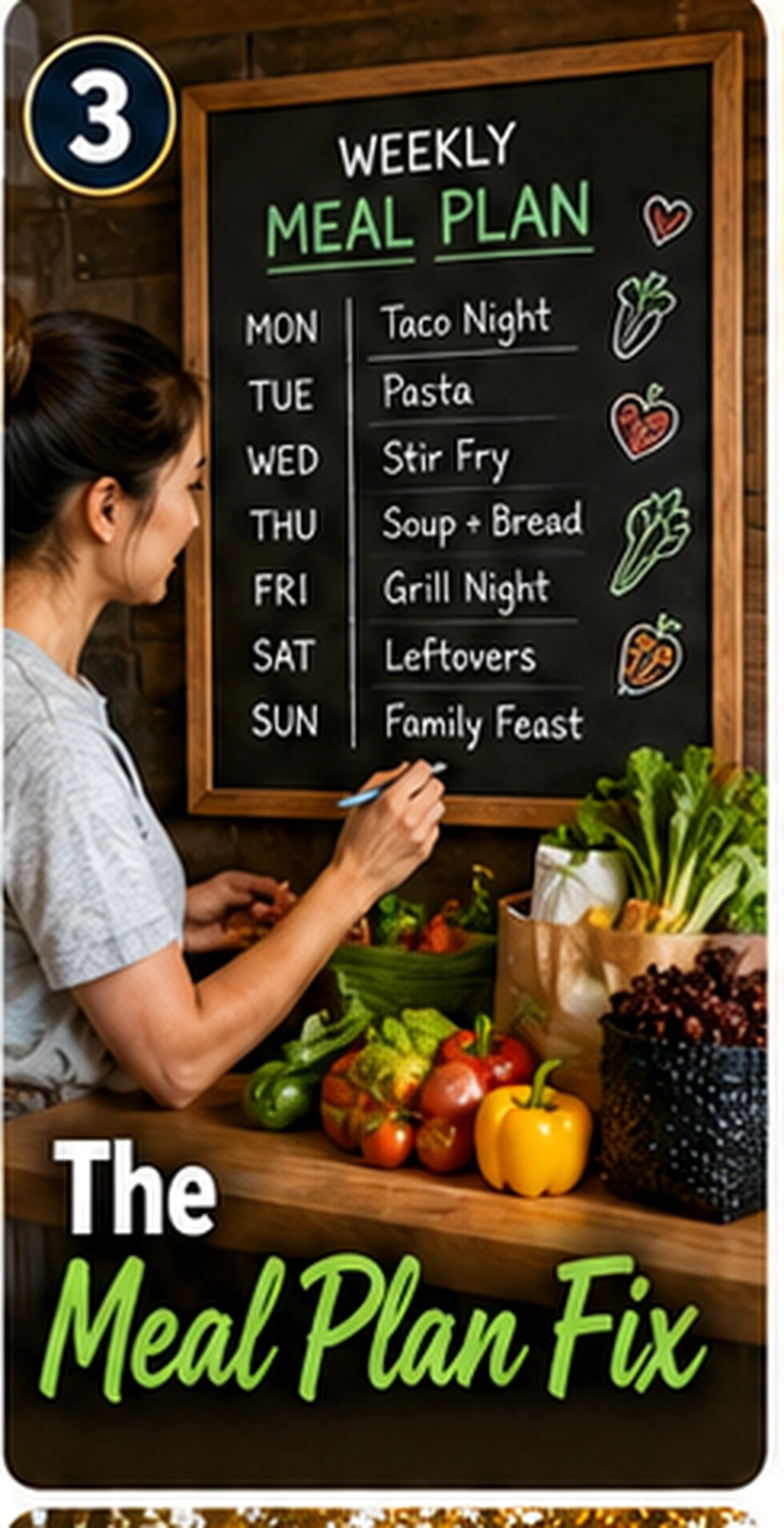
Build Better Weeknights
Evenings are expensive because decision quality is low when everyone is tired. This is when delivery, convenience stores, last-minute online shopping and random purchases become tempting. A money plan that ignores fatigue is not realistic.
Design the evening before the evening happens. Know what dinner will be. Keep snacks visible and simple. Decide which nights can include delivery. Create routines for homework, entertainment and bedtime that reduce emergency purchases.
The objective is not rigid scheduling. It is removing the moments in which the most expensive option wins simply because it is the easiest.

Teach Children Value Without Making Them Carry Adult Stress
Children can learn money without being exposed to the emotional weight of adult financial problems. They can understand waiting, trade-offs, saving for a goal and choosing one thing over another. Those are healthy lessons.
Use simple language: ‘We are choosing what matters most.’ ‘We can buy it later if it is still important.’ ‘We have a plan for fun money this month.’ This teaches boundaries without turning money into fear.
Children learn from observation as much as instruction. If they see adults compare options, wait before purchases and talk calmly about priorities, those behaviors become normal.

Control the Tiny Yeses
Family budgets often stretch through small repeated approvals rather than dramatic spending: an app, a toy, a snack stop, an online order, a premium upgrade, an extra delivery. Each yes feels harmless. The month feels the total.
Create category rhythms instead of constant negotiation. Maybe non-essential online purchases wait 24 hours. Maybe children have a monthly extras budget. Maybe restaurant meals are planned rather than default. Clear rules reduce conflict because the answer is not reinvented every time.
Boundaries work best when everyone understands what they protect. The message is not ‘we cannot have anything.’ The message is ‘we are choosing where our money creates the most value.’

Choose Experiences Over Accumulation
Many families discover that joy is not proportional to the amount of stuff entering the house. Experiences, traditions and shared time can create more lasting value than repeated small purchases that quickly become clutter.
This does not mean every experience is cheap. It means a family can intentionally reduce low-value object spending to protect higher-value activities. The financial goal becomes clearer when the household knows what it wants money to make possible.
A family savings goal feels less restrictive when it is connected to something positive: travel, education, emergency resilience, a home project or simply less month-end stress.

Create a Family Money Meeting That Does Not Feel Like a Meeting
Once a month, spend 15 or 20 minutes reviewing the household. What worked? Where did spending drift? Which upcoming costs need planning? What is one goal for the next month? Keep the tone operational and calm.
Do not use the conversation to audit individual mistakes. Use it to improve the system. If delivery was high, ask what made the week hard. If groceries were wasted, ask whether the meal plan was unrealistic. Curiosity produces better changes than blame.
For older children, a small age-appropriate role can help. They can compare prices, help plan a meal or save toward a shared family objective.

A Realistic Family Example
Consider a family that reduces one weekly delivery order, eliminates $35 in duplicate subscriptions, plans groceries better, delays non-essential online purchases and sets a monthly children’s extras budget. The combined saving may reach $220 a month.
That is $2,640 a year. The family still eats out, buys gifts and has fun. The difference is that spending becomes more deliberate and fewer costs arise from chaos.
The most valuable outcome may not be the money itself. The household feels calmer because decisions are clearer and fewer purchases happen under pressure.

The Family Save-Money Checklist
Plan meals before shopping. Keep rescue meals at home. Review subscriptions quarterly. Use a waiting rule for online purchases. Set a rhythm for kids’ extras. Talk about money in calm, age-appropriate language. Create one shared savings goal. Review upcoming expenses before they become emergencies.
Choose only a few actions at first. A family system has to fit the people living inside it. Over-engineering creates resistance. The best rule is usually the simplest one everyone can remember.
Consistency matters more than intensity. A household that saves $150 every month for years is stronger than one that attempts a severe three-month cut and then rebounds.

Plan for School, Activities and Seasonal Costs
Family budgets often feel unpredictable because predictable annual expenses are treated as surprises. School materials, uniforms, camps, sports, birthdays, holidays and seasonal clothing appear every year, even if the exact amount changes.
Create small sinking funds for these categories. Divide a reasonable annual estimate by twelve and set aside a little each month. This smooths the impact and reduces the chance that a predictable event lands on a credit card.
The technique also improves family conversations. Instead of saying ‘we cannot afford this now,’ you can say ‘this is the amount we planned for this category.’ The boundary feels less personal and more consistent.
Clothes, Toys and the Rotation Problem
Children grow quickly, interests change and homes accumulate. Before buying more, create a rotation and inventory habit. Know what sizes fit, what is already stored and what toys or equipment are no longer used.
Secondhand options can be valuable for fast-growth categories, while certain items may justify buying new for safety, durability or hygiene. The point is not a blanket rule. It is matching the purchase method to the useful life of the item.
A one-in, one-out rule for some toy or clothing categories can also reduce clutter. Less clutter lowers the chance of buying duplicates because the household can actually see what it owns.
Make Holidays and Birthdays Financially Predictable
Celebrations become expensive when decisions happen under time pressure. Set a gift and celebration philosophy before the season: a budget range, a limit on the number of gifts, and a preference for experiences or meaningful items over volume.
Save throughout the year if the category is large. Buy planned items when prices are reasonable, but avoid using sales as an excuse to expand the list. A discount only saves money when the purchase was already intentional.
Children remember rituals and attention as much as quantity. A strong celebration does not have to be a high-consumption event. Designing the experience in advance protects both joy and the budget.
Help Older Kids Practice With Real Decisions
As children get older, abstract lessons should become practical. Give them responsibility over a small category: snacks outside the home, entertainment money, a clothing upgrade or saving toward a larger goal. The amount should fit the family, but the decision should be real.
Allow small mistakes. If a child spends the entire amount early, rescuing the decision immediately removes the lesson. A safe, limited consequence can teach pacing better than a lecture.
The objective is not to turn children into miniature accountants. It is to let them experience trade-offs while the stakes are low and support is available.
Use Family Challenges Carefully
Short family challenges can make saving visible and positive. A no-waste food week, a weekend built around free local activities or a month of planning purchases before buying can create useful conversations. Keep the tone playful rather than punitive.
Avoid turning children into monitors of adult spending or attaching shame to mistakes. The challenge should demonstrate creativity and trade-offs, not anxiety. Celebrate the amount saved only as one outcome; also celebrate less waste, better planning and time together.
When a challenge works, keep the routine that created the benefit and drop the temporary intensity. The purpose is to discover better defaults, not to live in permanent restriction mode.
Make Transportation a Family Planning Category
Transport can become a large household cost through fuel, parking, ride-hailing, maintenance and last-minute trips. Review the weekly pattern rather than only individual fares. Combining errands, planning school and activity routes, and avoiding unnecessary duplicate trips can produce savings without reducing mobility.
For major vehicle decisions, compare total ownership cost rather than only monthly payments. Insurance, fuel, maintenance, taxes and depreciation can matter as much as the purchase price. Families often save more by optimizing the full transport system than by chasing small daily discounts elsewhere.
FAQ
Should children know the family budget?
Not necessarily. They can learn healthy money concepts without carrying adult financial anxiety. Share information at an age-appropriate level.
Is eating out a bad family expense?
No. If it is valued and planned, it can be part of a healthy budget. The problem is when it becomes the default solution to repeated chaos.
How do we save when kids constantly need new things?
Separate real needs from upgrades and impulses, plan seasonal categories in advance and consider secondhand options where appropriate.
What if one adult is more frugal than the other?
Agree on shared goals, fixed obligations and personal discretionary amounts. Avoid turning every purchase into a moral argument.
What is the best first family saving action?
For many homes, improving groceries and weeknight routines creates fast, low-conflict results.
Related Save Money Guides
- How to Save Money Without Feeling Deprived
- The 30-Day Save Money Reset That Actually Works
- The Subscription Trap: How Small Monthly Charges Drain Your Money
- How to Use Smart Tools and Better Habits to Save More Money
Next Step
Your Child Will Learn About Money is the natural companion to this article. It focuses on the financial lessons children absorb from everyday family life and how adults can teach value, patience, limits and choice without making money frightening.
A financially stronger family is not one that talks about money constantly. It is one where better decisions become part of the culture.
The headline is only the start.
Ask Nova what this story could change in your budget, savings, debt, investments or next purchase.