The credit card is not the villain. The expensive habit is using it to make normal life invisible until the bill arrives.
Reading time: 13 minutes. Money no Sofa practical guide.
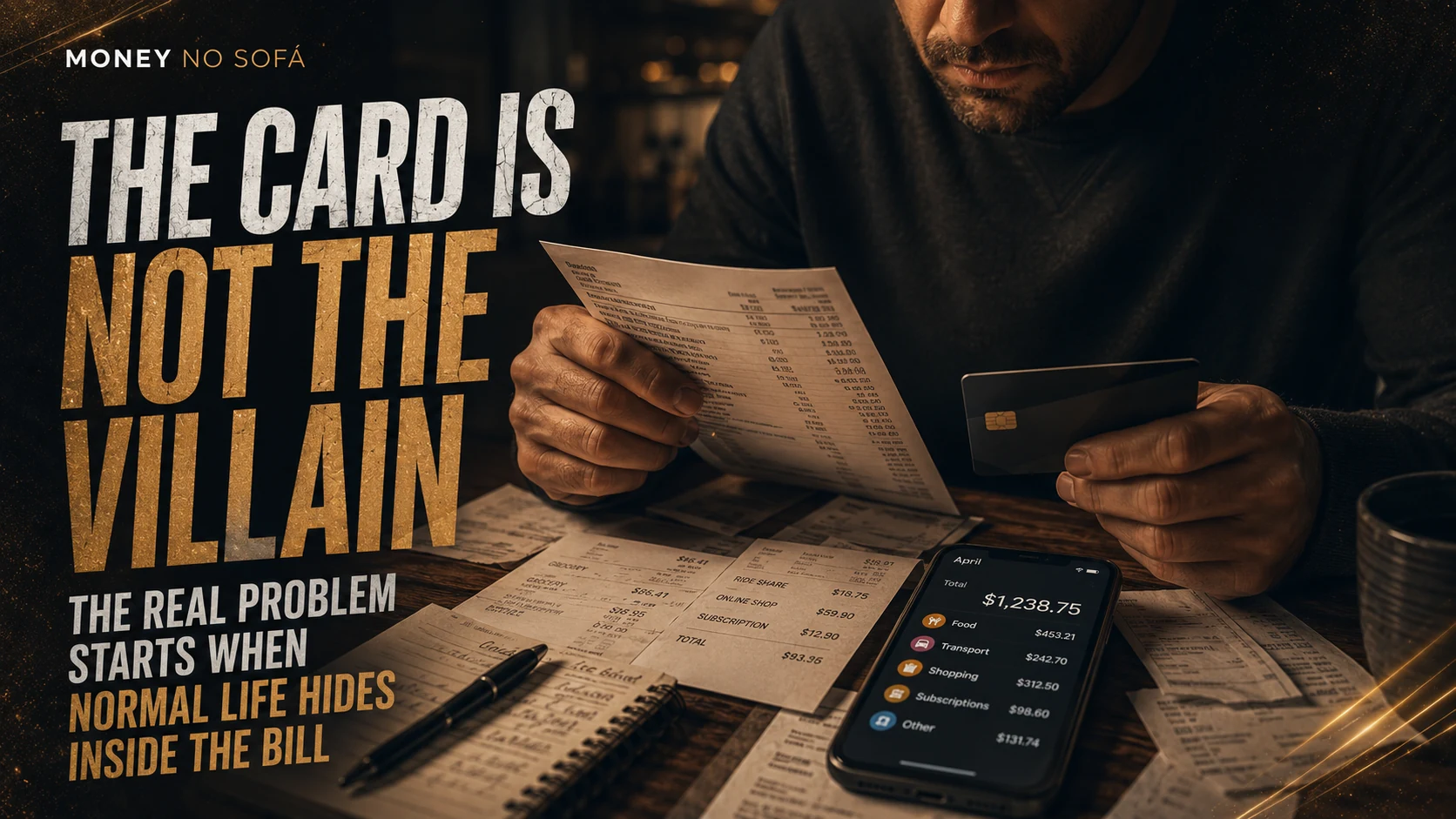
The card is not the villain
The credit card is not evil. It is not a moral failure. It is not automatically the enemy of a family budget. In many homes, the card is useful. It protects purchases, organizes payments, helps with subscriptions, creates convenience, and can even give the household more visibility when used correctly.
The real problem starts when the card becomes a hiding place for ordinary life. A supermarket stop here. A pharmacy run there. A small delivery order after a hard day. A ride because the day got too tight. A school item. A gift. A streaming charge. A forgotten app. A late-night impulse purchase that did not feel serious because the money did not leave immediately.
That is when the bill stops being a payment tool and becomes a psychological trap. The card allows normal life to happen now and financial reality to arrive later. At the moment of spending, the pain is quiet. At the moment of paying, the pain becomes loud.
That is why so many households say the same thing at the end of the month: “We did not buy anything big. So why is the bill this high?” The answer is often simple. The big expense was not one purchase. The big expense was a hundred normal moments that nobody tracked while they were happening.
The habit that makes normal life expensive
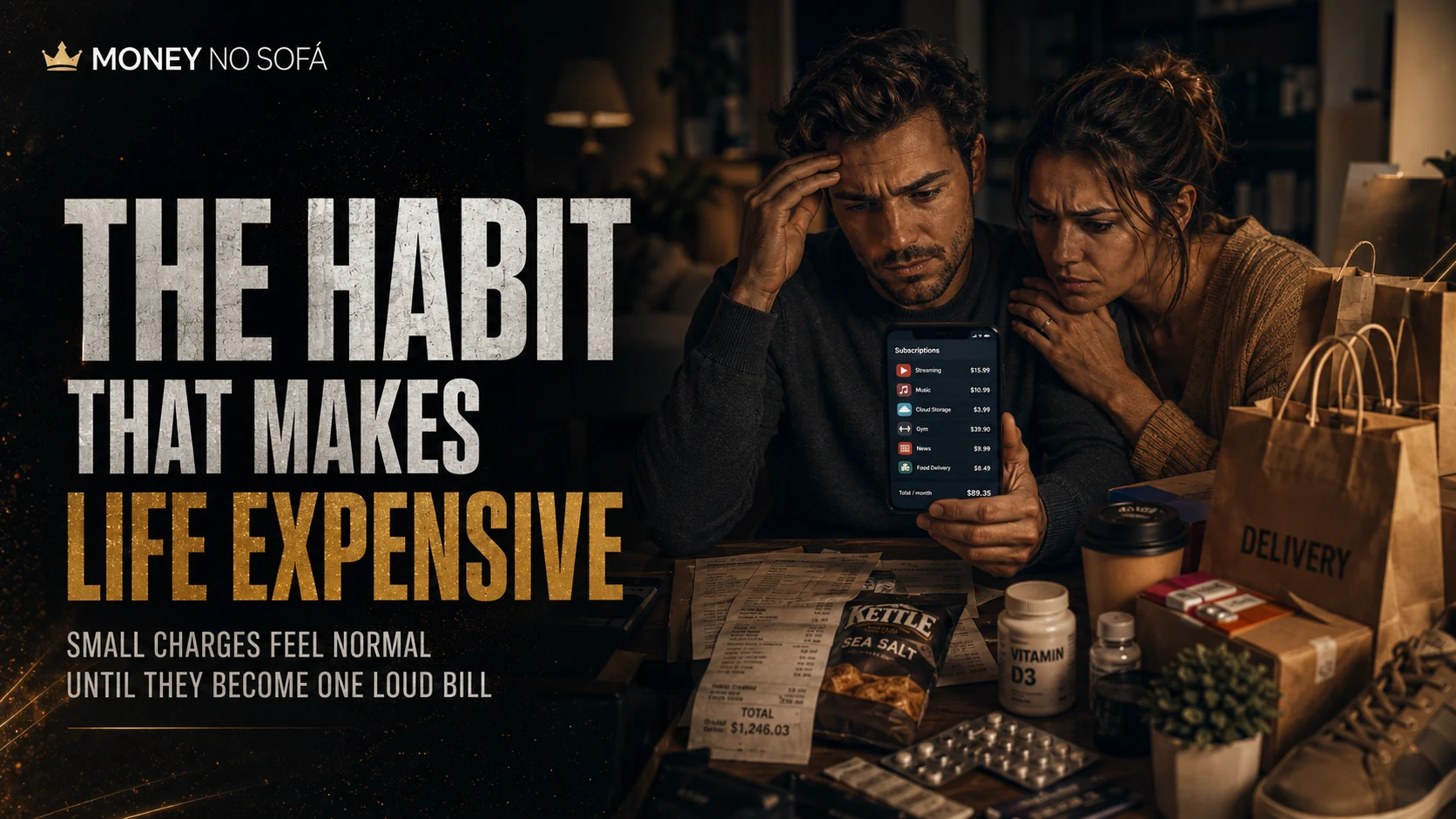
The habit that makes life expensive is not luxury. In most families, the real drain is the repeated use of the card for emotional convenience. Someone is tired, so dinner goes on the card. Someone is stressed, so a small shopping reward goes on the card. The house ran out of planning, so speed replaces structure and the card pays for the gap.
This is why credit card stress can grow even in homes that are not wildly irresponsible. The issue is not necessarily extravagance. It is the pattern of using tomorrow’s money to smooth today’s discomfort.
Once that habit becomes normal, the bill starts functioning like emotional storage. It holds the cost of stress, fatigue, bad planning, convenience, boredom, and small acts of self-reward. It turns an uncomfortable week into a future payment obligation. The home gets temporary relief, but next month begins already injured.
This is one of the most expensive habits in household finance because it hides inside ordinary life. If someone buys a luxury watch, everyone knows what happened. If a family leaks money through delivery, impulse purchases, saved cards, small upgrades, rides, subscriptions, and convenience spending, the damage takes longer to notice. But it is often bigger.
The trap is not the size of each transaction. It is the invisibility of the pattern. One ten-dollar charge feels harmless. Ten ten-dollar charges disappear into the week. Fifty small charges become a month that feels strangely heavy. Then interest enters the room, and what looked normal starts getting expensive fast.
How the card makes money leave quietly
Cash creates friction. Debit creates immediacy. The credit card creates delay. That delay is powerful because it separates the pleasure of spending from the pain of paying. The human brain is not neutral about this. If the reward comes now and the consequence comes later, most people will underestimate the total cost of the decision.
That is why card spending often feels lighter in the moment. The wallet stays intact. The bank balance may not visibly fall that second. The home tells itself it is manageable. But the bill keeps recording everything with perfect memory, even when the people spending do not.
The card also bundles unrelated categories into one giant future number. Groceries, delivery, gas, pharmacy, subscriptions, school items, clothes, and entertainment all end up in one monthly total. That makes it harder to feel the true weight of each category while the month is still in motion.
By the time the bill arrives, it is too late to make most of the important decisions. The money is already committed. The household is no longer deciding what to buy. It is deciding what sacrifice will pay for what was already bought.
Separate convenience from debt
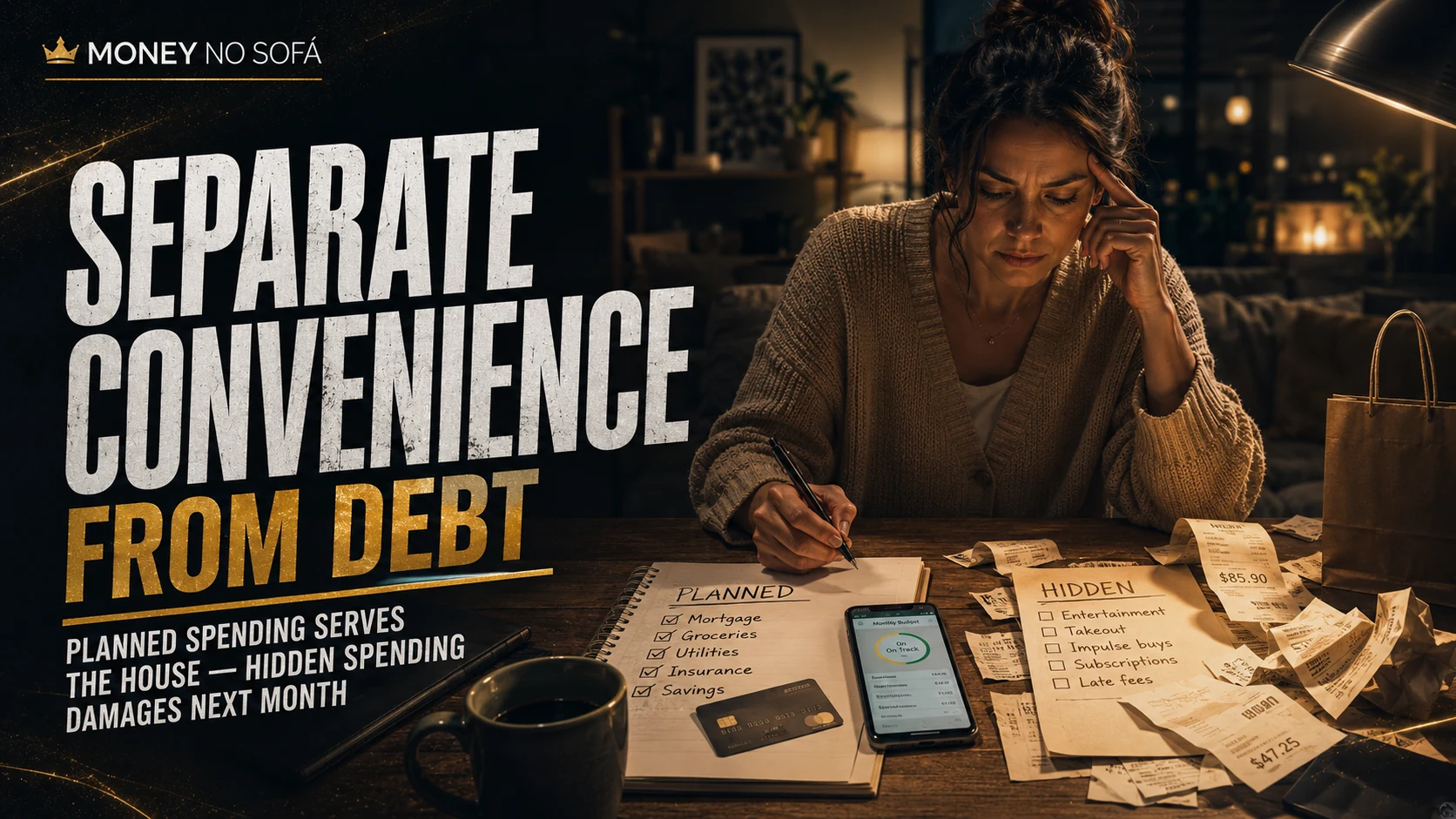
The healthiest way to use a credit card is simple: planned spending can go on the card, hidden spending should not. Planned spending means the household already knows where that money belongs. The groceries were budgeted. The insurance renewal was expected. The travel booking was saved for. The school cost was known. The purchase may go on the card for organization or protection, but the money already has a job.
Hidden spending is different. Hidden spending happens because the card creates breathing room that the budget did not. It happens when the only reason the purchase feels possible is that payment has been postponed. That is not convenience. That is debt wearing the clothes of convenience.
Families need to become very honest about this distinction. A card used for known, budgeted expenses can be a useful tool. A card used to rescue every tired, impulsive or unplanned moment becomes a silent financial leak.
One practical question helps here: “If this had to leave the checking account today, would we still buy it?” If the answer is no, then the decision is probably not about utility. It is about delay. That delay is exactly what creates next month’s pressure.
The weekly card check
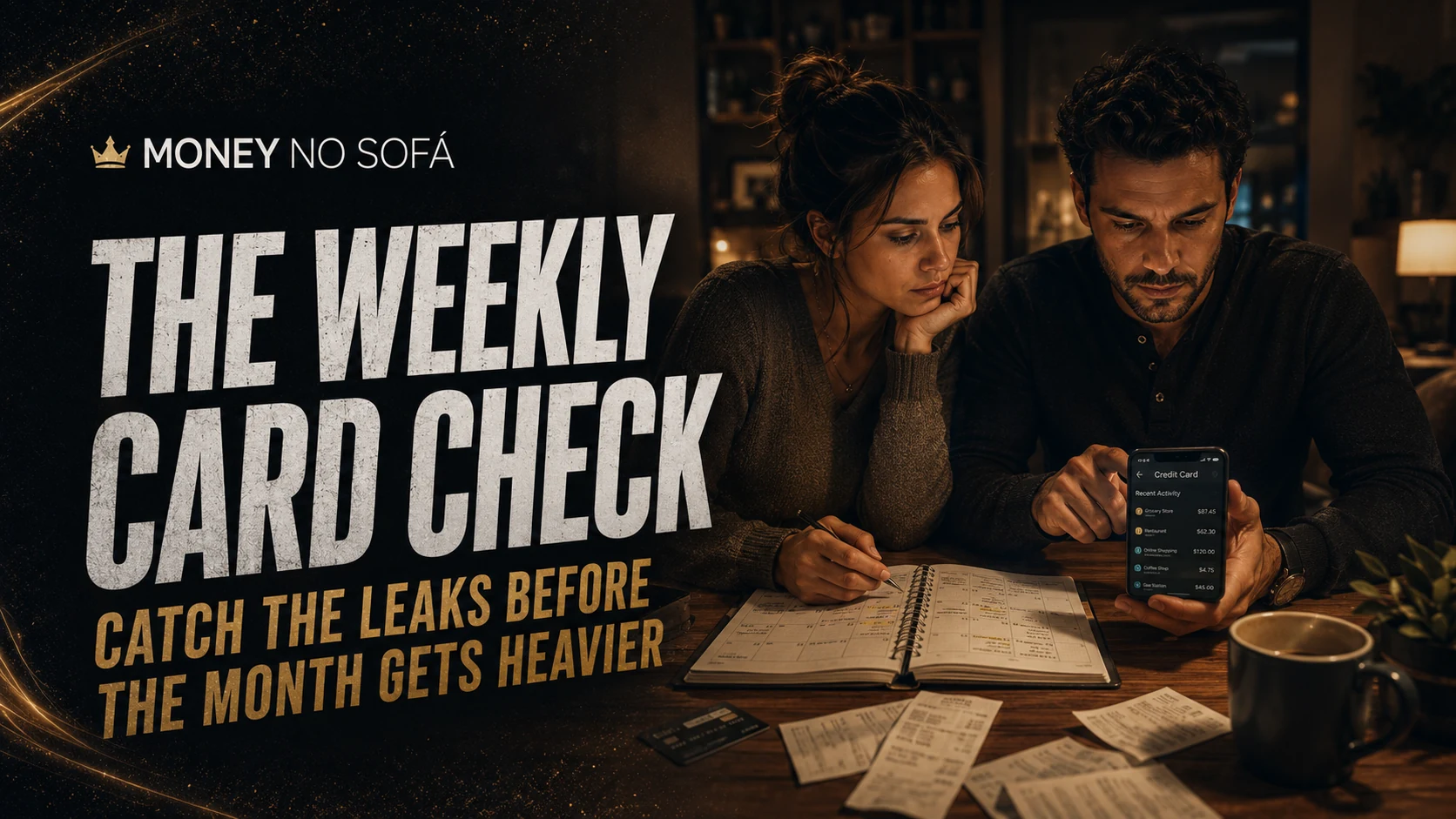
One of the best habits a household can build is the weekly card check. Not the monthly shock. The weekly check. Once a week, open the credit card app, review recent charges, and ask three questions: what did we buy, what surprised us, and what should stop now?
This does two important things. First, it shortens the distance between behavior and awareness. Instead of discovering the truth at the end of the month, the family sees the pattern while the month can still be protected. Second, it turns the card into information, not mystery. The bill stops being an emotional event and becomes a management tool.
The weekly card check does not need to take long. Ten minutes is enough. The household can sit at the table, on the sofa, or wherever it already talks about normal life. The goal is not blame. The goal is to catch leaks early.
A delivery spike in week one can still be corrected. A shopping habit that is growing can still be interrupted. A forgotten subscription can still be canceled. A rideshare pattern that looks harmless can still be questioned. The family still has options because the month has not hardened yet.
This small ritual changes the emotional tone of money. Instead of waiting for the statement to attack everyone at once, the household creates smaller moments of truth. Smaller truths are easier to manage than one giant surprise.
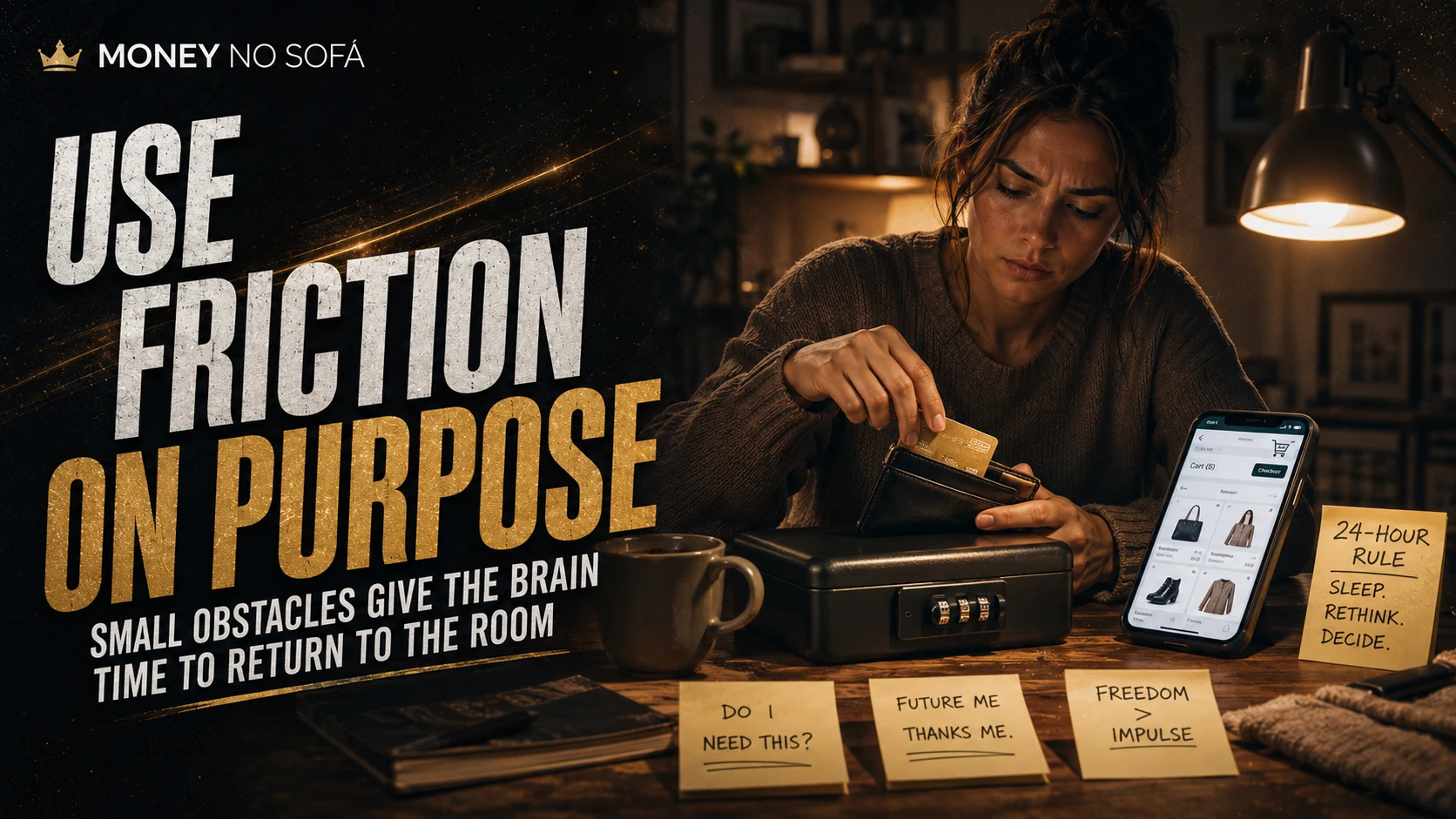
Use friction on purpose
Credit cards are designed to remove friction. That is their commercial advantage. But what helps the seller is not always what helps the household. Families need to add some friction back on purpose.
Friction is not punishment. Friction is time. It is the pause that allows the brain to re-enter the decision. Remove saved cards from shopping apps. Log out of the checkout flow. Use a 24-hour rule for non-essential purchases over a certain amount. Keep one card only for fixed bills and another method for flexible spending. Do not let every app become a one-swipe tunnel between emotion and debt.
Even small obstacles can change behavior. If a purchase requires you to stand up, get the wallet, re-enter the card, or wait until tomorrow, many weak decisions disappear on their own. The desire may still exist, but impulse loses some of its power.
This is especially important for late-night spending, stress purchases, and convenience-driven decisions. Those are the moments when the brain wants relief more than value. Friction helps separate the two.
A strong household does not rely only on self-control. It designs the environment so that weak moments have less power. That is one of the smartest financial habits any family can build.
When the card becomes a monthly identity problem
One reason credit card stress feels so emotional is that the bill often arrives as a judgment. It looks like a mirror of the whole month. It tells the household what it prioritized, what it ignored, what it postponed, and how often it chose relief over structure. That can create shame, conflict, and avoidance.
The danger is that people then start treating the card bill like a character flaw rather than a system problem. But money gets easier when households stop moralizing and start diagnosing. The bill is not proof that the family is bad. It is data showing where planning failed, where fatigue took over, and where visibility disappeared.
That shift matters. Shame usually creates hiding. Diagnosis creates action. When the home sees the card as a system signal instead of a personal failure, it becomes easier to make useful changes.
A healthier role for the credit card
The goal is not necessarily to destroy the card or never use it again. The healthier goal is to give it a narrower, more disciplined role. For some homes, that means using the card only for planned recurring payments. For others, it means using it for grocery points but paying it weekly. For others, it means one shared rule around categories that are allowed and categories that are not.
Good card use has three qualities. It is visible. It is planned. And it is repayable without confusion. If a purchase passes those three tests, the card can remain a tool. If not, the card is probably being used to create fake flexibility.
Fake flexibility feels good for a few days. Real flexibility comes from cash reserves, lower fixed costs, better planning, and less invisible leakage.
A simple reset plan for the household
If the card has become too heavy, the reset does not need to be dramatic. Start with a simple four-step plan.
- Step 1: Review the last 30 days. Separate charges into planned, convenience, impulse, forgotten subscriptions, and real emergencies.
- Step 2: Choose new card rules. Decide which categories are allowed and which must leave the card.
- Step 3: Add weekly reviews. Do not wait for the statement.
- Step 4: Build one friction rule. Remove stored cards, create a 24-hour rule, or isolate the card from impulsive apps.
This kind of reset will not solve everything in one week. But it changes the direction of the household. It moves the home from confusion to structure, from guilt to awareness, and from delayed damage to earlier decisions.
The Money no Sofa takeaway
The credit card is not the villain. The real danger is the habit of letting ordinary life hide inside the bill. Small purchases, convenience spending, emotional rewards, and weak planning can quietly make normal life expensive.
The smartest move is not panic. It is clarity. Separate convenience from debt. Review the card weekly. Use friction on purpose. Give the card a narrower role. And remember that the bill is not only a payment request — it is feedback on how the month was lived.
The families that win with money are not always the ones with the highest income. Very often, they are the ones that notice the leaks before the month hardens around them. When the card stops being a hiding place, the budget becomes easier to breathe inside.
If debt has already become part of the monthly system, continue with WHEN WILL I BE DEBT-FREE? — a practical Money no Sofá Lab guide to mapping balances, building a payoff system and creating more financial margin.
The headline is only the start.
Ask Nova what this story could change in your budget, savings, debt, investments or next purchase.