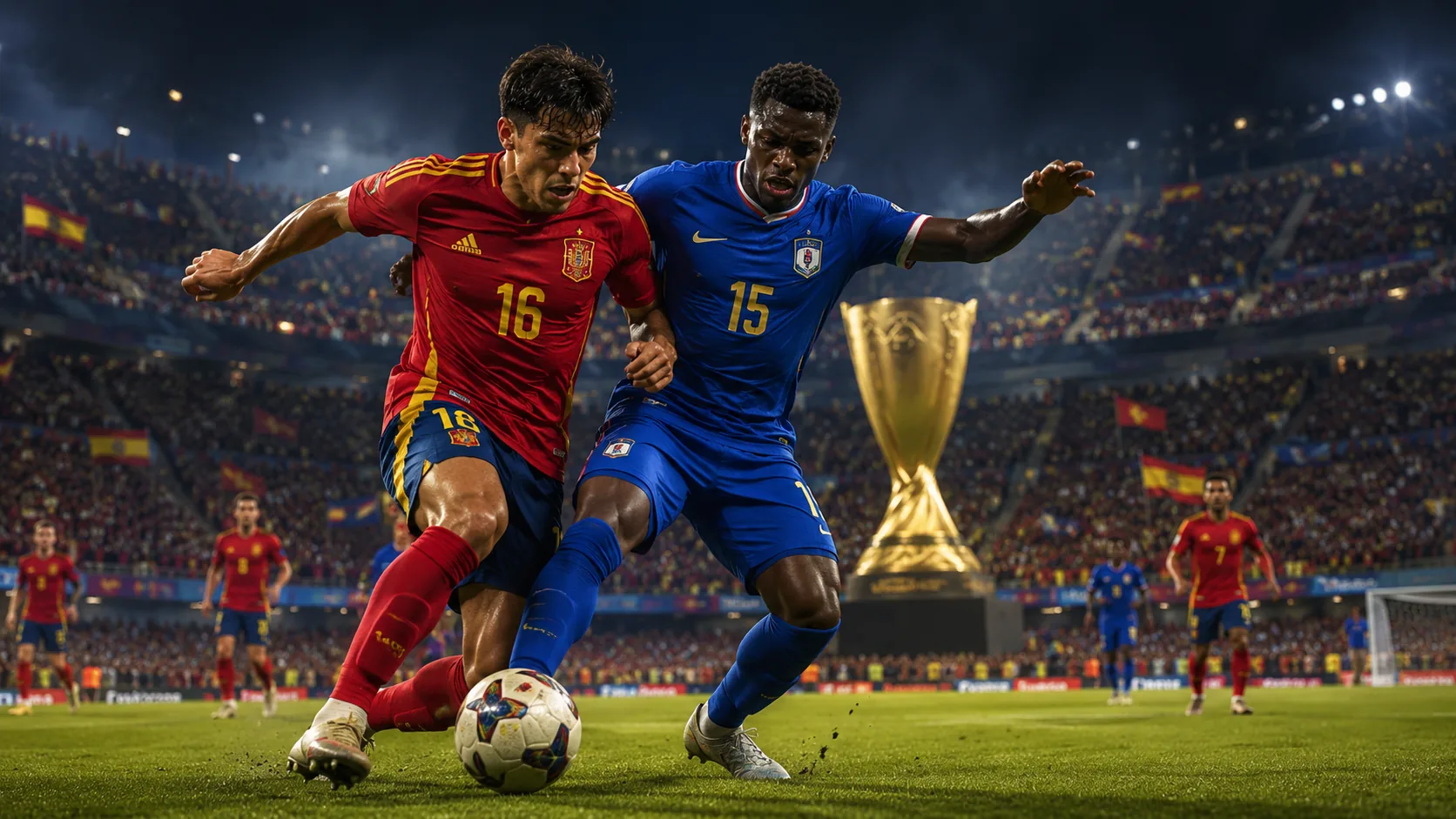
Spain and Cape Verde Show the Cup Is Open is the kind of headline that makes the World Cup feel alive. A favorite can struggle. A debutant can compete. A quiet score can still say something loud about pressure, preparation and expectation.
A result that changes the mood
Spain entered the match with history, structure and reputation. Cape Verde entered with the energy of a country living its first World Cup story. The result was a reminder that the tournament is not played on brand power. It is played minute by minute, mistake by mistake, decision by decision.
For neutral fans, that uncertainty is the product. For families watching at home, it is also the trap. The more surprising the tournament becomes, the more every match starts to feel unmissable. And when everything feels unmissable, spending usually rises.
The small-nation effect
Cape Verde’s presence in the World Cup is already meaningful. Like Curaçao, the country represents one of the tournament’s best emotional stories: small nations using football to create global visibility. Even when a match ends without many goals, the image of a debutant standing firm against a major football country has value.
What this means for Brazil fans
Brazil’s 1-1 draw with Morocco already made Group C feel more complicated. Spain and Cape Verde added another reminder: reputation helps, but it does not protect anyone from pressure. Brazil is still Brazil, with five stars on the chest, but the Cup is clearly demanding structure, patience and better decisions.
That is also true at home. A family cannot control the result. It can control the budget around the result.
How to watch more and spend less
- Pick the matches that matter most instead of treating every game like an event.
- Create one grocery list for the week, not one order per match.
- Share subscriptions and viewing plans inside the house before adding new services.
- Wait 24 hours before buying jerseys, TVs, speakers or decor after a surprising result.
The next games matter
Spain still has bigger Group H tests ahead, including Uruguay. Cape Verde now has proof it can compete emotionally and tactically. For Brazil fans, the next major focus is the response after Morocco: the team needs to turn tension into clarity before Haiti and Scotland.
Money no Sofa recommendation
Use the World Cup as a reason to organize the house, not to overspend inside it. The tournament will keep producing surprises. Your budget does not need to be one of them.
Why this match feels bigger than the score
A World Cup opener or early group match can sometimes look small on paper, especially when one country carries a deeper football tradition and the other arrives with a newer global story. But the real meaning of Spain and Cape Verde is not limited to goals, possession or a table calculation. The meaning is in the mood it creates. It tells the audience that the tournament is not closed, that reputation is not protection, and that every team must earn its comfort again once the ball starts moving.
That is why a match like this matters to fans who may not normally follow every fixture. The World Cup becomes special when it breaks the expected order. A favorite can look uncomfortable. A smaller nation can look organized. A quiet passage of play can reveal courage. A defensive block can feel like a national statement. The Cup feels open when people at home begin to say, almost at the same time, that no game should be ignored.
For Spain, the pressure is the pressure of history. Supporters expect control, technique and maturity. They expect the team to manage the ball, manage rhythm and slowly make the opponent feel smaller. For Cape Verde, the pressure is different. It is the pressure of opportunity. When a smaller nation meets a more established football country, the first job is not only to resist. It is to prove that belonging on the stage is not a symbolic prize. It is earned by structure, discipline and moments of confidence.
That contrast is what gives the headline strength. Spain and Cape Verde did not simply play a match. They helped frame the emotional promise of the tournament: the World Cup belongs to the team that handles the moment, not only the team with the older shirt, bigger market or larger television audience.
The emotional economy of an open World Cup
When the Cup feels predictable, families can plan around the obvious games. They know which match will bring relatives over, which day will justify a larger lunch, and which fixture can be followed casually on the phone. But when the Cup feels open, every match starts asking for attention. That is where the emotional economy begins. A surprise result does not stay inside the stadium. It travels into group chats, living rooms, supermarkets, delivery apps, streaming accounts and shopping decisions.
The family that planned to watch only Brazil may suddenly want to watch Spain. The friend who did not care about Cape Verde may now want to see the next small-nation story. The house that had one match-day grocery list may start creating one for every game. That is how a tournament becomes expensive without anyone making a single large decision. Spending rises because attention rises. Attention rises because uncertainty makes the event feel alive.
There is nothing wrong with enjoying that. Money no Sofa is not against the ritual. In fact, the best part of football often happens at home: the shared meal, the sofa, the small arguments, the predictions, the children asking why a country matters, the older fan remembering a player from another generation. The point is not to remove emotion. The point is to prevent emotion from managing the card.
An open World Cup asks for a more deliberate home strategy. The family should decide which games deserve a full event and which games can be watched with what is already in the house. It should define one weekly snack budget instead of letting each result create a new delivery order. It should check subscriptions before adding another service. It should remember that the best match-day memory usually comes from people, not from the amount spent around the television.
What Spain can teach about control
Spain, as a football idea, is often associated with control. That word matters far beyond football. Control is not the same as dominance. Control is the ability to avoid panic when the plan becomes uncomfortable. A team can have the ball and still lose control emotionally. A family can have income and still lose control financially. In both cases, the problem is not the absence of resources. It is the absence of a calm system.
In a difficult match, Spain’s lesson is to keep asking the right questions. Are we moving the ball with purpose or only keeping it? Are we creating better decisions or only repeating comfortable habits? Are we respecting the opponent or assuming that the shirt will solve the game? Those same questions work inside the home. Is this purchase useful or only familiar? Does it improve the week or only satisfy the moment? Are we planning the tournament or reacting to each headline?
The strongest families treat spending like a team treats possession. They do not rush every pass. They do not let one loud moment define the whole strategy. They move with patience, review options and accept that sometimes the best decision is to wait. That kind of control does not feel dramatic, but it wins over time.
What Cape Verde can teach about focus
Cape Verde’s lesson is different and just as useful. A smaller team cannot waste energy trying to be everything at once. It needs focus. It needs a clear plan, realistic roles and the courage to ignore outside noise. That is often the exact lesson a household needs during a World Cup month. The family does not have to copy every neighbor, buy every product, follow every promotion or host every gathering.
Focus begins by choosing what matters. For some homes, the priority is watching Brazil with the grandparents. For others, it is inviting friends once or twice. For others, it is simply having a calmer evening with a good screen, simple food and no financial stress afterward. When the priority is clear, spending becomes easier to manage because every purchase has to answer to a purpose.
The Cape Verde idea is powerful because it reminds the viewer that smaller does not mean passive. A smaller budget can still create a good home experience. A smaller gathering can still be memorable. A simpler menu can still feel generous. A well-planned sofa can beat a noisy event that leaves the family tired and over budget.
How to build a World Cup viewing plan at home
A useful plan starts with the calendar. Mark the matches the family truly cares about. Then divide them into three groups: full event, casual watch and background game. A full event is the match that justifies guests, food and preparation. A casual watch is worth attention but not extra spending. A background game can stay on while the house continues its normal routine. This simple classification prevents every match from becoming a financial occasion.
Next, build the food plan around the week, not around the emotion of each kickoff. A single supermarket run usually beats three rushed delivery orders. Snacks can be portioned. Drinks can be bought with a limit. Leftovers can become part of the next match. The point is not to make the experience cheap in a sad way. The point is to make it intentional in a way that feels better the next morning.
The third step is screen discipline. Before buying a new television, soundbar, cable package or streaming service, ask whether the current setup is actually failing. If the picture is good, the sound is clear and the family can watch without friction, the upgrade may be a desire rather than a need. If the upgrade will serve the home for years, compare prices calmly. If it will only serve the feeling created by one surprising match, wait.
The final step is to create a small World Cup envelope. It can be physical, digital or written in a note. The family decides how much can be spent on food, subscriptions, decorations, small gifts and gatherings during the tournament. Every purchase comes from that number. When the number is gone, the house returns to simple viewing. This is not restriction. It is clarity.
The risk of buying after surprise
Surprise is one of the strongest triggers in consumer behavior. When a match breaks expectations, people feel that they are living something special. The brain wants to mark the moment. That can lead to good choices, like calling family, saving a photo, cooking something simple or writing down the memory. It can also lead to expensive choices, like buying a jersey immediately, upgrading a screen without comparison, ordering food for more people than planned or adding a subscription that will be forgotten later.
The safest rule is the 24-hour pause. If a purchase still feels useful the next day, it can be evaluated properly. If it disappears from the mind after sleep, it was probably part of the match emotion. A family that uses the pause does not become less passionate. It becomes harder to manipulate.
Retailers understand urgency. They know that football shortens decision time. They know that phrases like limited offer, match-day deal and only today work better when the crowd is emotional. The consumer’s defense is not cynicism. It is a small routine: compare, wait, calculate total cost and ask how the purchase will be used after the tournament.
What Brazil fans should take from it
For Brazil fans, Spain and Cape Verde add another layer to the tournament mood. If the Cup is open, Brazil must play with clarity, not only emotion. A shirt with five stars brings respect, but it does not remove the need for structure. The sofa lesson is similar. A household with good income, a familiar routine or past discipline still needs a plan when emotion gets louder.
The Brazilian fan experience is unique because football enters the home as memory. It is not only a match. It is childhood, family, school breaks, office conversations, neighborhood noise and the feeling that the country stops for ninety minutes. That is beautiful. It is also commercially powerful. Every brand wants to connect to that emotion. Every app wants a share of the moment. Every store wants to sell the idea that the game will be better if the cart is fuller.
The smarter fan protects the emotion by protecting the home. Watch the games. Invite people when it makes sense. Celebrate the goals. Debate the team. But keep the budget visible. The Cup will be remembered for the matches, not for the forgotten purchases made between them.
A practical checklist for Spain, Cape Verde and the next surprise
- Choose the next three matches that deserve real planning.
- Set one weekly food and drink ceiling before opening delivery apps.
- Check current streaming access before adding another subscription.
- Use a 24-hour pause for jerseys, electronics and decoration purchases.
- Keep one simple menu that can work for more than one match.
- Share costs with guests when the gathering becomes larger than expected.
- Remember that a good World Cup memory does not need a premium purchase.
FAQ
Why did Spain and Cape Verde make the World Cup feel open?
The match carried the feeling that a favorite could be tested and a smaller nation could compete with structure and belief. That kind of uncertainty makes the tournament more attractive and also more emotionally intense for fans at home.
How can families enjoy more games without overspending?
The best approach is to separate matches into full events, casual watches and background games. Spend only on the games that truly deserve a gathering, and keep weekly limits for food, streaming and small purchases.
Should a family buy a new TV or sound system because of the World Cup?
Only if the purchase solves a real long-term problem. If the current setup works, the better decision is usually to wait until the emotional pressure of the tournament passes and then compare prices calmly.
What is the main Money no Sofa lesson?
The Cup may be open, but the household budget should not be open-ended. The family can live the football emotion fully while still deciding in advance how much each match-day ritual can cost.
Final thought from the sofa
The most useful way to read Spain and Cape Verde is to see it as a reminder that the World Cup is never only about the obvious favorites. It is about preparation meeting emotion. It is about countries carrying different kinds of pressure. It is about fans discovering new stories and then bringing those stories into the living room. That is why the tournament has so much cultural power. It makes people feel part of something larger without leaving the house.
But every powerful emotion needs a counterweight. Inside Money no Sofa, that counterweight is clarity. A family can be excited and still organized. It can cheer loudly and still check the price. It can invite people over and still set a limit. It can respect the magic of football without letting every match become a reason to spend. The best World Cup home is not the most decorated one. It is the one where people can enjoy the game, remember the moment and wake up the next day without regret.
That is the real value of an open Cup. It gives the viewer surprise, conversation and memory. The financial mistake is trying to buy all of that in a hurry. The smarter move is to prepare the house, choose the important games, keep the card calm and let the football do what football does best: fill the room with tension, laughter, hope and stories that last longer than the receipt.