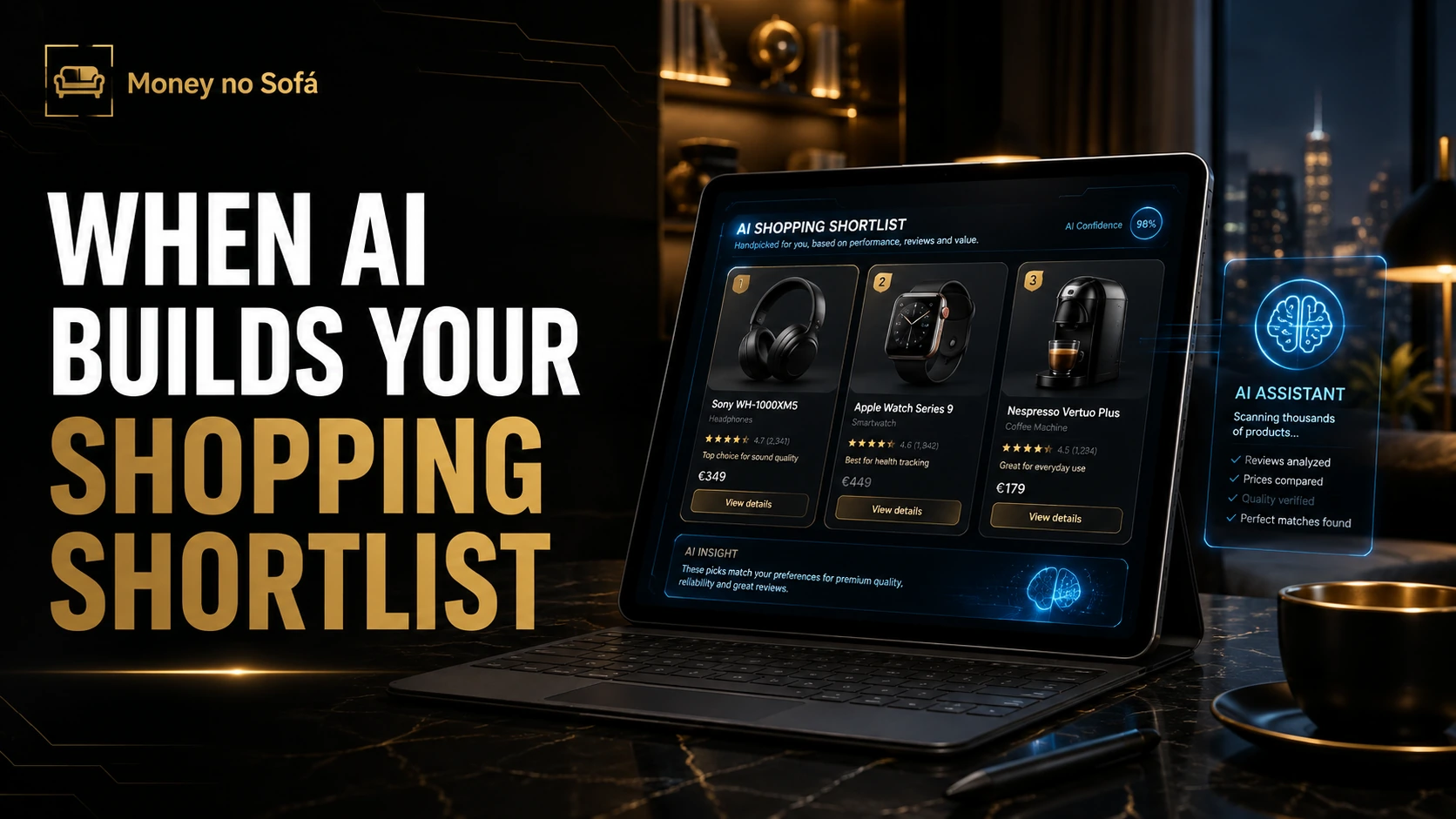
AI is moving upstream in the buying journey. What changes when a machine filters the market before you even start browsing?
Shopping used to begin with a search box. You typed a product name, opened a dozen tabs, compared prices, read reviews, watched a video, and tried to decide which option deserved your money.
AI is changing that first step. Instead of asking for products, people can now describe a situation: budget, priorities, trade-offs, habits, even what they do not want. The result is no longer a list of links. It is often a shortlist.
AI is becoming the first filter
Imagine you want headphones under $150. A traditional search might give you reviews, ads, retailers and comparison pages. You still need to combine the information.
An AI assistant can start differently: “I work eight hours a day, need a comfortable fit, decent calls, long battery life and I do not care about premium noise cancellation.” That request contains context. Context allows the system to eliminate products that are technically good but wrong for you.
This matters because filtering has value. The harder a category is to compare, the more useful a credible shortlist becomes.
A shortlist is not the same as a decision
The danger is treating the shortlist as neutral. Every recommendation depends on criteria: price, availability, ratings, specifications, source quality, brand reputation or simply which products the system can confidently understand.
That is why the right question is not only “What should I buy?” It is also:
- Which alternatives did you exclude?
- Why did these products rank higher?
- What trade-off am I accepting?
- What would make the cheaper option a better choice?
- What information is uncertain or missing?
AI can reduce information overload. It should not remove your judgment.
Clear product data becomes more valuable
This shift also changes what good commerce content looks like. Vague claims such as “next-level performance” are difficult to compare. Clear facts are easier: weight, battery life, warranty, compatibility, return policy, delivery time, price and service availability.
For brands and retailers, machine-readable clarity may become as important as persuasive copy. For consumers, that is potentially good news because better structured information can make weak comparisons easier to spot.
This is also why AI-driven shopping traffic deserves attention. We explored the business side of that shift in AI Shopping Traffic Is Worth More.
Your best move is to make the shortlist work harder
When AI gives you three options, do not immediately choose number one. Use the shortlist as a starting point for better questions.
Ask for the total cost of ownership. Ask what feature you are paying for but probably will not use. Ask which product delivers 80% of the benefit for less money. Ask for reasons not to buy anything yet.
That last question is especially useful. A system optimized to help you choose can still help you decide not to spend.
The next time AI gives you a shopping shortlist, ask: “What did you exclude, what am I sacrificing, and what is the best reason to wait?” If the purchase still makes sense after those answers, your decision is stronger.
Money no Sofá — Money for real life.
The headline is only the start.
Ask Nova what this story could change in your budget, savings, debt, investments or next purchase.