France did not simply eliminate Morocco. Mbappé, Dembélé and a patient French team controlled the rhythm until the World Cup quarterfinal finally opened.
Reading time: approximately 12 minutes. Money no Sofá editorial analysis.
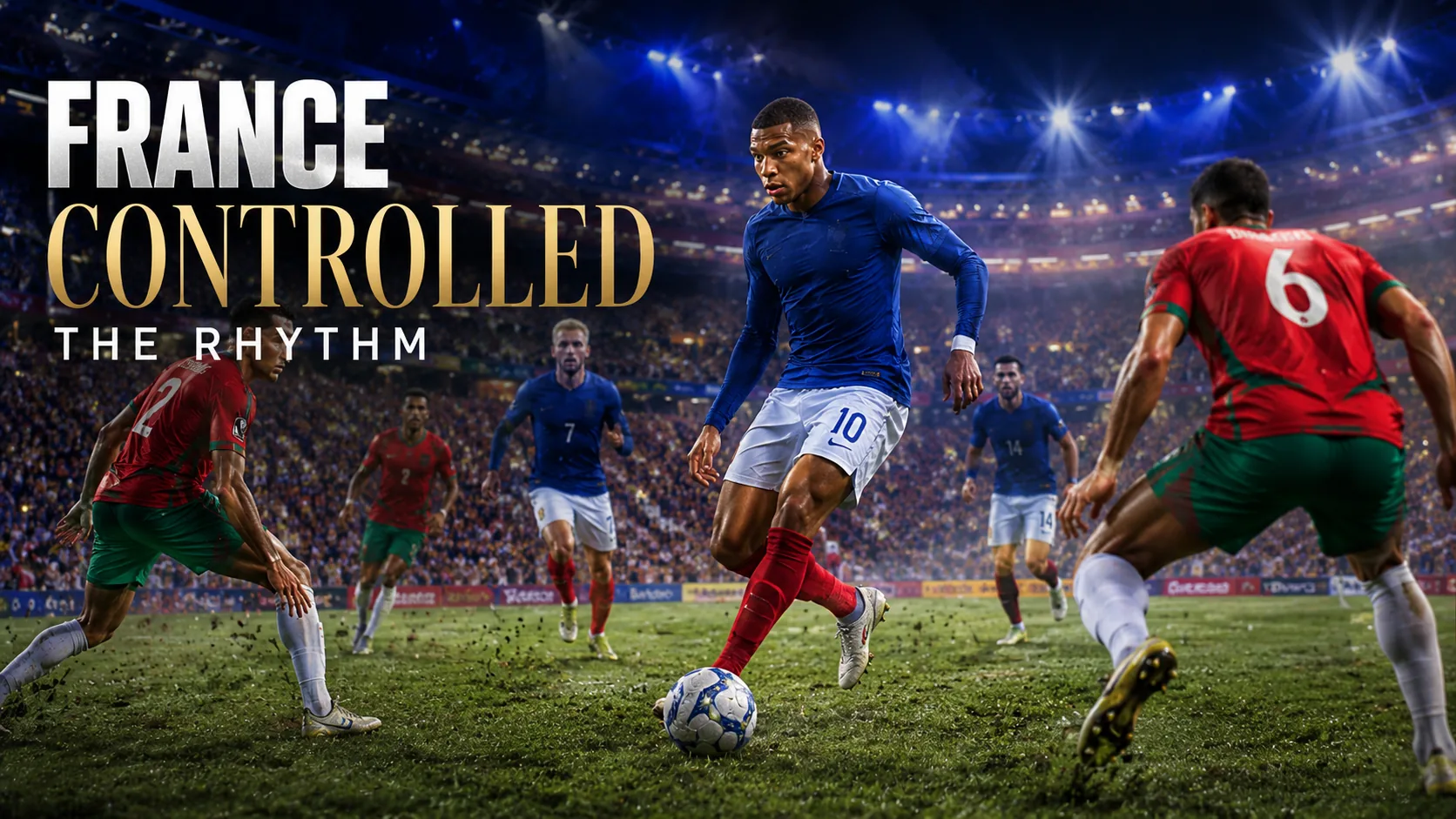
France did not begin the night by running over Morocco.
They waited.
They moved the ball from one side to the other. They tested the spaces. They allowed Morocco to believe that another historic defensive performance might be developing. Then, when the moment finally arrived, France changed the rhythm.
Kylian Mbappé scored. Ousmane Dembélé followed. A difficult World Cup quarterfinal became a 2–0 victory, and France walked into another semifinal looking less like a team surviving pressure and more like a team that understands exactly when to accelerate.
That was the dance.
It was not constant speed. It was control.
France defeated Morocco on July 9 after a goalless first half. Mbappé broke the deadlock in the 60th minute, and Dembélé doubled the advantage six minutes later. The result ended Morocco’s run and sent Didier Deschamps’ team into the semifinals.
Morocco built another wall
Morocco entered the match with a familiar identity.
The team was organized, patient and willing to suffer without the ball. The defensive block stayed compact. The spaces between midfield and defense were reduced. France could circulate possession, but circulation alone did not guarantee penetration.
This was not fear. It was Morocco understanding the problem in front of them.
France had already shown that it could score in different ways during the tournament. Mbappé could attack space. Dembélé could isolate defenders. Michael Olise could create between the lines. Midfield runners could appear when opponents focused too heavily on the front line.
Morocco’s first task was therefore not simply to win the ball. It was to deny France a clean route toward goal.
For much of the first half, that plan worked.
France had the ball, but Morocco protected the most valuable areas. Every French attack seemed to require one more pass, one more movement or one more individual action.
Then came the penalty.
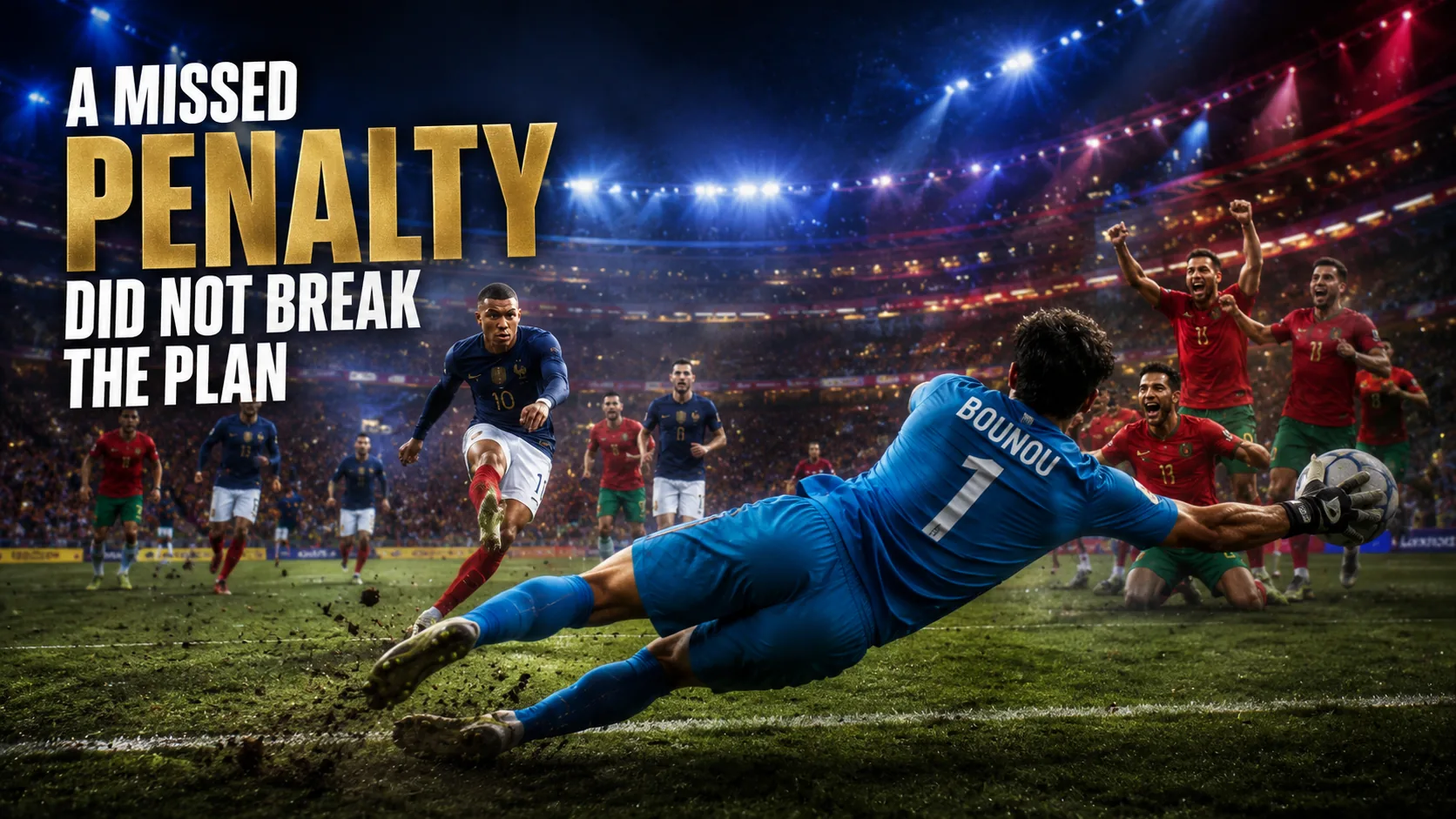
Mbappé had an opportunity to put France ahead, but Yassine Bounou saved it. The moment could have changed the emotional direction of the match. Morocco had survived. France’s biggest star had failed from the spot. The stadium suddenly had a reason to believe in another upset.
But France did not panic.
That may have been the most important detail of the night.
The penalty save became a dramatic moment, not a tactical collapse. France returned to the structure, continued moving Morocco across the field and waited for the next opening. Bounou’s save kept the score level, but it did not transfer control of the match.
Mbappé stopped forcing the moment
Great players are often described through speed, power and numbers.
But the most valuable quality in a knockout match may be emotional control.
Mbappé had already missed the penalty. The match remained locked. Morocco’s confidence was growing. Every minute without a French goal increased the tension.
A less disciplined performance could have become rushed. Mbappé could have started shooting from impossible positions. France could have abandoned its shape and sent too many players forward.
Instead, Mbappé stayed inside the match.
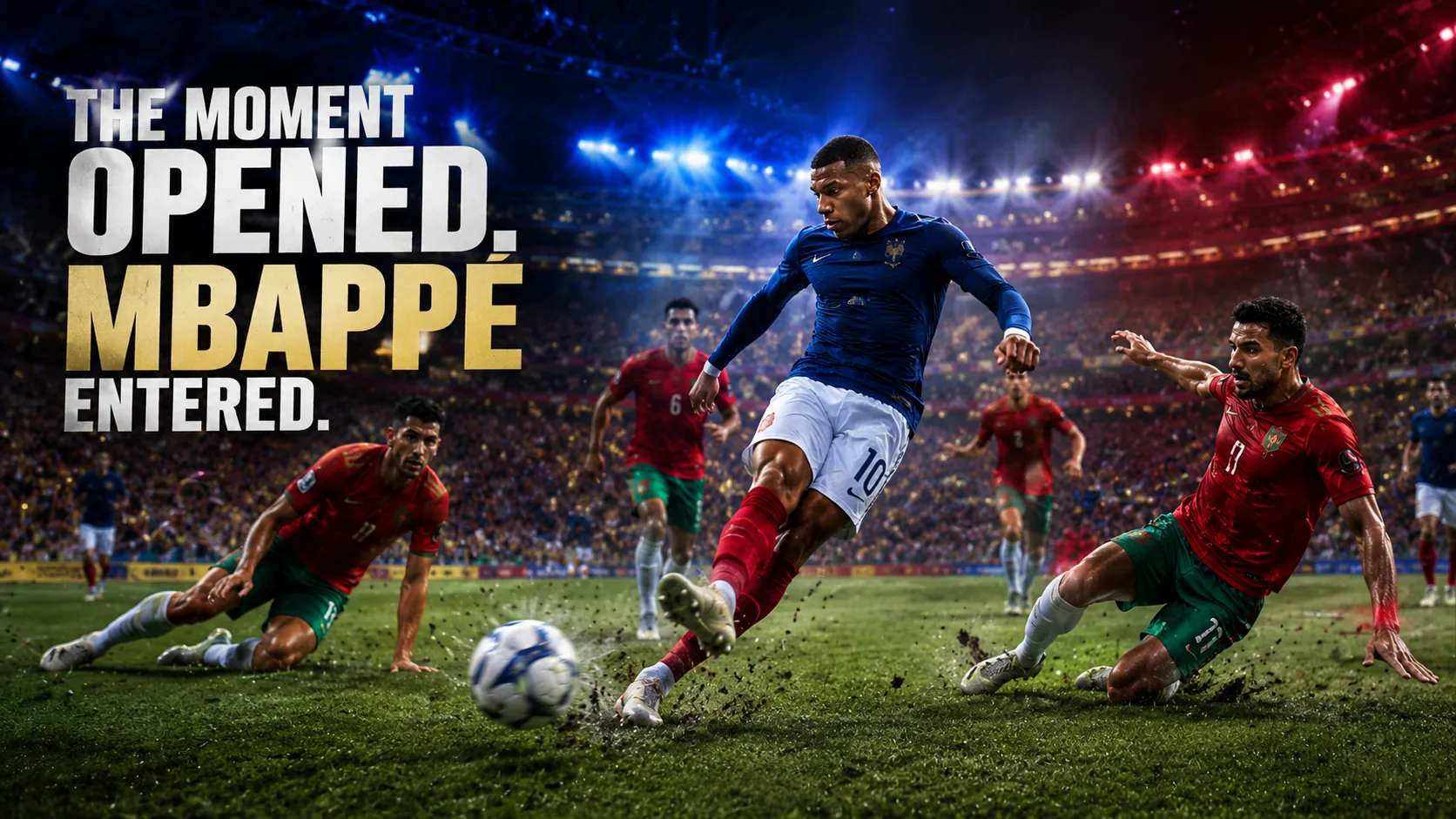
In the 60th minute, the opportunity appeared. He received the ball, created the angle and produced the finish France had been waiting for.
The goal was powerful because it arrived after frustration.
Morocco’s structure had not been destroyed by endless French attacks. It was opened by one elite action after an hour of pressure. That distinction matters. France did not need to dominate every second. It needed to remain stable long enough for quality to decide the game.
For Morocco, conceding changed everything.
A defensive plan can remain patient at 0–0. At 1–0 down in a knockout match, patience starts to become elimination. The team must move higher, take risks and leave spaces that did not exist before.
France understood that transition immediately.
Dembélé completed the dance
Only six minutes separated the first goal from the second.
That was not accidental.
The opening goal forced Morocco to leave its preferred defensive position. Players had to step forward. Full-backs had to take greater risks. Midfielders could no longer remain entirely focused on blocking French combinations.
The match suddenly became wider.
This is where France can be devastating.
Mbappé was no longer attacking a wall. He was attacking a defense in transition. Dembélé was no longer receiving the ball with several players positioned behind it. He had space, movement and a Moroccan team trying to recover its shape.
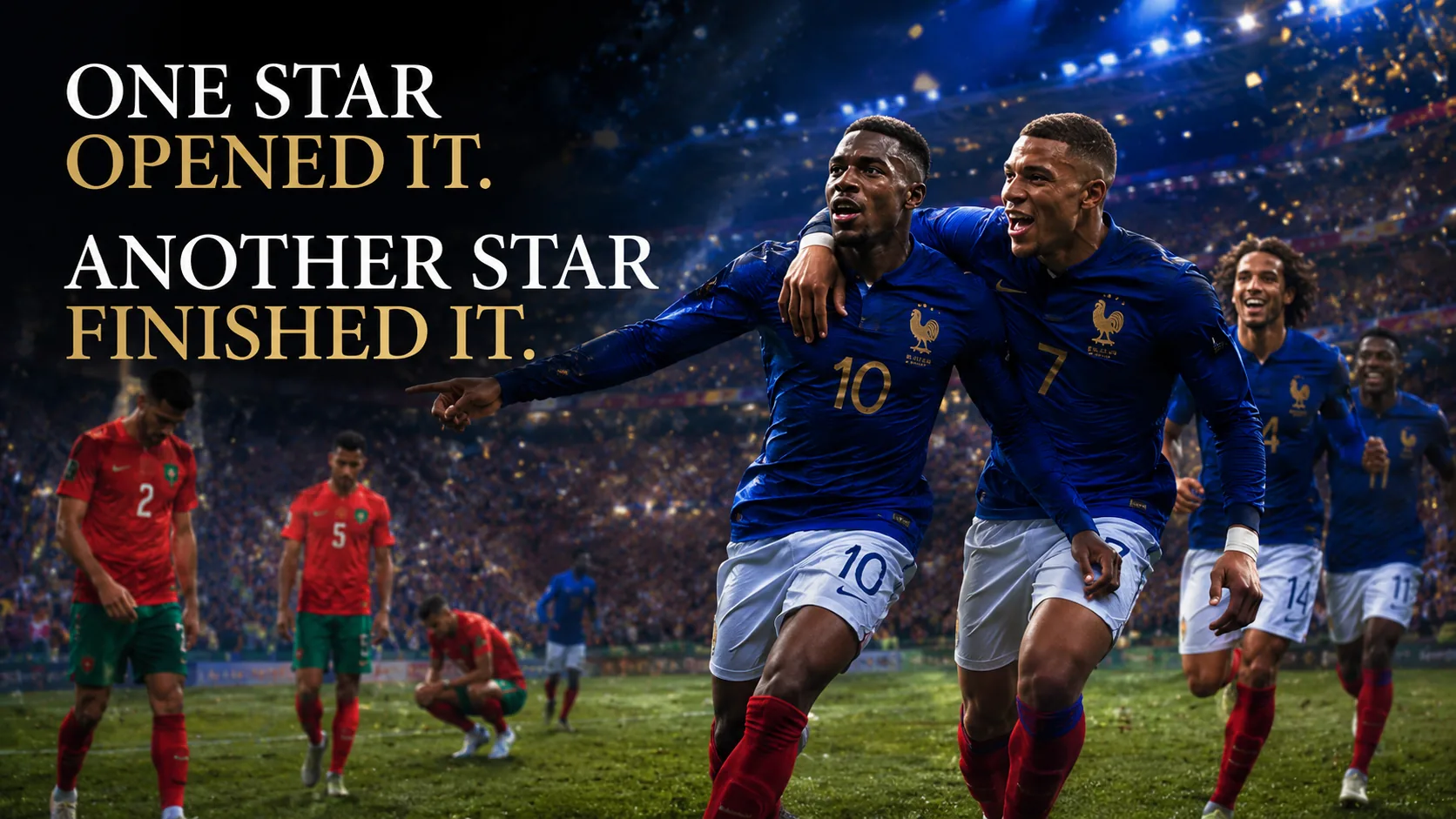
Mbappé helped create the second goal, and Dembélé finished it.
The combination captured the strength of this French generation. Defenders can survive one superstar for a period. Surviving several elite attackers, each capable of changing position and exploiting a different space, is much harder.
Dembélé’s goal made it 2–0 and effectively ended Morocco’s chance of producing a comeback.
That depth is what separates France from many talented national teams.
Some countries have a strong first eleven. France has layers.
If the central route is blocked, it attacks outside. If Mbappé is surrounded, Dembélé receives more space. If both wings are protected, midfielders can move forward. If the match becomes physical, France has defenders and midfielders capable of controlling that version too.
It does not always look spectacular.
But when the rhythm changes, it can look inevitable.
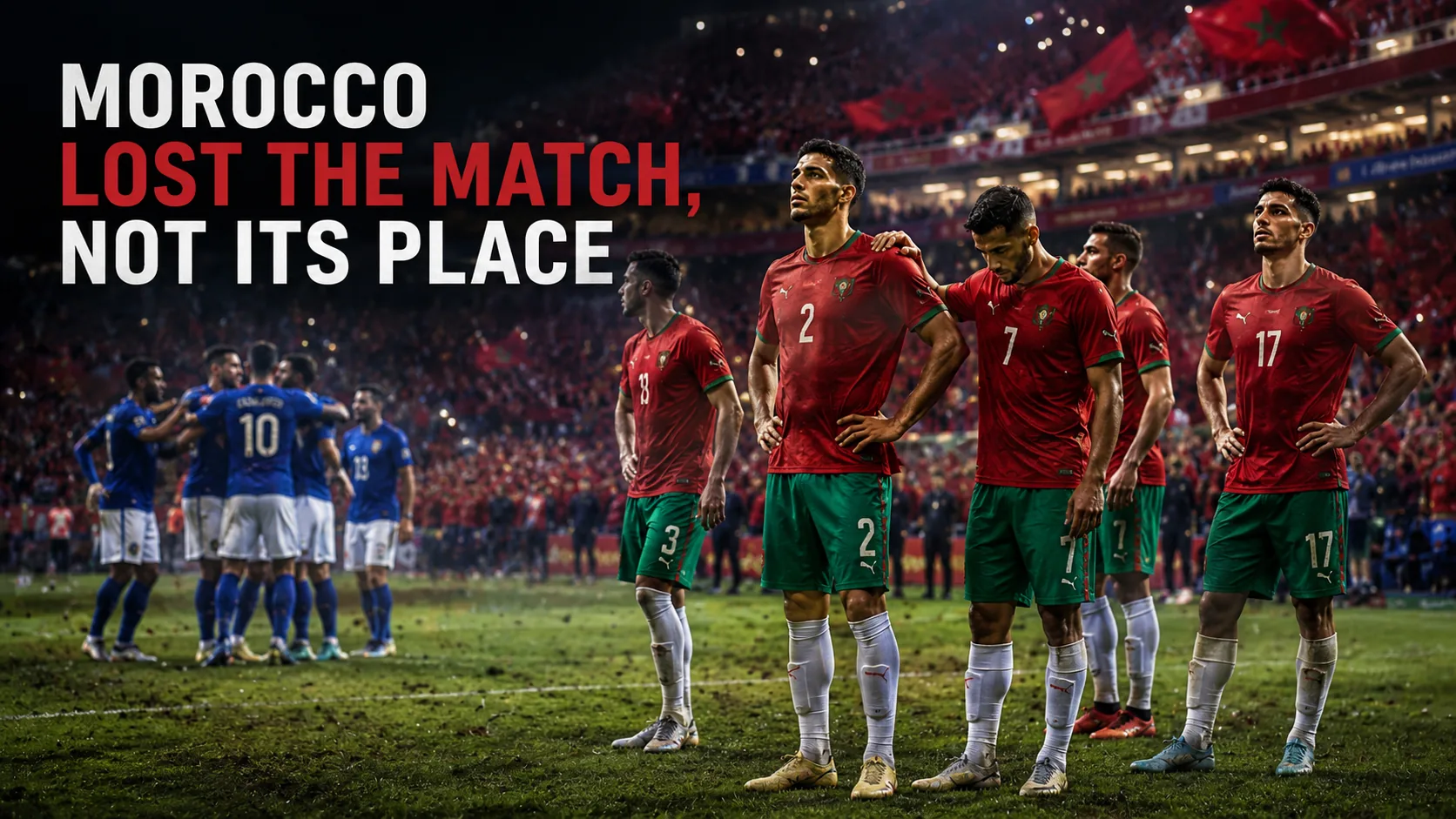
Morocco’s defeat was not a disappearance
The score will say France 2, Morocco 0.
That does not mean Morocco’s tournament should be reduced to a defeat.
The team once again demonstrated that its place near the final stages of major tournaments is no longer an accident. Morocco reached the quarterfinals after another disciplined run and arrived with a structure capable of making elite opponents uncomfortable.
Against France, however, Morocco struggled to transform defensive resistance into attacking danger. The team produced little clear threat, while France’s possession and tactical control prevented the transitions that had made Morocco dangerous earlier in the tournament.
Morocco’s coach, Mohamed Ouahbi, acknowledged afterward that France had been the better team. He praised his players but also spoke about the need for honest evaluation and improvement.
That response matters.
There is a difference between celebrating a heroic defeat and building the next competitive level. Morocco has already proved that it can enter the conversation. The next challenge is to control major matches rather than only resisting inside them.
Morocco will also be one of the hosts of the 2030 World Cup alongside Spain and Portugal. The foundation built through these deep tournament runs can become something larger: infrastructure, confidence, investment, youth development and global football identity.
This quarterfinal was therefore not the end of Morocco’s relevance.
It was another measurement of how far the project has already come — and what still separates it from the final step.
France now looks complete
France’s attack receives most of the attention, but the more important development may be the balance around it.
The victory over Morocco showed a team capable of keeping its shape even when the breakthrough took time. Deschamps’ side did not allow one missed penalty to become emotional disorder. It kept the midfield connected to the defense, maintained pressure without exposing the back line and accelerated only when the game opened.
That balance changes how opponents must approach France.
Sit too deep, and the pressure eventually creates an individual moment.
Move too high, and Mbappé and Dembélé attack the space behind.
Focus entirely on the wings, and France can progress through midfield.
Commit more players forward, and a lost ball can become a sprint toward your own goal.
This is why France’s performance felt like a dance.
The team was not playing at one speed. It was deciding which speed the match required.
Against Morocco’s block, France moved patiently.
After the first goal, it accelerated.
After the second, it controlled the remaining minutes.
That sequence is the behavior of a team that believes the tournament belongs to it.
The business behind the dance
The Money no Sofá angle begins when the match ends.
A World Cup performance does not create value only through goals. It creates attention, stories, images, sponsorship inventory, merchandise demand, streaming audiences and cultural relevance. For supporters, that same attention can also create emotional purchases, which is why our guide to watching the World Cup without letting emotion swipe the card matters beyond a single match.
France now carries one of the most valuable narratives in global sport: a national team that combines an established superstar with a deep generation of attacking talent.
Mbappé is the center of that commercial universe, but France’s advantage is that the story does not stop with him. Dembélé, Olise, Désiré Doué and the broader squad give brands, broadcasters and supporters multiple personalities to follow.
Every semifinal appearance increases the economic weight of that ecosystem.
More matches mean more television attention.
More attention means more social content, sponsor exposure and merchandise activity.
More memorable moments mean longer-lasting value after the tournament.
Morocco also leaves with economic value. The team strengthened its reputation as one of Africa’s most consistent modern World Cup forces and gave supporters another deep run to remember. Defeat reduces the number of future tournament matches, but it does not erase the audience, pride or identity created along the way. Cape Verde’s goalkeeper offered a smaller version of the same lesson when Vozinha went viral and faced the real money decision behind sudden attention.
The lesson is simple: attention becomes valuable when it belongs to a larger story.
France’s story is dominance through depth.
Morocco’s story is belonging among the elite.
Both stories survive the final whistle.
The Money no Sofá takeaway
France beat Morocco because it did not confuse movement with progress.
The team moved the ball, but it also waited for purpose.
Mbappé missed a penalty, but he did not allow failure to control the next decision.
Morocco resisted, but France did not abandon the plan simply because the reward was delayed.
That lesson travels far beyond football.
In money, work and business, people often change direction too quickly because the first attempt does not succeed. One failed sale becomes proof that the offer is wrong. One difficult month becomes permission to abandon the budget. One missed opportunity becomes a reason to force the next one.
France did the opposite.
It stayed inside the structure.
Then the opening came.
Mbappé scored. Dembélé followed. The wall moved, and France danced through it.
The semifinal is next.
And right now, France looks like a team that knows the music before everyone else hears it.
Sources and editorial note
This is an original Money no Sofá editorial analysis based on current reporting about France’s 2–0 victory over Morocco in the 2026 World Cup quarterfinal. Sources include Reuters reporting on the match and Morocco’s reaction and additional tournament coverage from major international sports outlets.
The headline is only the start.
Ask Nova what this story could change in your budget, savings, debt, investments or next purchase.
