The match nobody wanted to play became the match nobody could stop watching. England won the bronze, Saka scored three and Mbappé took the greatest scoring record in World Cup history.
A third-place match usually begins with two broken dreams.
The finalists are preparing for immortality. The rest of the world is
already looking toward the trophy. And the two teams left behind must
somehow return to the field only days after discovering that their
greatest ambition is gone.
Then England and France gave us ten goals.
England beat France 6–4 in Miami, secured third place at the 2026
World Cup and turned what is often treated as the tournament’s
consolation game into one of its most unforgettable nights.
Bukayo Saka scored a hat-trick. Jude Bellingham added the final blow.
France came back from four goals down and almost transformed humiliation
into one of football’s great recoveries.
And in the middle of the chaos, Kylian Mbappé made history.
His two goals took him to 22 in World Cup competition, making him the
leading scorer in the history of the men’s tournament — ahead of Lionel
Messi, at least before Argentina’s final against Spain.
The Game Nobody Wanted
Became Unmissable
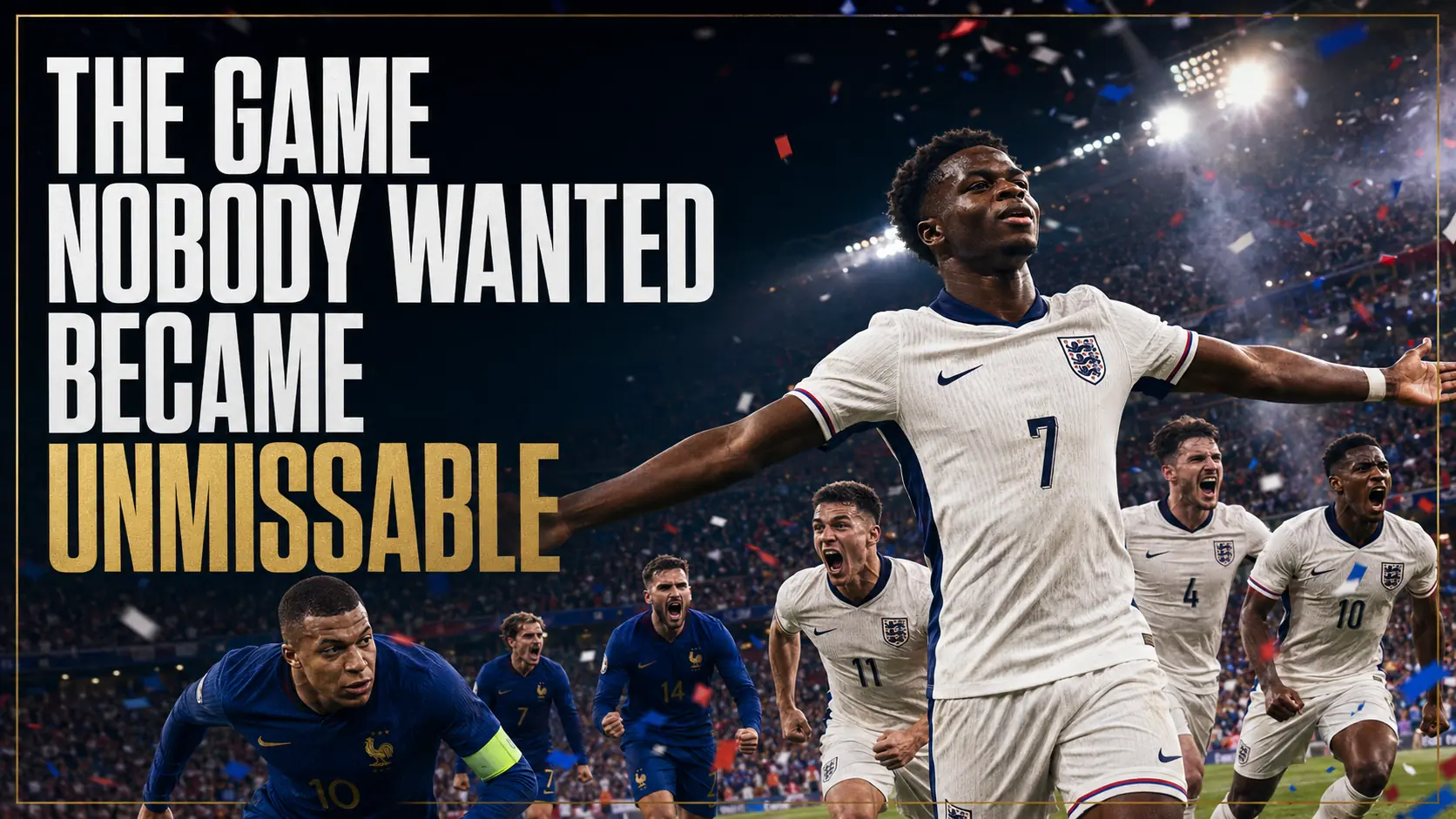
There is something emotionally cruel about playing for third
place.
Both teams arrived after losing semifinals. Both had imagined the
final. Both had already spent weeks carrying the expectations of a
nation. The bronze-medal match was not the destination either side had
crossed an ocean to reach.
Perhaps that disappointment removed the fear.
England played the first half as if restraint had been cancelled.
Declan Rice scored. Ezri Konsa scored. Saka scored twice. By halftime,
the scoreboard showed 4–0 and France looked less like a former world
champion than a team still trapped inside the pain of its semifinal
defeat.
It could have become a quiet execution.
Instead, it became a spectacle.
Mbappé scored after the interval. Bradley Barcola followed. Mbappé
struck again, and suddenly 4–0 had become 4–3. Every comfortable
assumption disappeared. The crowd understood that it was no longer
watching a ceremonial game. It was watching a team try to escape the
impossible.
Saka completed his hat-trick from the penalty spot in the 87th
minute. Ousmane Dembélé made it 5–4 in stoppage time. Then Bellingham
scored England’s sixth and finally closed the door.
Ten goals. Two hat-trick-level individual stories. One match with
almost no time to breathe.
The bronze medal had found its masterpiece.
Mbappé Lost the Match and
Won Time
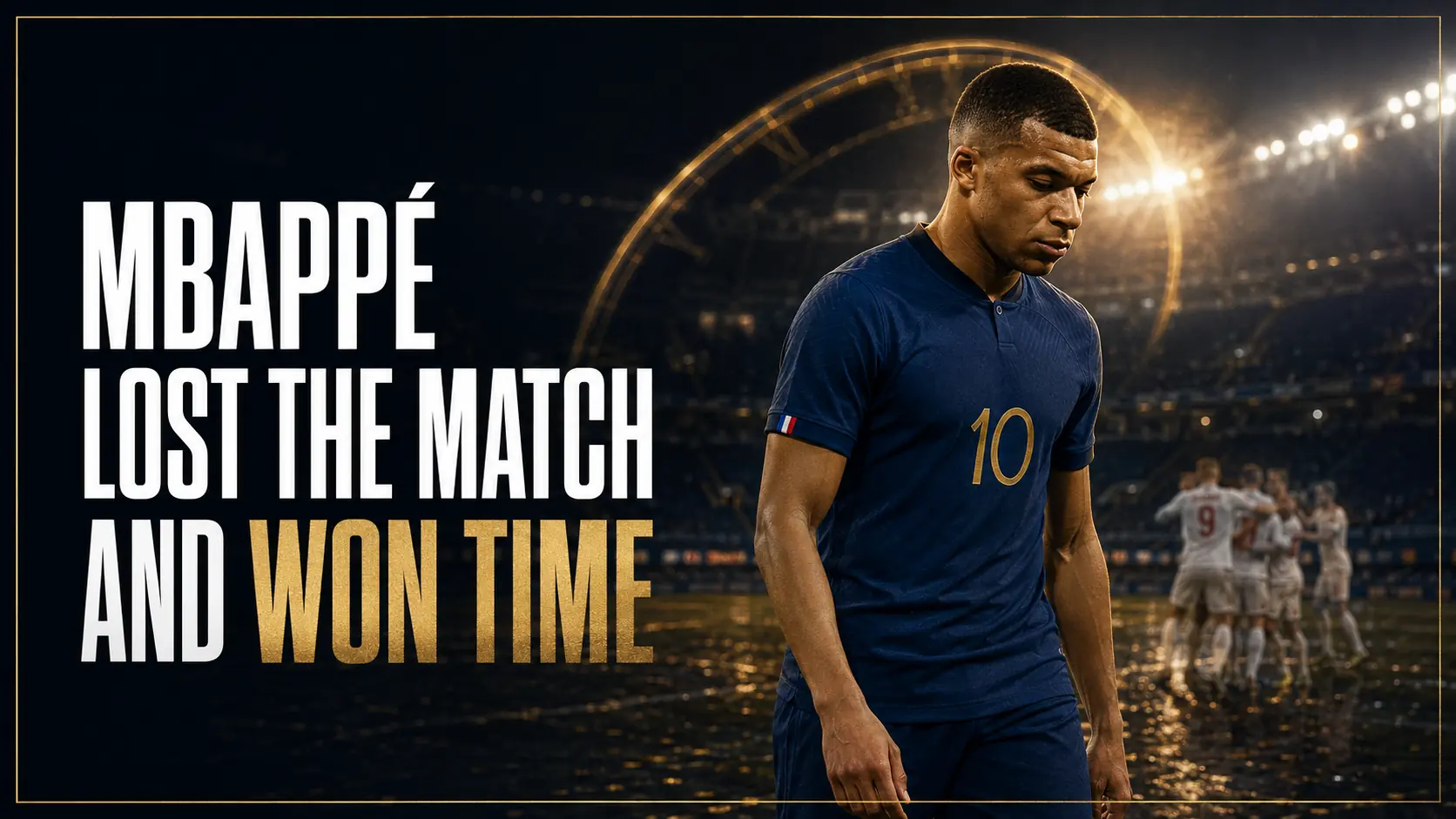
Football has always had two scoreboards.
The first tells us who won today. The second tells us who will still
be remembered decades from now.
England clearly won the first one. Mbappé may have won the
second.
At only 27, the French captain reached 22 World Cup goals in 22
appearances. He scored four in 2018, eight in 2022 and ten in 2026.
Three tournaments were enough to move past every striker who came before
him.
That is not simply consistency. It is an extraordinary concentration
of performance on football’s largest stage.
The record also contains an uncomfortable truth about greatness:
personal history does not wait for perfect circumstances.
Mbappé did not break the record while lifting the trophy. He did it
while France was losing a game it never wanted to play. His expression
carried the contradiction. The achievement was enormous, but the night
still felt incomplete.
That is why his reaction mattered. He said the record was important
for his legacy but admitted he would have preferred to be preparing for
the final. It was the response of someone who understands that
statistics can define a career without completely satisfying the person
who produced them.
Records are public. Regret is private.
Is Mbappé’s Record Already
Safe?
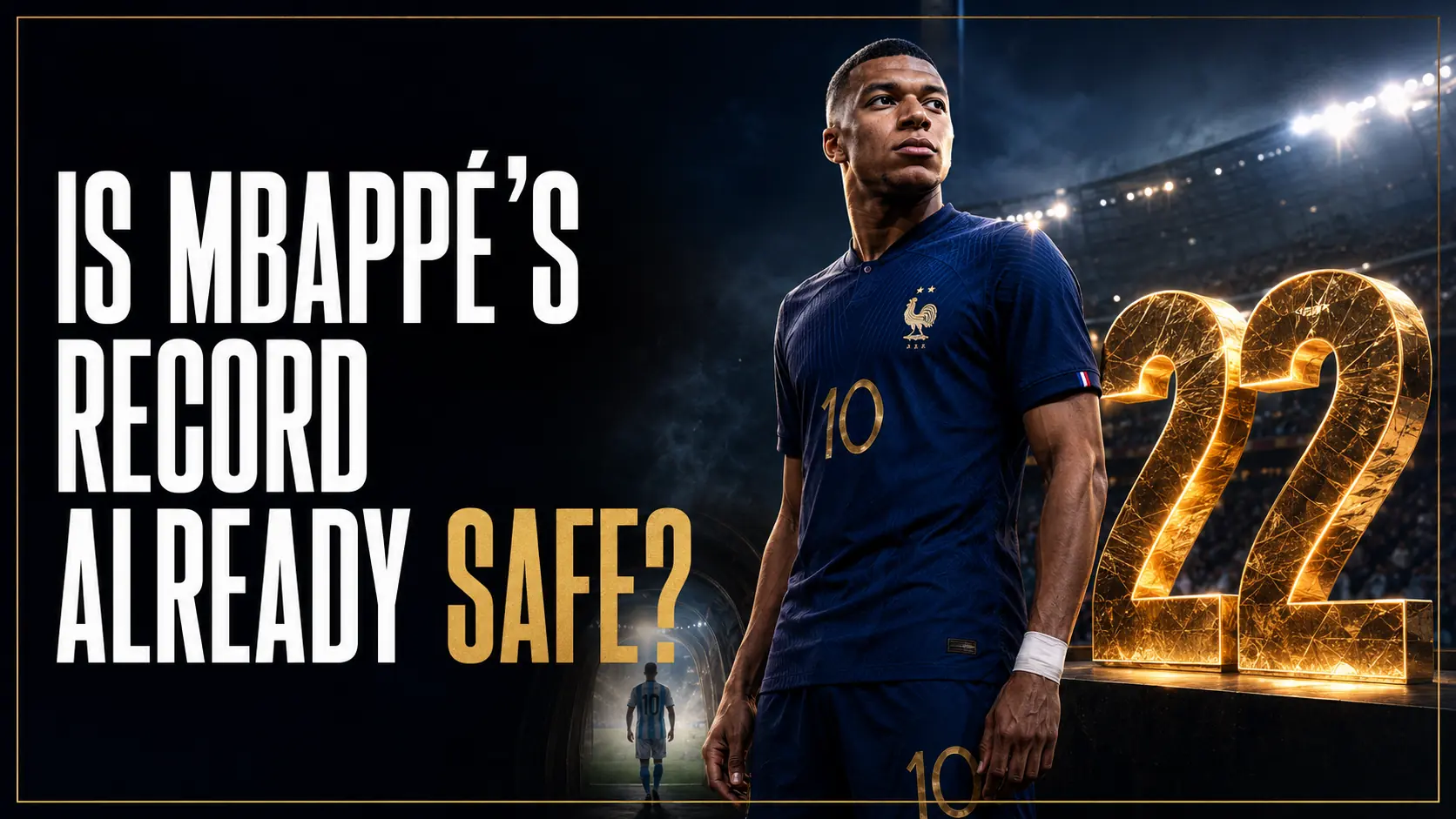
Not yet.
Mbappé ended France’s campaign with 22 World Cup goals. Messi entered
the final against Spain with 21. That means the crown could still change
hands before the tournament ends.
One Messi goal would draw him level. Two would return the record to
the Argentine. And because this is likely to be Messi’s last World Cup
appearance, the final is no longer only about Argentina versus Spain or
Messi versus Lamine Yamal. It has also become the last move in a
historic scoring race between two generations.
But time is on Mbappé’s side.
Messi is approaching the end of his World Cup story. Mbappé will
probably have at least one more tournament. Even if the Argentine
changes the ranking in the final, the Frenchman now appears positioned
to build a total that may survive for generations.
The most important number may not be 22. It may be 27 — Mbappé’s age
when he reached it.
Saka Turned Pain Into a
Statement
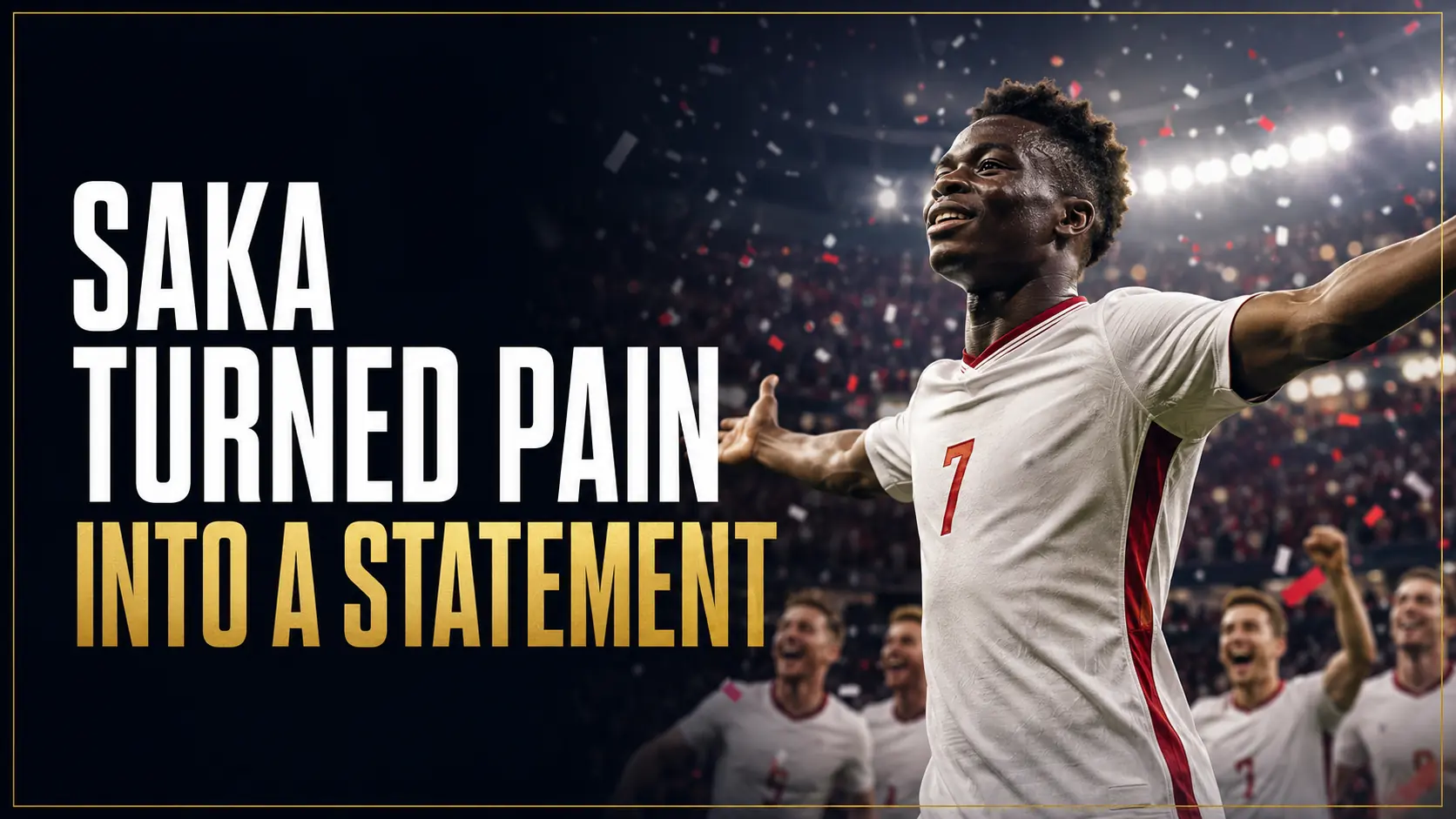
The record belonged to Mbappé, but the match belonged to Bukayo
Saka.
His hat-trick gave England the attacking courage that had often
disappeared under the weight of expectation. He was direct, calm and
decisive, scoring twice during the first-half explosion and once more
when France had transformed the game into a genuine threat.
That final goal was more than a penalty. It was England recovering
control of a story that was slipping away.
For a national team so often defined by what went wrong, third place
offered a different ending. It was not the trophy England wanted, but it
was the country’s best World Cup finish since winning in 1966.
There is wisdom in knowing the difference between disappointment and
failure.
England did not become world champion. But it did not leave
empty-handed, either. It left with a medal, a historic result and
further evidence that Saka and Bellingham can carry the team’s
future.
Sometimes progress arrives wearing a color you did not choose.
The Attention
Economy Does Not Care About Bronze
On paper, a third-place match is a lower-value product than a
final.
In reality, value follows attention — and attention follows emotion,
uncertainty and memorable characters.
The 6–4 score changed everything. Every new goal extended the life of
the event. Highlights travelled across phones and television screens.
Saka’s hat-trick created one story. Mbappé’s record created another.
France’s comeback created suspense. England’s victory created national
pride.
One match produced several narratives for broadcasters, sponsors,
publishers, creators and social platforms to distribute around the
world.
That is the commercial power of sport. The original product lasts 90
minutes, but the story can continue generating attention for days, years
or even decades.
A conventional 2–0 bronze-medal game might disappear into the
tournament archive. A 6–4 game featuring the greatest scorer in World
Cup history becomes searchable, replayable and sellable long after the
stadium lights go dark.
The lesson reaches beyond football.
Markets often undervalue what appears secondary. Everyone competes
for the obvious prize: the final, the prime location, the largest
client, the most fashionable investment. But neglected spaces sometimes
offer better upside because expectations are low and attention is
cheaper to win.
The question is not always, “Is this the biggest stage?”
What This Match Teaches
Us About Money
Money, like football, has two scoreboards.
One shows what you earned today. The other shows what your decisions
may be worth over time.
Mbappé’s record is a form of compound interest. Four goals became
twelve. Twelve became twenty-two. The total looks spectacular now, but
it was built tournament by tournament, game by game, finish by
finish.
That is how most durable wealth is created. Not through one magical
afternoon, but through repeated performance on ordinary days — including
the days that did not unfold as planned.
England offered another lesson. After losing access to the biggest
prize, it still protected the value that remained. The team could not
change the semifinal, but it could change the final memory of its
campaign.
We face similar choices with money and work. A failed plan can tempt
us to abandon the entire season. A missed promotion, a disappointing
investment or a business that grows more slowly than expected can feel
like the end of the story.
It rarely is.
The mature response is to ask what value can still be recovered, what
reputation can still be built and what opportunity remains hidden inside
the disappointment.
A Farewell Hidden Inside
the Madness
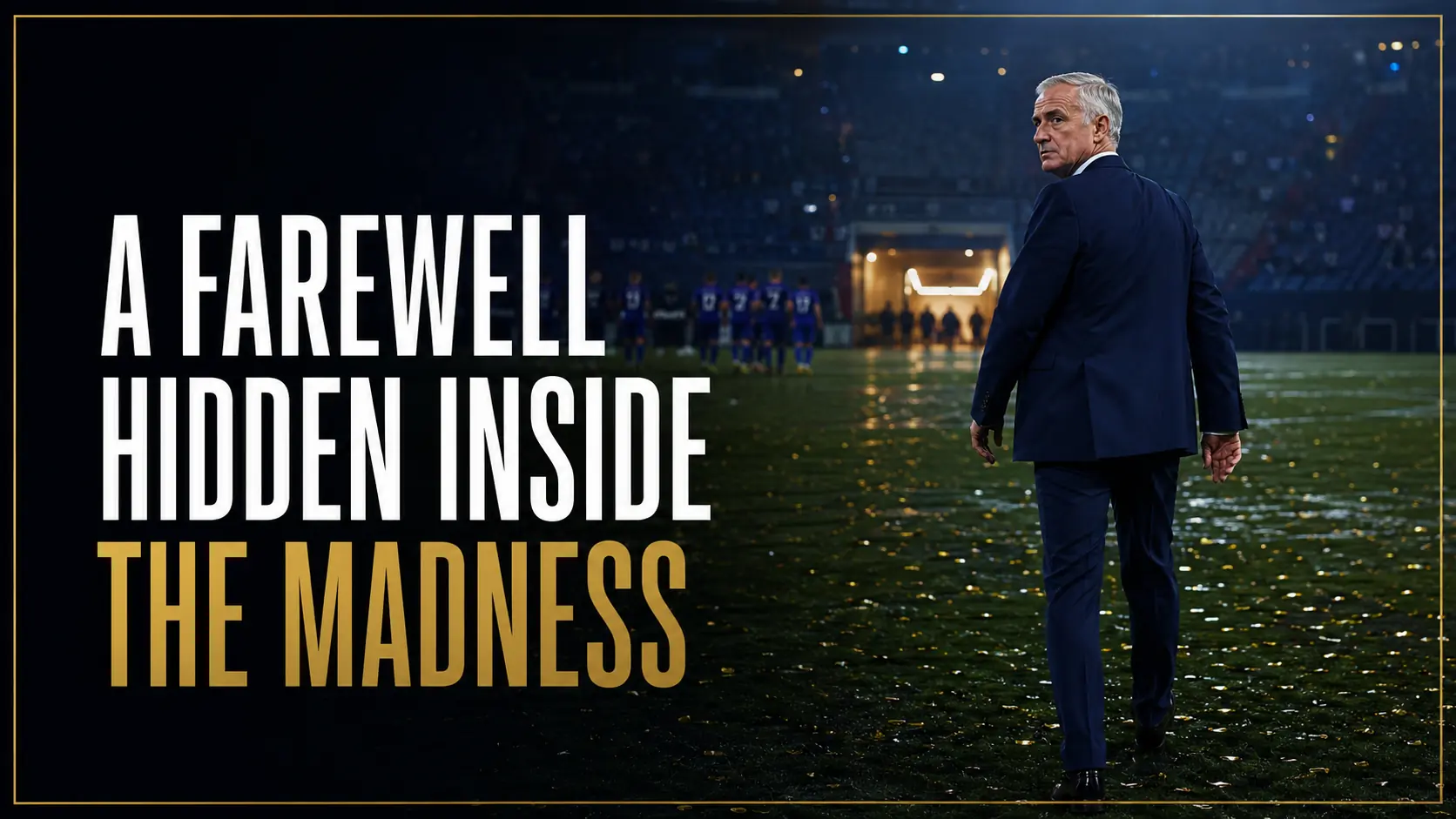
The night also closed a remarkable chapter for France.
It was Didier Deschamps’ final match after 14 years in charge. His
era included the 2018 title, the 2022 final and the transformation of
France into one of international football’s most consistent powers.
His farewell was not elegant. France conceded four goals in the first
half and six in total. Yet even that chaotic ending reflected something
essential about the team he built: it continued to fight when the match
seemed lost.
Legacies are never as clean as commemorative videos make them appear.
They include triumph, fatigue, mistakes, renewal and the moment when
someone else must take control.
Deschamps leaves. Mbappé remains. French football turns the page.
The Record, the Medal and the
Sofa

From the sofa, we thought we were watching the match that came before
the match that mattered.
We were wrong.
England and France reminded us that importance is not assigned by the
schedule. It is created by what people do with the moment they
receive.
England took a painful week and finished with its best World Cup
position in 60 years. Saka turned disappointment into a hat-trick.
France turned 4–0 into a genuine contest. Mbappé turned a defeat into
history.
The scoreboard will always say England 6, France 4.
But the deeper story is that no opportunity is automatically small,
no setback owns the ending and no record is built only on perfect
days.
The game for third place became a first-class memory.
And for at least one night, Kylian Mbappé stood alone above every
goalscorer the World Cup has ever known.
The headline is only the start.
Ask Nova what this story could change in your budget, savings, debt, investments or next purchase.
