A crypto exchange is more than a trading interface. It is a custody, liquidity, identity and operational dependency that must be managed deliberately.
MONEY NO SOFÁ — PREMIUM EDITORIAL
An exchange can be liquid, popular, and technically sophisticated while still being the wrong place for every dollar of your crypto. The hidden risk is not only hacking. It is dependency.
Approx. 17–19-minute read
Most investors evaluate a crypto exchange by the assets it lists, the fees it advertises, and the speed of its interface. Those features matter, but they describe the experience during normal conditions. Exchange risk becomes visible when conditions are abnormal: a sudden market crash, a withdrawal delay, a compliance review, a compromised email account, a chain outage, a delisting, a regional restriction, or a failure at the company itself.
The phrase “not your keys, not your coins” captures one part of the issue, but it is too compressed to guide a real decision. Self-custody has its own failure modes. A person can lose keys, expose a seed phrase, sign a malicious transaction, mishandle inheritance, or send funds to the wrong network. The mature question is not whether exchanges are bad and wallets are good. It is which risks should be delegated, which should be retained, and how much value should depend on any single system.
An exchange performs several jobs at once. It connects fiat money to crypto markets, matches buyers and sellers, holds customer assets, manages identity and compliance, supports networks, processes withdrawals, and sometimes offers lending, staking, derivatives, or structured products. Convenience comes from combining those functions. Concentration risk comes from the same design.
This article builds an exchange-risk framework for ordinary investors. The objective is not to create fear. It is to prevent convenience from becoming an unexamined single point of failure.
The exchange is part of the investment
Buying an asset through an exchange creates two exposures. The first is market exposure to Bitcoin, Ether, a stablecoin, or another token. The second is exposure to the exchange’s custody, security, solvency, technology, policies, and jurisdiction. Investors often track the first exposure continuously while barely examining the second.
Ownership on a platform is usually represented by an account balance. The exchange controls the private keys associated with pooled or segregated wallets and updates an internal ledger when customers trade. The blockchain may not record every customer transaction. The platform must reconcile internal claims with the assets it controls and the liabilities it owes to users.
During normal operations, this architecture is efficient. Trades are fast and inexpensive because most activity occurs inside the platform’s systems. During stress, customers depend on the exchange to remain solvent, secure, connected, and willing to process withdrawals. A blockchain that continues operating does not guarantee that a specific account remains accessible.
The practical implication is simple: selecting an exchange is an investment decision. It deserves the same skepticism applied to a token, fund, bank, or broker.
Proof of reserves is useful—but incomplete
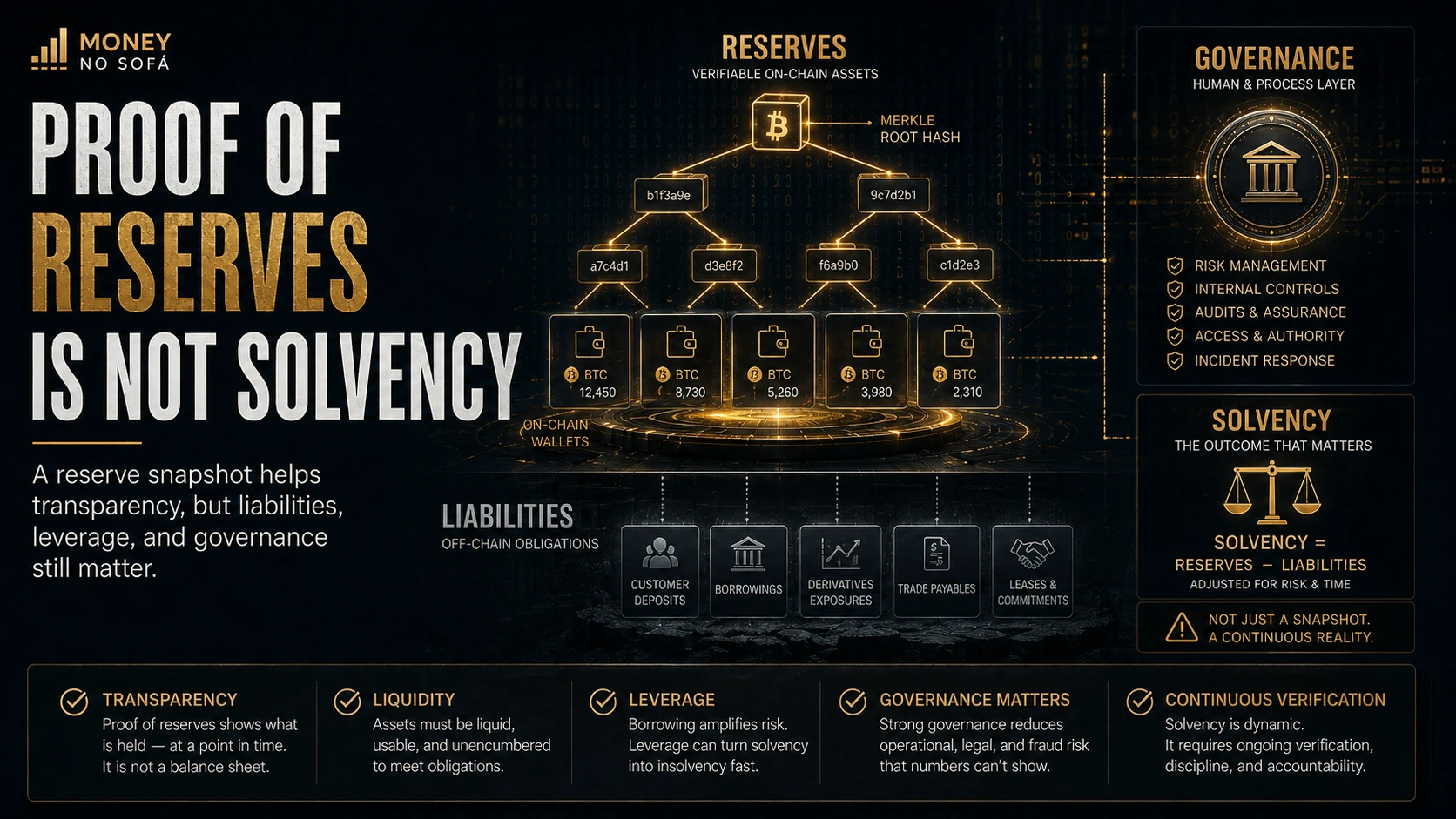
Proof of reserves uses cryptographic methods and on-chain verification to show that a platform controls assets and that customer balances are included in a dataset. Merkle trees can allow an individual user to confirm inclusion without revealing every other customer’s balance. Zero-knowledge proofs can improve privacy while preserving verification.
This is valuable. A user should prefer verifiable information over a company asking for blind trust. Regular reserve disclosures can make it harder to conceal a simple asset shortfall and can teach users to verify their own balances. Binance, for example, provides a proof-of-reserves process and describes the use of Merkle trees and zero-knowledge methods. Eligible readers who want to examine the platform directly can check the current Binance registration offer with code BITCOIN15 and then verify the exact regional entity, fees and withdrawal rules before depositing.
The limitation is scope. Proof of reserves is commonly a point-in-time view. It may not capture every off-chain liability, legal claim, pledged asset, related-party transaction, operating expense, or risk taken elsewhere in a corporate group. It does not guarantee that withdrawals will always remain open or that governance will respond correctly during a crisis.
Treat proof of reserves as one layer in due diligence. Combine it with legal structure, financial transparency, withdrawal history, security controls, regulatory status, and the investor’s own exposure limits.
Withdrawal risk is the test that matters

An exchange balance feels liquid because it can be traded instantly. That is not the same as withdrawal liquidity. A platform may pause withdrawals for wallet maintenance, network congestion, compliance review, suspicious activity, security incidents, regional restrictions, or insolvency. Some interruptions are routine and temporary. Others reveal deeper problems.
Investors frequently discover withdrawal rules only when they urgently need to move funds. Address whitelists may have waiting periods. New devices can trigger holds. Identity documents can require renewal. A bank transfer route may not support the desired amount or country. A token can exist on several networks, and choosing the wrong one can create a costly support case.
The best practice is to test the entire path when the account is new and the market is calm. Deposit a small amount, trade, add a withdrawal address through the official interface, confirm network compatibility, and move a small amount to a wallet you control. Record the fee, confirmation time, and any security delay.
A successful test does not guarantee future access, but it turns an assumption into observed behavior. It also teaches the investor how the system works before stress removes patience.
Account access is a custody risk
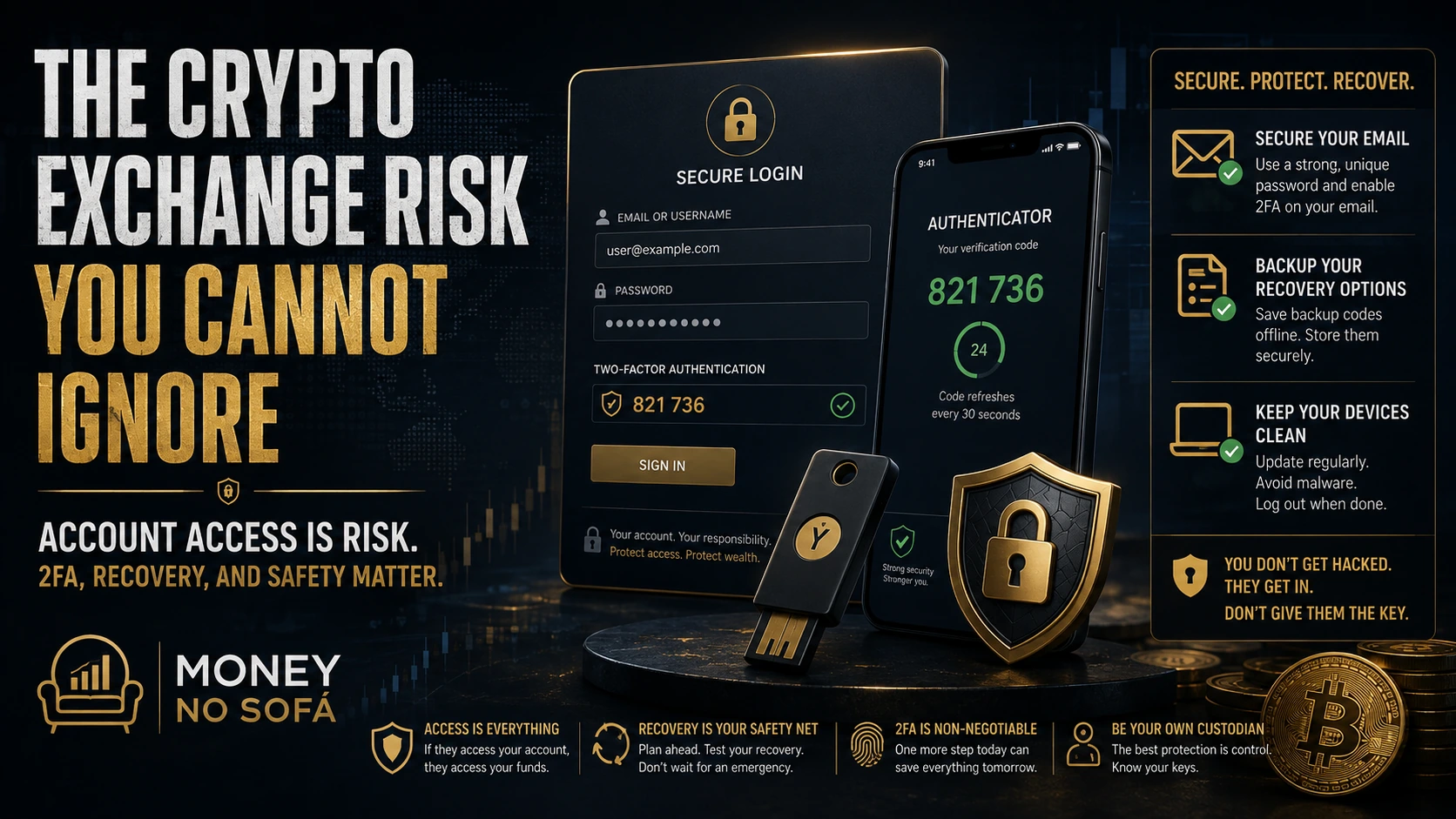
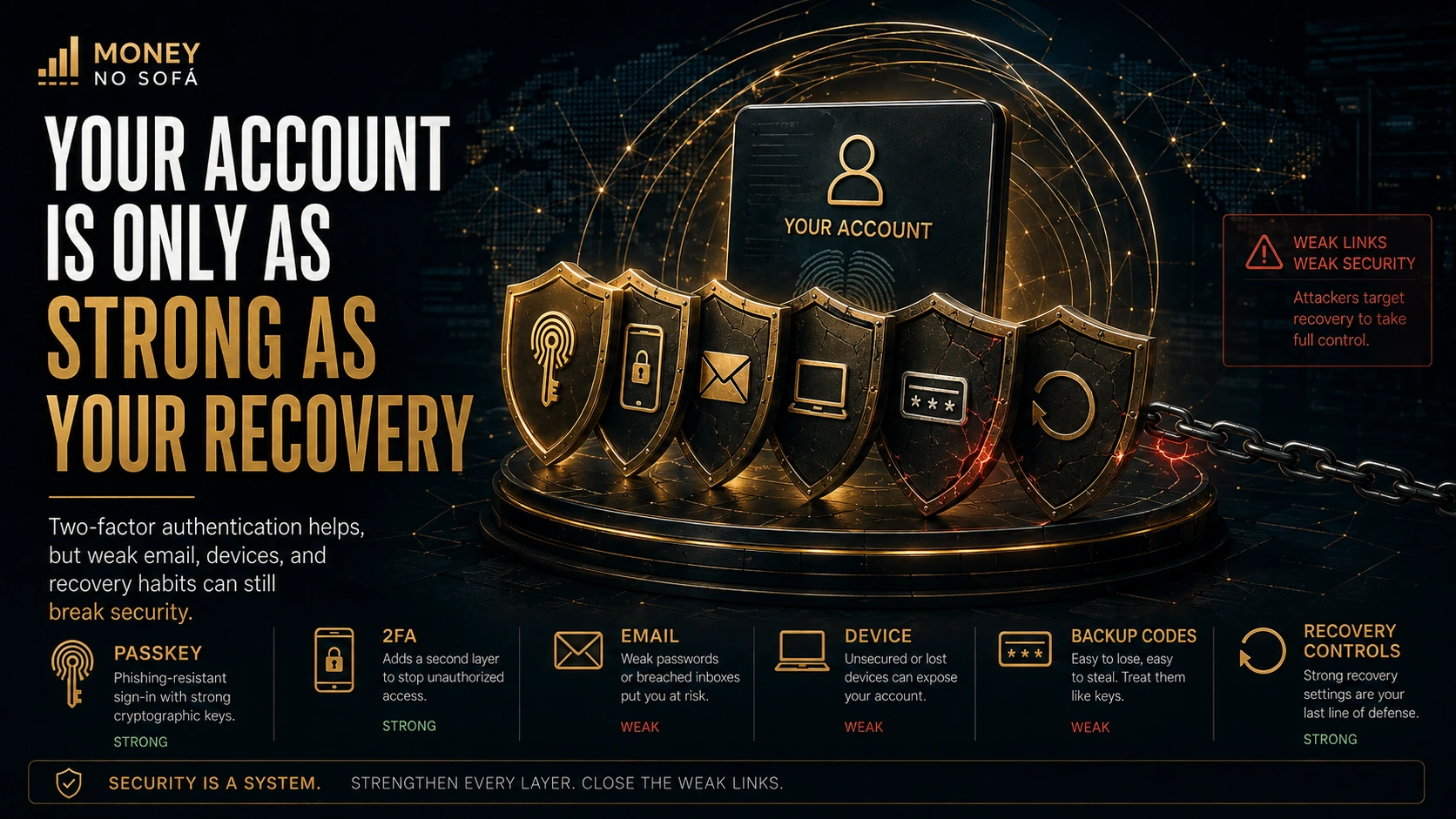
Exchange security is shared between the platform and the user. The company can invest in cold storage, monitoring, withdrawal controls, and incident response. The customer can still lose access through email compromise, SIM swapping, weak passwords, malware, fake support, or social engineering.
The security boundary extends beyond the exchange. The email account often controls password resets. The phone may receive authentication codes. A browser extension can alter addresses. A compromised cloud backup can expose documents or recovery data. Attackers target the weakest connected system, not the most sophisticated one.
Use a unique password stored in a reputable password manager. Prefer passkeys or hardware-based authentication when supported. Protect the email account with separate strong authentication. Enable anti-phishing codes, address allowlisting, device management, and withdrawal locks. Never accept support through unsolicited direct messages.
Recovery deserves equal attention. If a phone is lost while traveling, can the account be restored without creating a security shortcut? Are identity documents current? Does a trusted person know what accounts exist if the investor dies? Security that only works during an ordinary week is not complete.
Products multiply counterparty risk
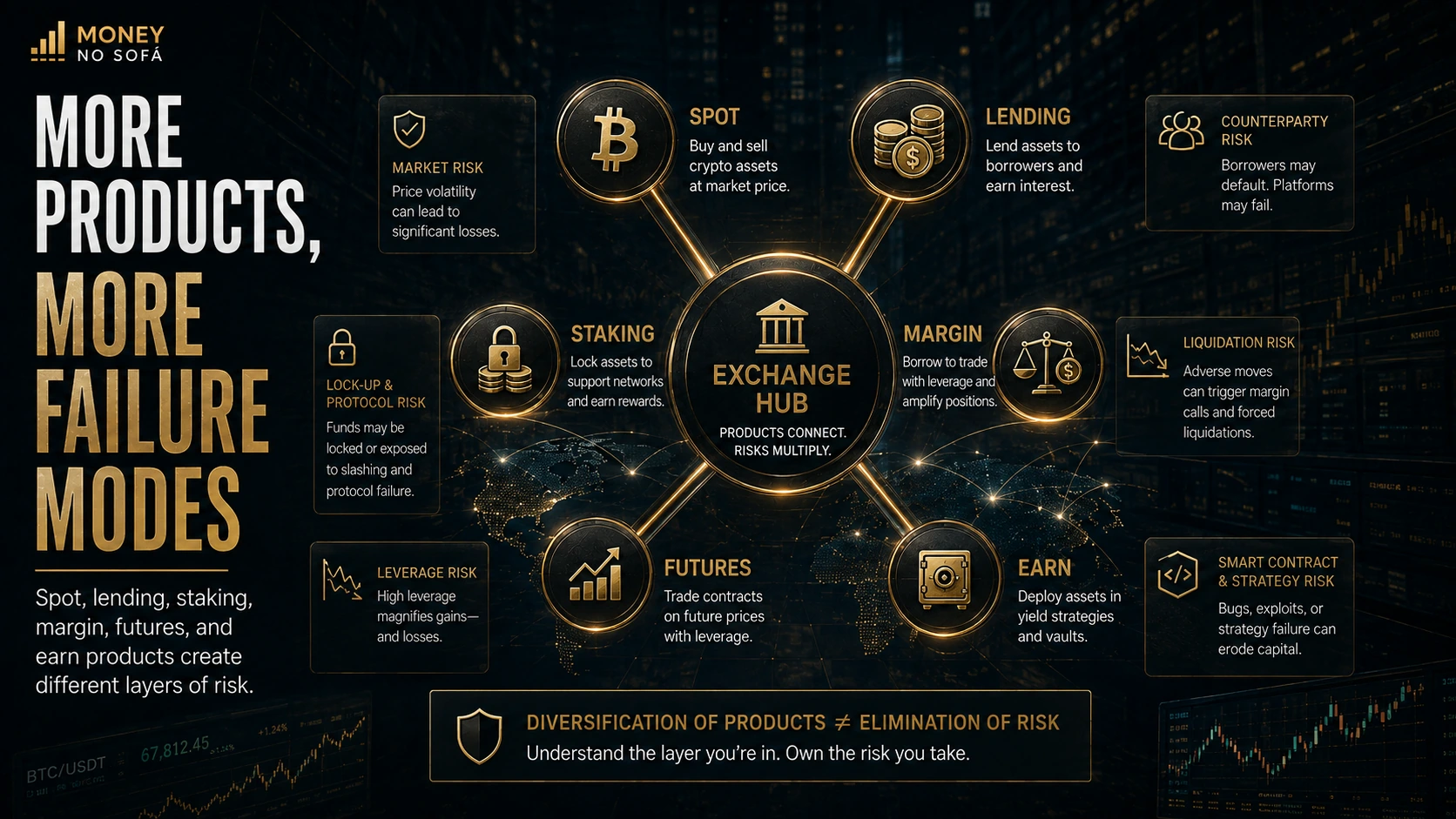
A modern exchange may offer spot trading, margin, futures, options, staking, lending, earn products, copy trading, payment tools, and token launches. The interface can make these products look like features inside one account. Economically, they can involve very different risks.
Spot custody means the exchange safeguards an asset. Margin introduces borrowing and liquidation. Earn products may involve lending, internal treasury activity, third-party protocols, or structured exposure. Staking can involve validator performance, lockups, slashing, and derivative tokens. Futures add leverage and funding costs.
The investor should never infer safety from proximity. A product displayed beside a spot wallet is not automatically equivalent to cash. Read the product terms, identify who owes what to whom, determine whether principal is at risk, and understand how redemptions work during stress.
Complexity should earn its place. If the expected return is small, a product that introduces lockup, counterparty, smart-contract, or liquidation risk may be unattractive even when the advertised yield looks higher than a bank account.
Exchange concentration changes behavior
Keeping every crypto asset, stablecoin, and trading strategy on one platform simplifies administration. It also creates a single dependency for market access, identity, customer support, records, and withdrawals. A policy change, regional restriction, or account review can affect the entire portfolio at once.
Diversification does not mean opening accounts everywhere. Each additional platform creates more passwords, tax records, attack surfaces, and operational work. The goal is to separate functions deliberately. A primary exchange can handle fiat access and liquid trading. Long-term holdings can move to self-custody or another qualified solution. A second verified fiat route can serve as backup.
Concentration should be measured by impact, not platform count. Ask how much money becomes inaccessible if one account is unavailable for thirty days. Ask whether essential tax records can be exported independently. Ask whether a stablecoin used as operating cash depends on the same venue used for speculative trading.
The right structure reduces the chance that one event damages every objective simultaneously.
Self-custody is not automatic safety
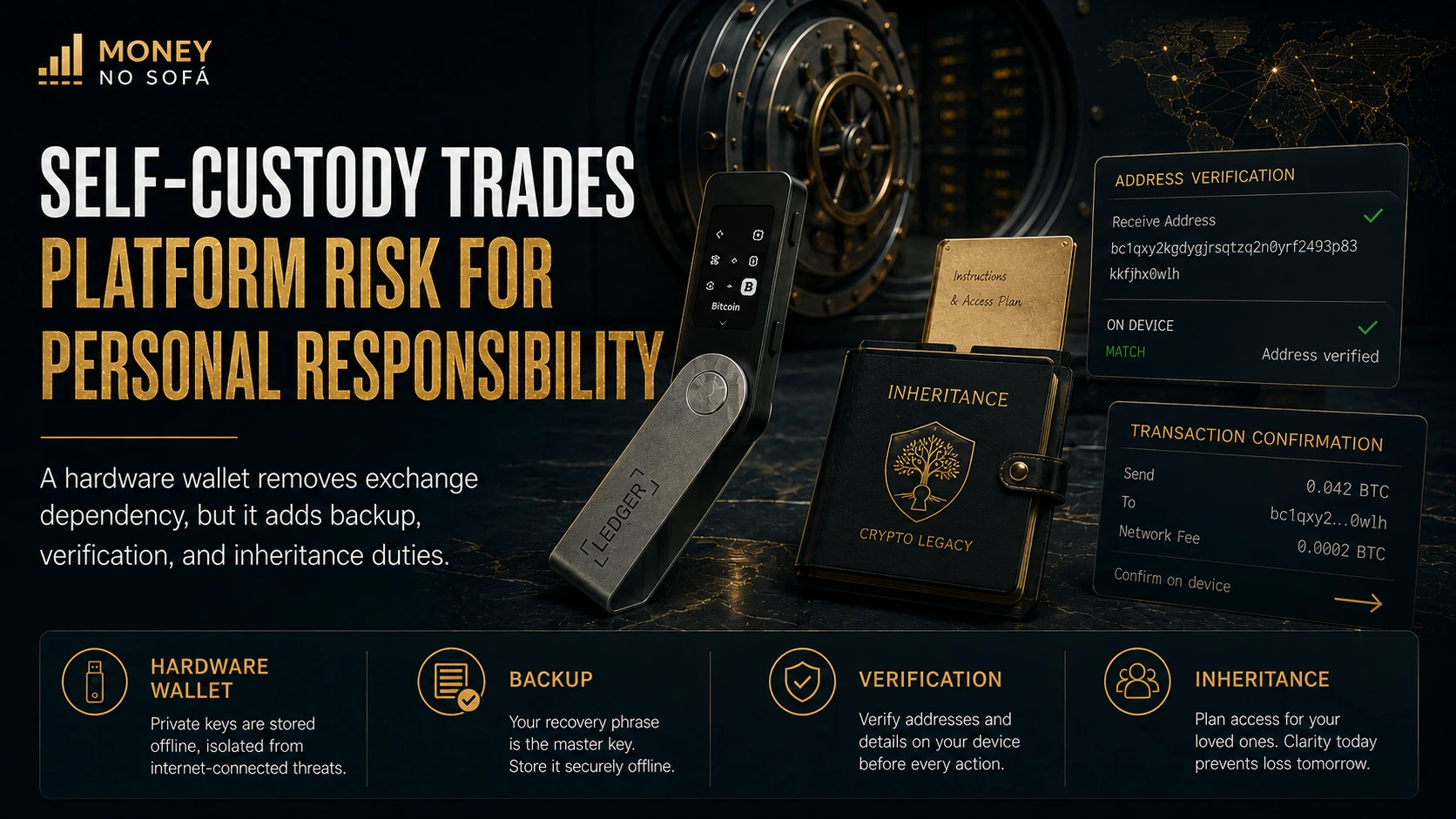
Self-custody gives the holder direct control over private keys. It can reduce counterparty exposure and preserve the ability to transact without waiting for a platform. It also removes the institution that might recover an account, block a suspicious withdrawal, or guide a confused family member.
The most dangerous self-custody errors are often mundane. A seed phrase is photographed and uploaded to the cloud. A fake wallet asks for recovery words. A hardware device is initialized incorrectly. A user signs a malicious approval. A backup is so well hidden that nobody can find it after death. A test recovery is never performed.
Use self-custody when the value of direct control justifies the responsibility. Start with a small amount. Buy hardware from an official source. Verify software where practical. Write backups offline, protect them from fire and theft, and test recovery before moving a significant balance. Separate long-term storage from wallets used for applications.
The objective is not ideological purity. It is a custody design that survives both institutional failure and human error.
A venue due-diligence scorecard
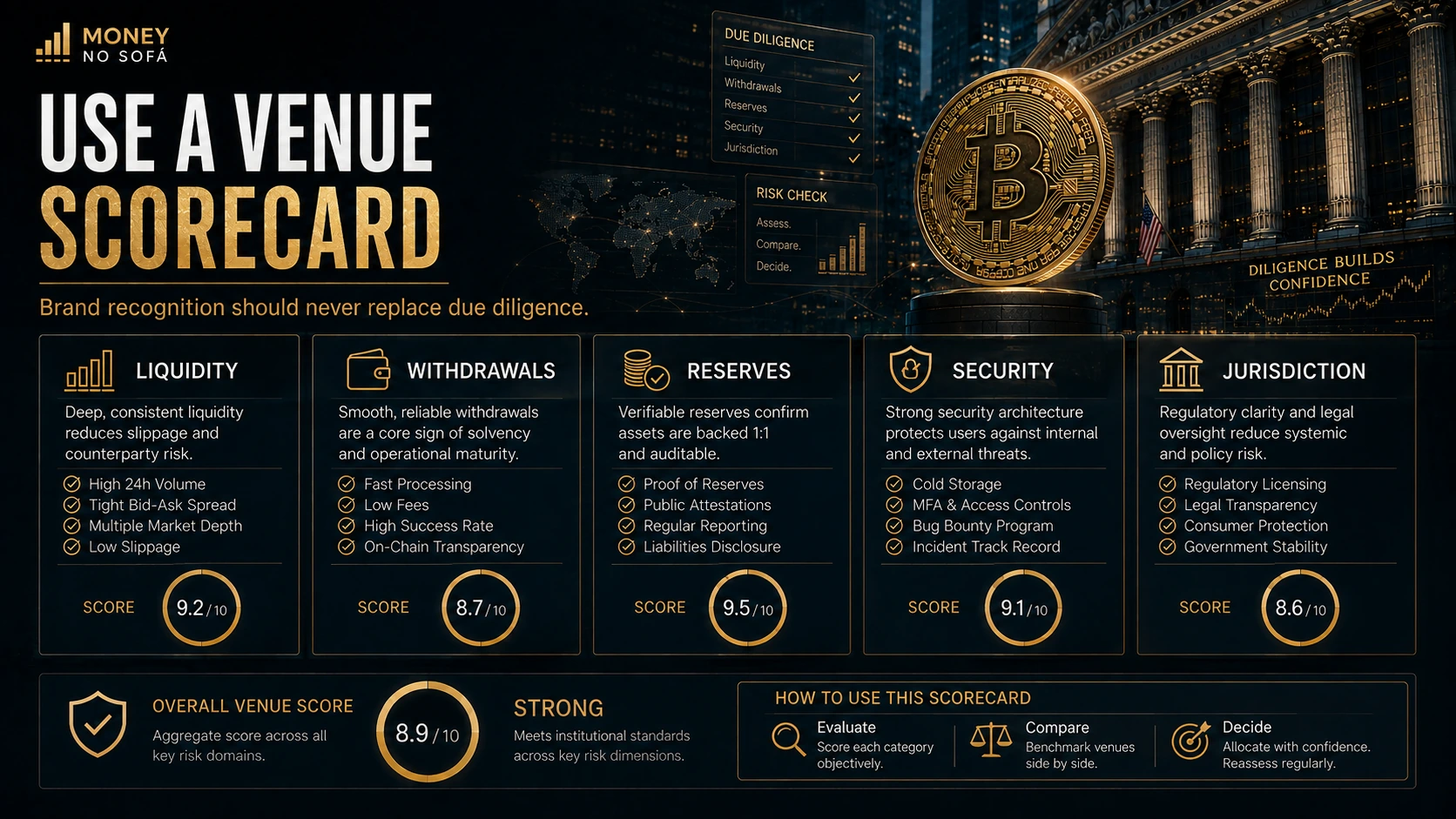
A useful scorecard compares the factors that affect the full customer journey. Begin with legal availability and the exact entity serving your country. Review fiat rails, supported networks, asset liquidity, spreads, fees, and tax exports. Then assess security, transparency, and recovery.
Do not score every category equally. A trader may prioritize depth and execution. A long-term buyer should prioritize withdrawals and custody. A business may care about account limits, documentation, and payment integration. A beginner may value a clear interface and support, but should not sacrifice basic security for convenience.
Use observable evidence. Test order execution with a small trade. Test a withdrawal. Download a statement. Review proof-of-reserves information. Confirm support channels through the official site. Read recent product and delisting notices. Verify that the mobile application comes from the official publisher.
Revisit the scorecard annually or after a major regulatory, ownership, security, or product change. A platform decision is not permanent.
| Category | Questions to ask | Warning sign |
|---|---|---|
| Legal access | Which entity serves my country? What protections and restrictions apply? | Unclear entity or unsupported jurisdiction |
| Liquidity | Are spreads and depth acceptable for my usual order size? | Large slippage outside headline pairs |
| Custody | Are reserves verifiable? Are assets segregated or reusable? | Opaque claims without verifiable detail |
| Withdrawals | Can I withdraw the asset and network I intend to use? | Repeated unexplained delays |
| Security | Passkeys, allowlists, device controls, anti-phishing? | Weak recovery and no withdrawal controls |
| Operations | Statements, support, tax exports, status communication? | Missing records or unofficial support channels |
A practical place to compare the market
Use Binance as one candidate in a structured venue comparison. Check the exact entity and services available in your region, review proof-of-reserves information, and run a small withdrawal test before committing a larger balance.
Check the current Binance referral offer with code BITCOIN15.
Availability, eligibility, fees, products, and referral benefits vary by country and account. Crypto assets are volatile and may result in loss.
The 70/20/10 operating model
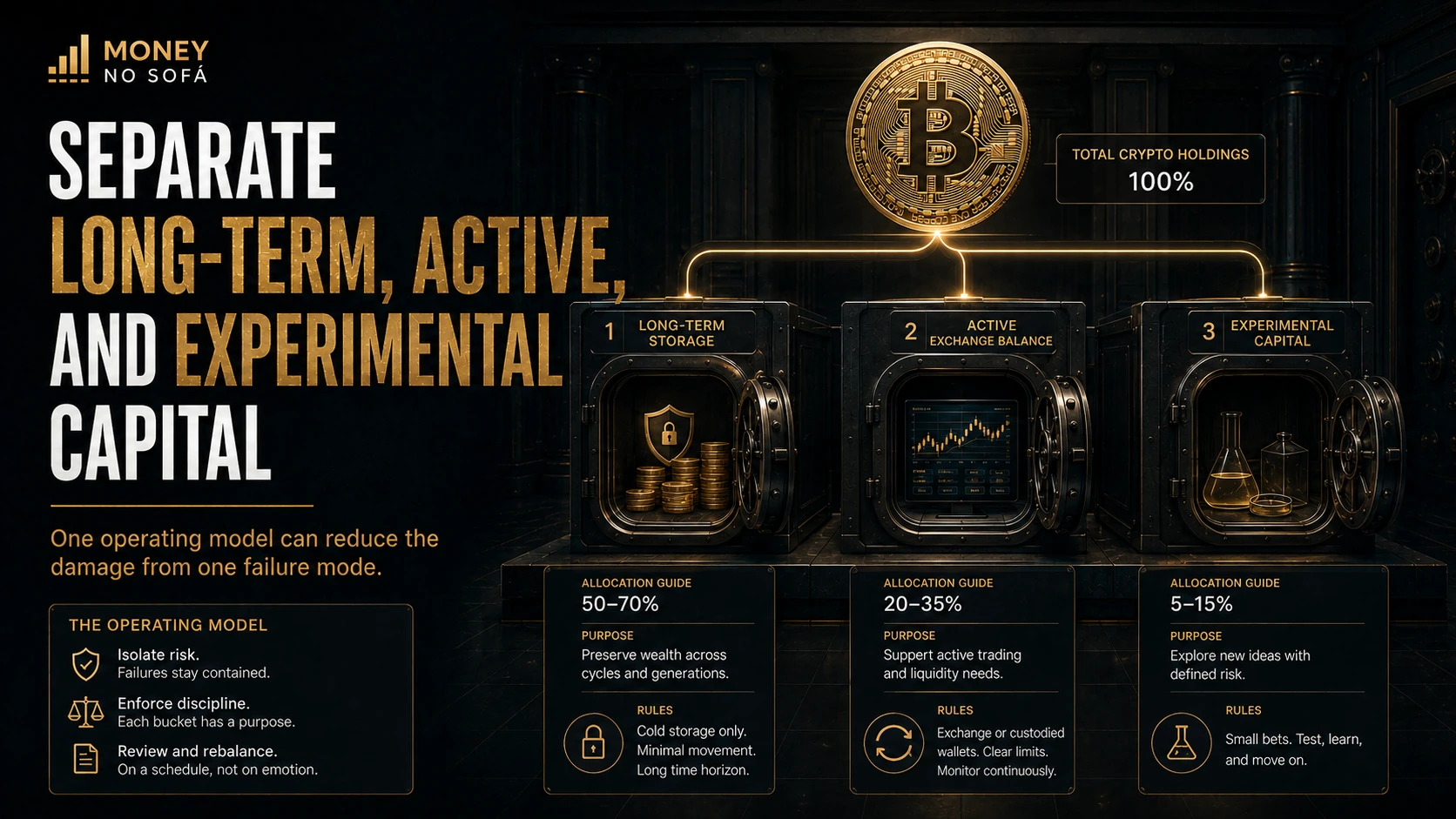
A simple operating model can prevent the exchange account from becoming an undefined warehouse for every asset. The percentages are examples rather than universal advice, but the structure is useful. Long-term capital belongs in the custody arrangement chosen for long-duration security. Active capital belongs on the venue needed for near-term transactions. Experimental capital should be capped at an amount the investor can lose completely.
For one investor, the structure might be 70% long-term custody, 20% active exchange balance, and 10% experimental strategies. For another, direct custody may be inappropriate and a regulated product may hold the long-term allocation. The principle is functional separation.
Functional separation improves decision-making. A market panic does not require moving the entire portfolio. A compromised experimental wallet does not expose the long-term reserve. A temporary exchange review does not remove every form of access. Records are easier to interpret because each account has a defined purpose.
Write the policy before allocating. Specify maximum platform exposure, approved assets, withdrawal thresholds, leverage prohibition or limits, and the trigger for moving funds. A written rule protects against convenience slowly expanding into concentration.
An incident plan before the incident
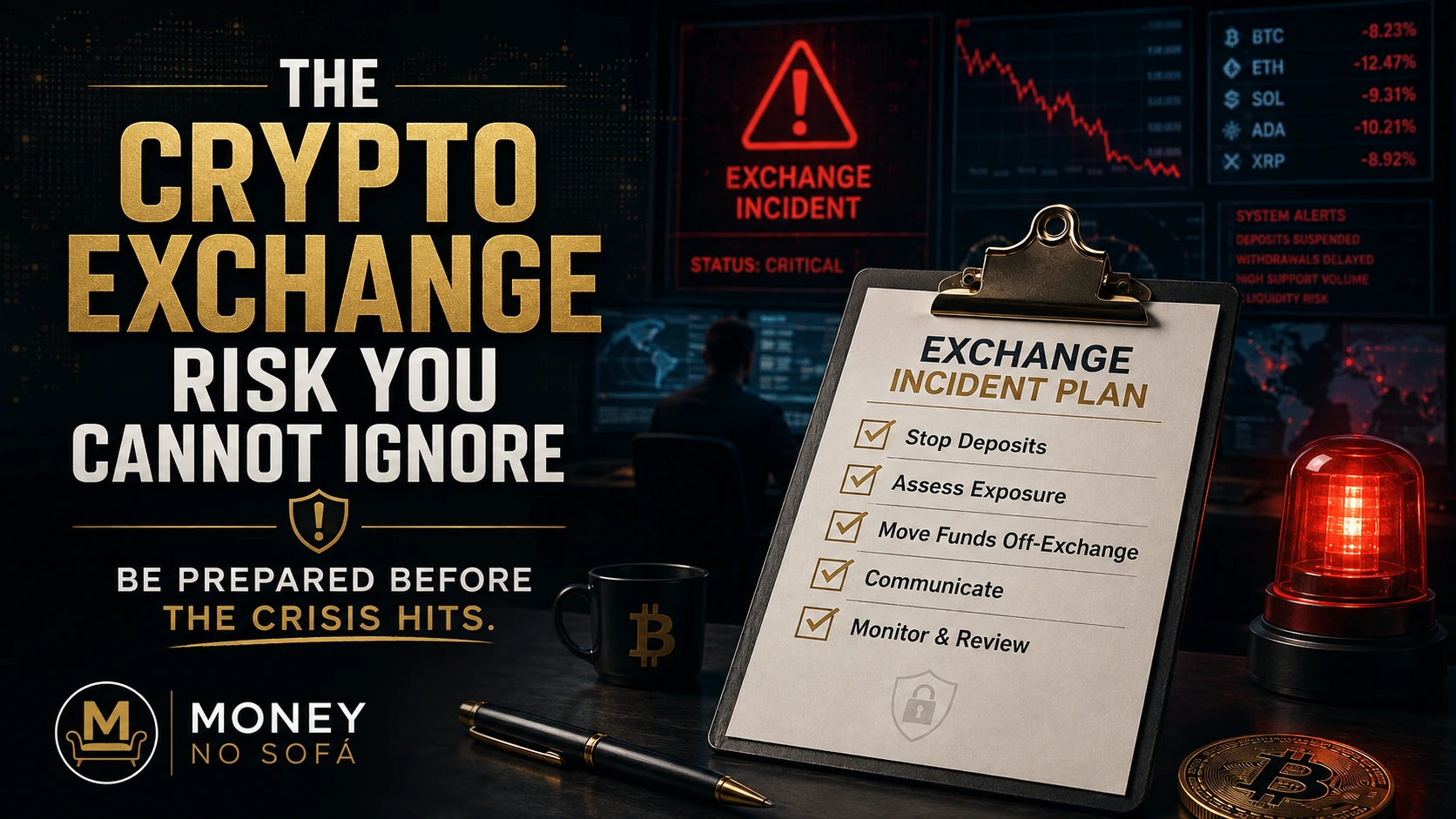
Prepare for three scenarios: suspected account compromise, inability to withdraw, and platform-wide disruption. The response differs. A compromised account requires securing email and devices, revoking sessions, changing credentials through official channels, and contacting verified support. A withdrawal delay requires confirming network status, account notices, transaction IDs, and platform announcements. A platform disruption requires preserving evidence and avoiding scams that imitate support.
Maintain offline records of account identifiers, official support URLs, recent statements, deposit addresses, transaction hashes, and the entity serving the account. Do not store passwords or seed phrases in the same incident document. Tell a trusted person where the document exists.
During public crises, fake recovery services appear quickly. Nobody needs a seed phrase to help trace a transaction or open a support case. Do not install remote-access software at the request of an unsolicited contact. Verify every domain independently.
An incident plan cannot guarantee recovery. It can prevent a manageable problem from becoming a second loss caused by panic.
- Secure connected accounts beginning with email and mobile service.
- Use only official support reached through a bookmarked domain or verified application.
- Preserve evidence including timestamps, transaction IDs, screenshots, and statements.
- Do not pay recovery fees to unknown people or reveal private keys.
- Review remaining exposure and move unaffected assets only through tested routes.
Frequently asked questions
Is proof of reserves enough to trust an exchange?
No. It can provide useful evidence about on-chain assets and the inclusion of user balances, but it may not reveal every liability, legal claim, governance weakness, or operational risk. Use it as one layer of due diligence.
How much crypto should remain on an exchange?
Only the amount needed for the exchange’s intended function and an amount whose temporary loss of access would not damage essential financial goals. Long-term, active, and experimental capital should be separated deliberately.
Is self-custody always safer?
No. It removes exchange dependency but creates personal key, backup, transaction, device, and inheritance risks. Safety depends on competent execution and a tested recovery plan.
Why test a withdrawal before investing more?
A small test confirms network compatibility, account permissions, security holds, fees, and the actual path from an exchange balance to a wallet. It turns a future assumption into present evidence.
What is the biggest account-security mistake?
Treating the exchange password as the entire security boundary. Email, phone service, devices, cloud backups, browser extensions, and social engineering can all become the real point of failure.
Can diversification across exchanges reduce risk?
It can reduce dependency on one company, but each additional account creates complexity and attack surface. Diversify functions and access routes, not merely logos.
Records, taxes, and continuity
Exchange risk includes information continuity. A user may retain access to assets but lose the transaction history needed to calculate cost basis, income, fees, transfers, and taxable events. Export statements regularly in a durable format. Do not assume records will remain available forever after an account closes or a jurisdiction changes.
Label transfers between personal wallets and exchanges so they are not mistaken for sales. Record transaction hashes and the purpose of each account. Separate business and personal activity. The administrative system should be understandable to an accountant or executor who did not participate in the trades.
Continuity also means maintaining alternatives. A verified second fiat route, a tested self-custody wallet, and current identity documents can reduce the pressure to solve everything during a crisis. Backup infrastructure may feel inefficient during normal conditions. Its value appears when the primary route is unavailable.
The best exchange relationship is replaceable. A user should be able to move assets, export records, and continue operating without depending on one company’s permanent existence.
Why platform governance matters
A technically secure platform can still expose customers through governance. Who can move treasury assets, approve listings, change risk limits, pause withdrawals, or alter product terms? How are conflicts between trading, custody, lending, and market-making activities managed? Users rarely see every internal control, but they can look for transparent policies, independent oversight, incident reporting, and consistent communication.
Governance becomes especially important when a platform expands rapidly across products and countries. The same brand may operate through different legal entities with different licenses, customer agreements, and recourse. The application can look identical while the contractual relationship changes by jurisdiction. Read the entity named in the terms rather than assuming the global brand is one uniform company.
Public incidents should be evaluated by the response, not only the event. Did the company communicate promptly? Were affected services isolated? Was a postmortem published? Were customers made whole where appropriate? Were controls changed? No financial institution can promise that an incident will never occur. Mature institutions demonstrate how they detect, contain, disclose, and learn.
Investors should also watch incentive conflicts. A venue may profit when customers trade more, borrow, use leverage, or buy newly listed assets. Education and risk warnings help, but the customer must maintain an independent policy. The platform’s interface is designed to offer products. The investor’s plan must decide which products are unnecessary.
Test the exit while conditions are normal
An exchange account should never be evaluated only by how easily money enters. Test a modest withdrawal to the exact wallet and network you expect to use later. Record the fee, confirmation time, security checks, address controls, and the evidence retained for accounting. Repeat the test after major account or device changes.
This does not prove that withdrawals will remain available during a crisis. It exposes avoidable operational failures before urgency appears. A recovery phrase that was never verified, an unsupported network, a forgotten allowlist delay, or an account whose identity review is incomplete can turn a market event into a custody event.
Dependency is the hidden risk
The most important exchange risk is not a single hack or company failure. It is the accumulation of dependency. When the same platform controls market access, custody, identity, records, leverage, yield, and withdrawals, one operational event can affect the entire financial plan.
Exchanges are useful. They make crypto accessible, liquid, and easier to integrate with ordinary money. The correct response is not avoidance. It is bounded use: choose carefully, secure the account, verify reserves where possible, test withdrawals, limit balances, separate functions, and maintain recovery paths.
The investor should be able to explain why each asset is on an exchange and what happens if the account is unavailable tomorrow. If there is no answer, convenience has already become risk.
A practical place to compare the market
Binance can serve as a market-access venue for eligible users who complete their own due diligence. Use the referral link only after verifying availability, fees, security settings, and withdrawal support for the assets and networks you intend to use.
Check the current Binance referral offer with code BITCOIN15.
Availability, eligibility, fees, products, and referral benefits vary by country and account. Crypto assets are volatile and may result in loss.
Could Trump Lock Up Bitcoin?
Go deeper into the custody, seizure, regulation and government-control layers that sit between Bitcoin’s network and real-world access.
Educational notice: This article is general editorial information, not personalized financial, investment, legal, accounting, tax, or security advice. Crypto products, rules, prices, and availability can change rapidly.
Selected sources
Continue Learning About Bitcoin
For the market risks that can make an exit harder, read about altcoin liquidity risk. New to the subject? Start with Bitcoin after 50.
For a book-length introduction to Bitcoin’s origins, Satoshi and the ideas behind money, explore The Bitcoin Trilogy — Complete Set.
The headline is only the start.
Ask Nova what this story could change in your budget, savings, debt, investments or next purchase.