The best small business idea may be a boring problem people hate solving. Learn how to score recurring pain, package a service, price it and turn annoyance into revenue.
MONEY NO SOFÁ — MAKE MONEY
Most people look for exciting business ideas. A more reliable place to look is the pile of repetitive, annoying, easy-to-delay problems that already cost businesses time, money and attention.
Approx. 17–19-minute read
Some businesses are born from invention. Others are born because everyone in the room keeps saying, “I hate doing this.”
The second category is less glamorous and often more practical. Appointment reminders, CRM cleanup, invoice follow-up, review responses, spreadsheet reconciliation, lead qualification, subscription audits, vendor comparisons, listing maintenance, document organization and recurring reports rarely make anyone feel like a visionary. That is exactly why they can become businesses.
A profitable service does not need to solve a new problem. It needs to solve an existing problem better enough, consistently enough, and with less friction than the client experiences today.
The U.S. Small Business Administration’s 2026 small-business FAQ reports more than 36.2 million small businesses in the United States, representing 99.9% of businesses. That enormous base does not consist only of founders trying to invent the next technology platform. It includes operators trying to answer customers, collect payments, update systems, maintain records, prepare quotes, manage vendors and keep small teams moving. Every recurring administrative failure is a potential service category.
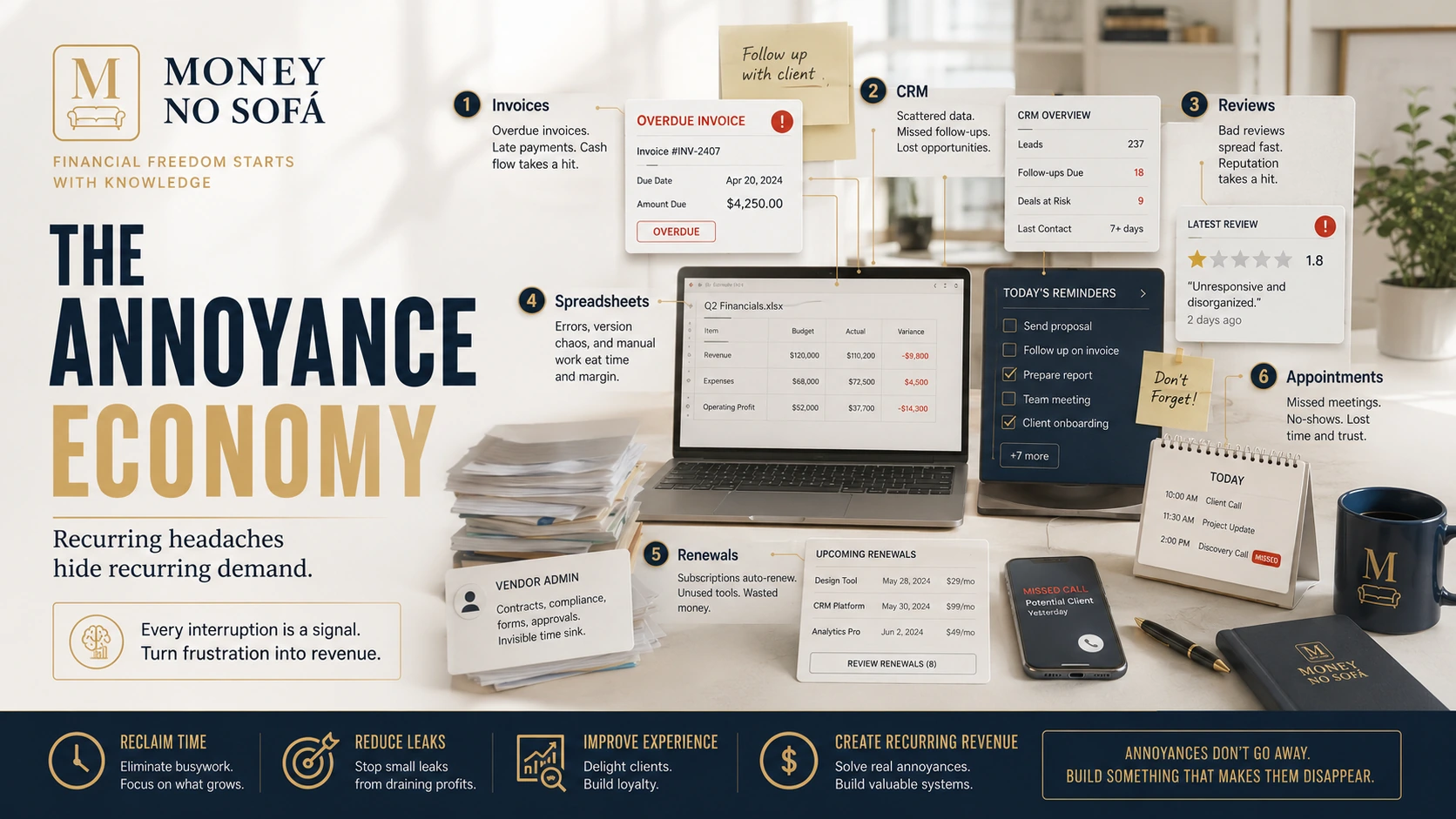
The boring-problem advantage
Exciting markets attract attention. Annoying problems attract budgets.
A founder may admire an innovative idea but still postpone buying it. The same founder may quickly pay someone to fix a broken follow-up process that is losing leads every week. Urgency is not created by novelty. It is created by consequence.
Boring problems often have four useful characteristics:
- They recur. The work returns every day, week or month.
- They are measurable. You can count invoices, leads, reviews, records, appointments or reports.
- They are neglected. The owner knows the work matters but delays it.
- They sit close to money. Failure can cause lost revenue, wasted spend, customer frustration or operational risk.
That combination creates a strong service business because the client can understand why the problem deserves attention and why outsourcing may be cheaper than continuing to ignore it.
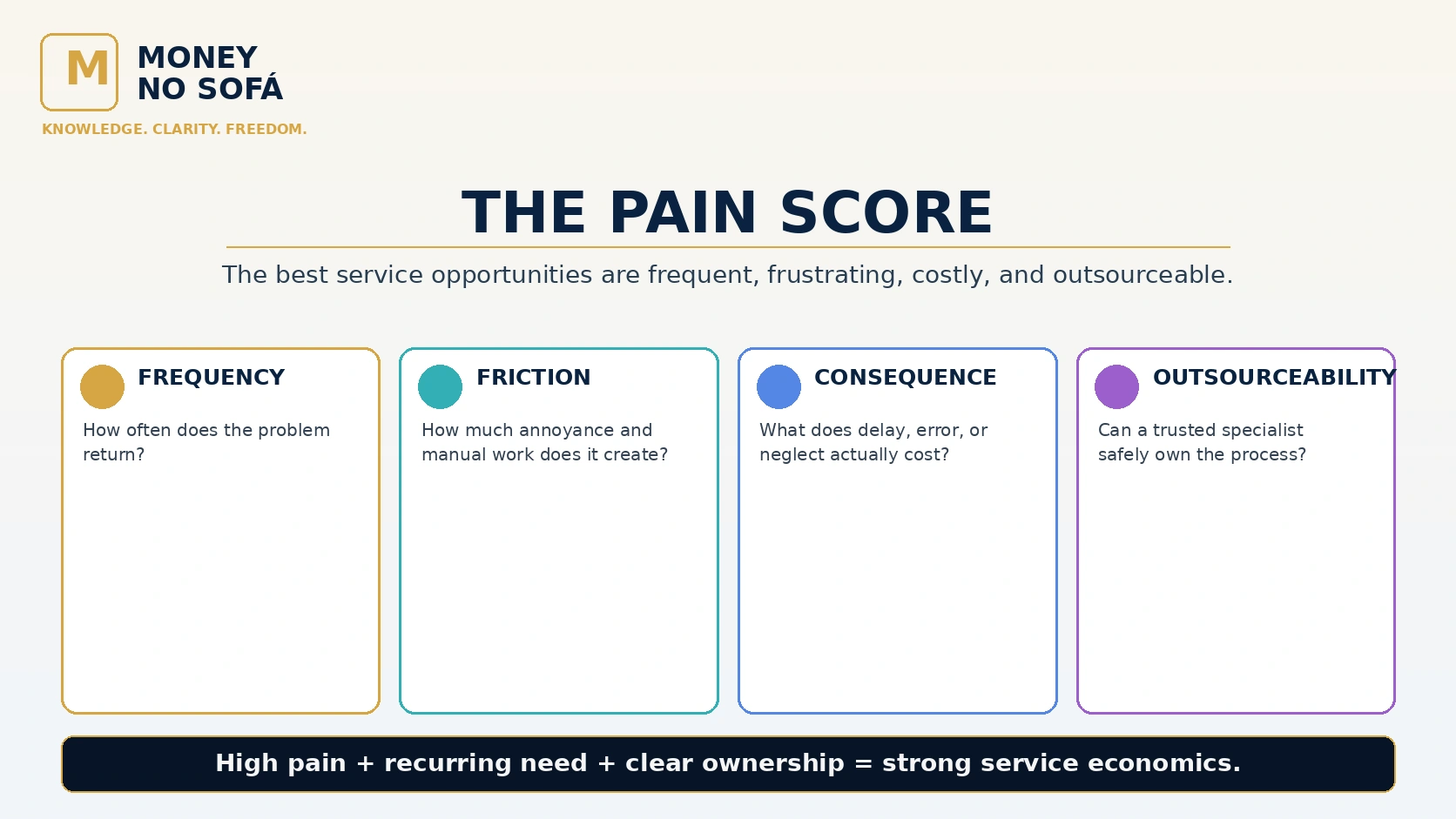
Use the Pain Score before choosing an idea
Instead of brainstorming business names, score problems. A simple framework is:
Pain Score = Frequency × Friction × Consequence × Outsourceability
Rate each factor from 1 to 5. A task that happens once a year, takes ten minutes and has little consequence may be irritating but is not a strong business. A task that happens every day, requires discipline, affects cash flow and can be delegated safely is much more promising.
Consider invoice follow-up for a small service company. It happens constantly. Owners dislike chasing clients. Delayed collection hurts cash flow. The process can be systematized with reminders, escalation rules and reporting. The Pain Score is high.
Now consider designing a custom holiday greeting once a year. The task may be annoying, but its frequency and consequence are low. It can still be sold, but the recurring business potential is weaker.
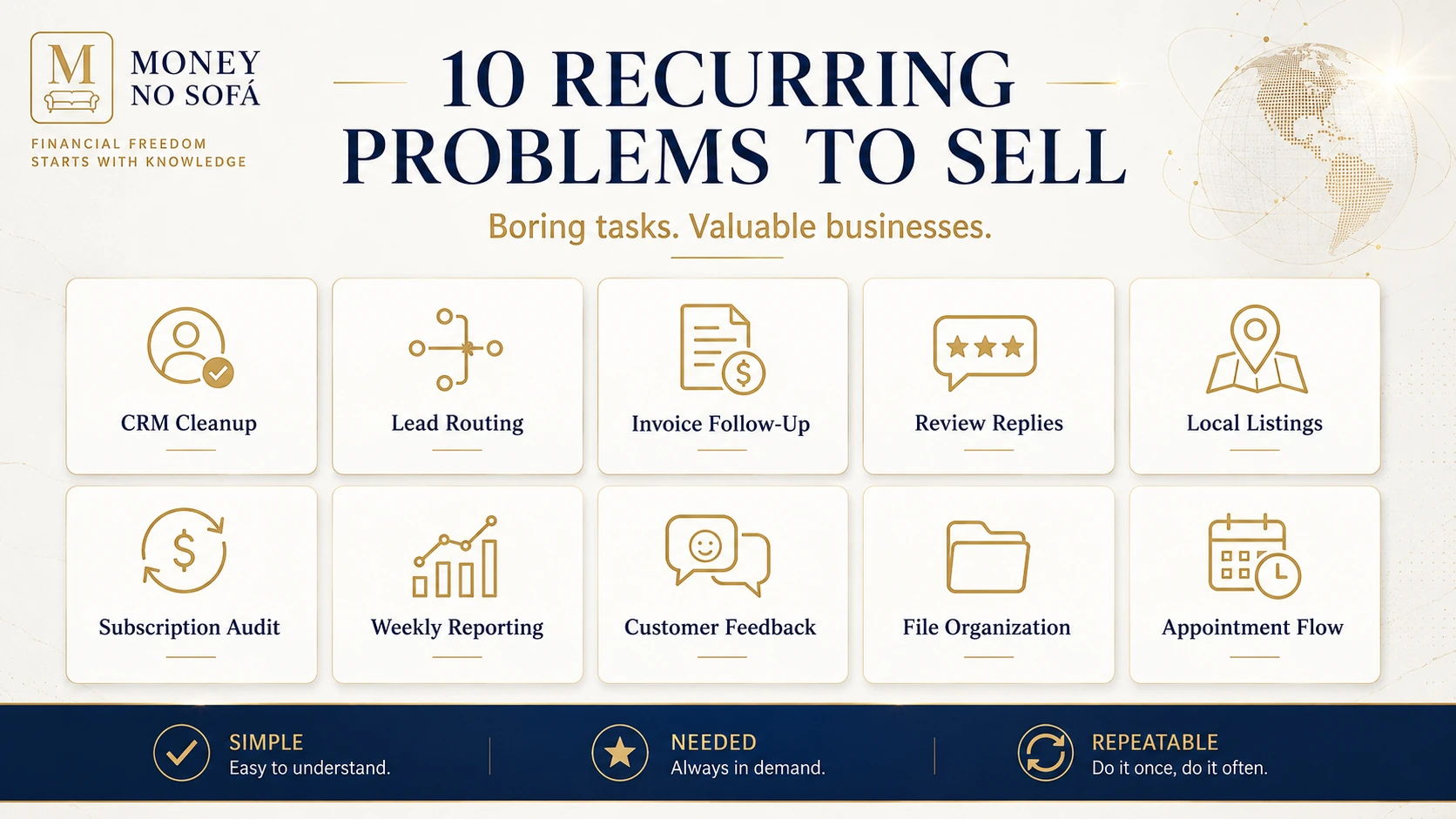
Ten boring problems worth studying
The point is not to copy a list blindly. Use these categories to train your eye.
1. CRM cleanup and maintenance
Small teams often accumulate duplicate contacts, incomplete fields, dead opportunities, inconsistent stages and missing ownership. A cleanup service can combine one-time repair with monthly hygiene.
2. Lead-response operations
Businesses spend money generating leads and then respond slowly or inconsistently. A service can build routing, reminders, qualification rules, templates and reporting without pretending to be the client’s entire sales department.
3. Invoice follow-up systems
A service can organize accounts-receivable reminders, aging reports and escalation workflows. It should not cross into legal collection activity unless appropriately licensed and structured.
4. Review monitoring and response preparation
Local businesses need to notice reviews, route complaints and answer consistently. A service can monitor, draft responses and escalate sensitive cases for approval.
5. Online listing maintenance
Hours, phone numbers, service descriptions, menus, photos and location details become inconsistent across platforms. Maintaining accuracy is repetitive and valuable.
6. Subscription and vendor audits
Companies accumulate software and services. A quarterly audit can identify unused seats, duplicate tools, contract renewal dates and opportunities to renegotiate.
7. Weekly management reports
Many owners have data but no rhythm. A service can consolidate approved data sources into a standardized weekly report with exceptions and action items.
8. Customer-feedback synthesis
Reviews, surveys, chat logs and support conversations contain useful patterns but are rarely reviewed systematically. A recurring synthesis turns noise into a product or marketing input.
9. File and knowledge-base organization
Teams lose time searching for the latest proposal, policy, deck or process document. A service can design naming conventions, folder structures and knowledge-base maintenance.
10. Appointment confirmation and no-show reduction
For appointment-based businesses, reminders, rescheduling and follow-up can directly affect capacity utilization.
Do not sell the task. Sell the relief.
“I clean CRMs” describes labor. “Every Monday your pipeline will contain only active opportunities with an owner, next step and current stage” describes relief.
“I respond to reviews” is a commodity. “Every new review is triaged within one business day, negative feedback is escalated, and your team receives a monthly pattern report” sounds like an operating system.
This distinction is one of the most important in small-service businesses. Clients do not wake up wanting more freelancers. They want fewer loose ends.
The strongest service promise often contains three elements: the thing that will remain under control, the cadence, and the evidence the client will receive.
For example: “Every Friday, you receive a clean report showing unpaid invoices by age, follow-up status and accounts requiring your decision.” The offer is clear without guaranteeing that every customer will pay.
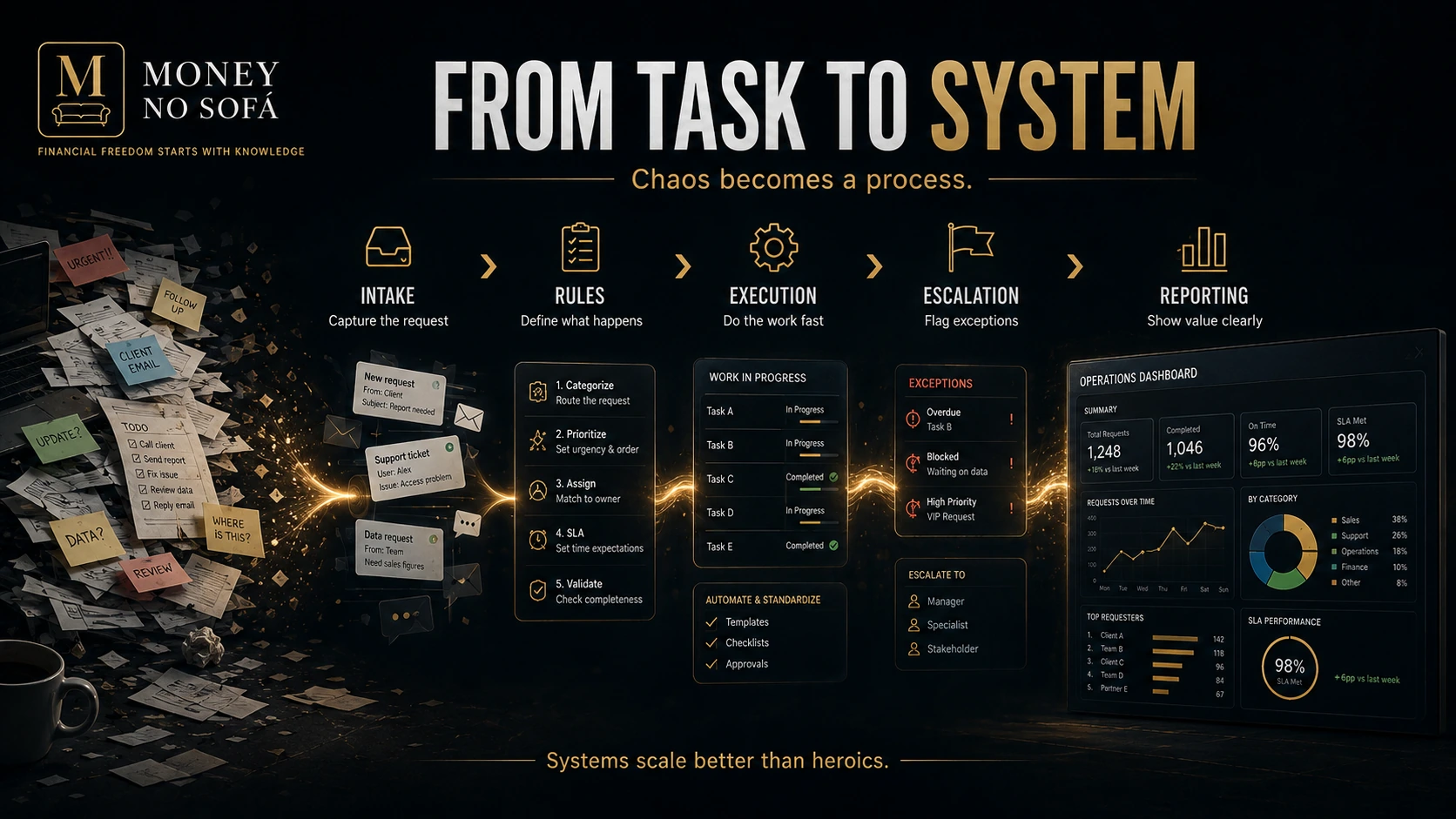
Package the service as a system
One reason boring work becomes exhausting is that it arrives unpredictably. Your business should remove that randomness.
Define an intake, workflow, escalation rule and output. For a review-management service:
- Pull new reviews from approved sources.
- Classify as positive, neutral, service issue or high-risk complaint.
- Draft responses according to brand rules.
- Send sensitive cases for client approval.
- Publish or return approved responses.
- Deliver a monthly trend summary.
This makes the work trainable. It also helps you identify what can be automated and what still needs judgment.
AI should remove repetitive effort, not accountability
AI and automation make these businesses more attractive because much of the repetitive processing can be accelerated. A model can categorize leads, draft first-pass review responses, summarize feedback, normalize spreadsheets, prepare report commentary or identify duplicate records.
But the service provider remains responsible for the process. If an automated system sends an inappropriate message to an angry customer, deletes a valid CRM record or misclassifies a payment issue, the client will not care that the software was “mostly right.”
Upwork’s 2026 In-Demand Skills report found that demand for the leading AI-enabled skills more than doubled year over year while human expertise remained strong across categories. Its 2025 data also showed scripting and automation among fast-growing web-development skills and continued demand for virtual assistance, digital project management, research, bookkeeping, lead generation and marketing automation. The economic lesson is not “AI replaces service businesses.” It is that the most competitive operator can combine software speed with human responsibility.
Automate the first draft, routing and reminders. Keep judgment, approvals and exception handling visible.
How to choose the first niche
The same boring problem can be more valuable in one niche than another. Appointment confirmation matters differently to a high-volume dental practice than to a two-person design studio. Review response has different urgency for a restaurant than for an industrial supplier.
Choose a niche where the pain is frequent and the buyer is easy to identify. A useful test is whether you can answer these five questions:
- Who owns the problem?
- How often does it occur?
- What happens when it is ignored?
- What tools does the business already use?
- Can you show improvement without needing access to dangerously sensitive information?
If the answers are fuzzy, narrow the niche.

Create a minimum viable service
Do not automate everything before you have a client. Deliver the first version manually enough to understand the real workflow.
Suppose you want to sell CRM hygiene. Your first offer could be a two-week cleanup sprint:
- audit up to a defined number of records;
- identify duplicates and incomplete fields;
- standardize agreed fields;
- flag stale opportunities instead of deleting them;
- create a simple hygiene rulebook;
- deliver before-and-after metrics.
After three projects, you will know where the real complexity lives. Maybe duplicates are easy but opportunity ownership is political. Maybe the CRM structure is fine but users ignore it. Maybe the highest-value service is not cleanup but a weekly pipeline-control routine.
The market teaches you what to automate.
Price the recurring problem
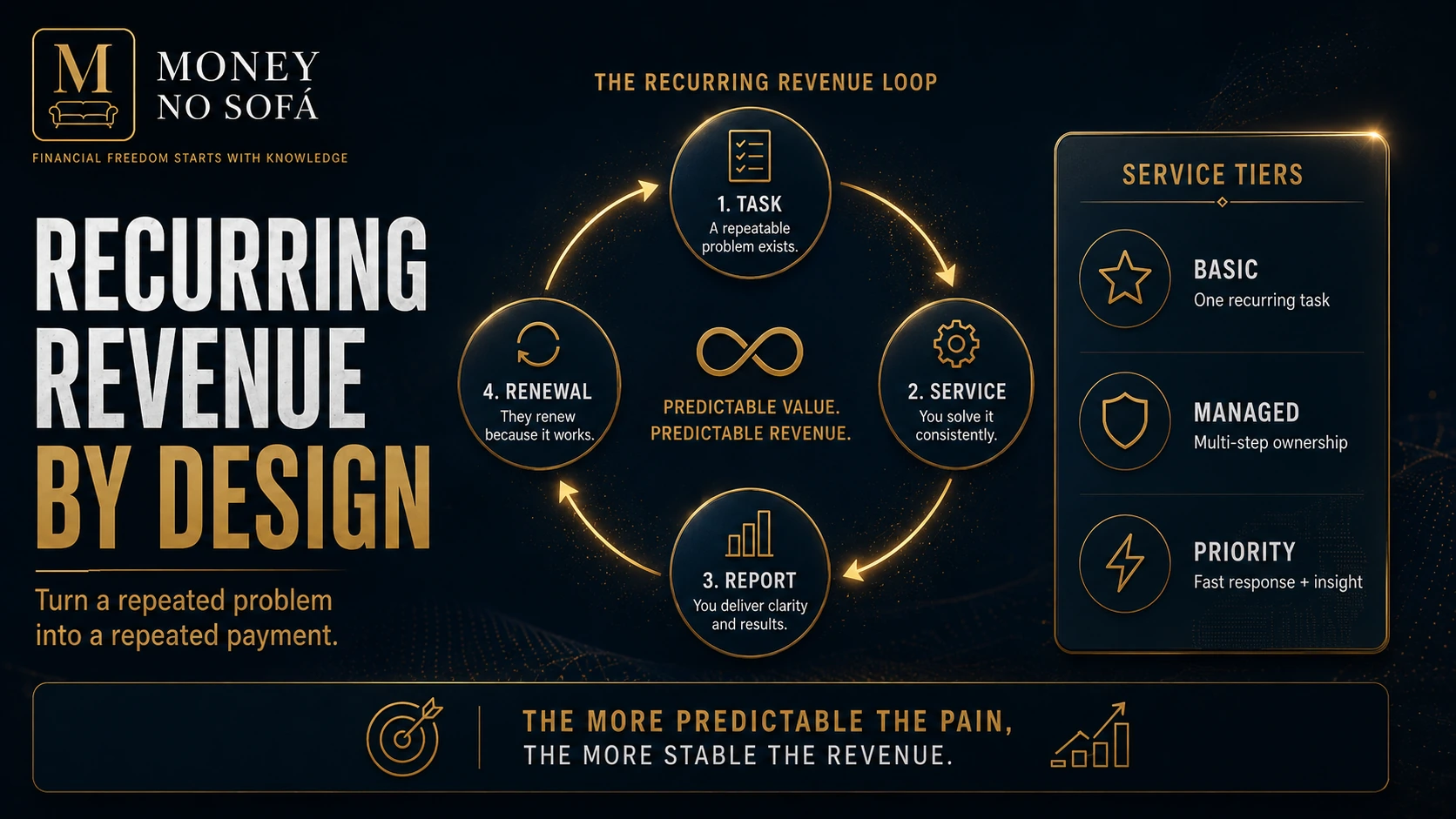
A one-time cleanup can be priced by scope. A recurring service should be priced by workload bands and responsibility.
For example:
- Starter — $250/month: one simple recurring workflow, low volume, monthly report.
- Operator — $500–$900/month: weekly cadence, multiple checks, defined escalation and reporting.
- Managed System — $1,000–$2,500+/month: higher volume, integrations, documentation, ongoing optimization and regular review calls.
Again, these figures are examples rather than guaranteed market prices. The point is structural: recurring problems can support recurring pricing when the service owns a recurring outcome.
Avoid unlimited plans. “Unlimited tasks” creates unpredictable economics. Define records, locations, channels, reports, tickets, accounts or response windows.
Find clients by looking for visible mess
The best prospects often reveal the problem publicly.
A local business has dozens of unanswered reviews. A company advertises heavily but its lead form takes days to get a response. Job listings mention spreadsheet-heavy coordination. A founder complains publicly about software sprawl. A sales team is hiring operations support. A website shows inconsistent location information.
Your outreach becomes stronger when it points to a visible symptom:
I noticed three of your location profiles show different Saturday hours and several recent reviews mention difficulty reaching the right location. I run a simple listing-and-review maintenance service for multi-location businesses. I can audit every profile, return the inconsistencies, and show you the ongoing monthly workflow before you decide whether to continue.
That message works better than “I help businesses grow.” It shows that you understand a specific operational problem.
Make the first sale easy to reverse
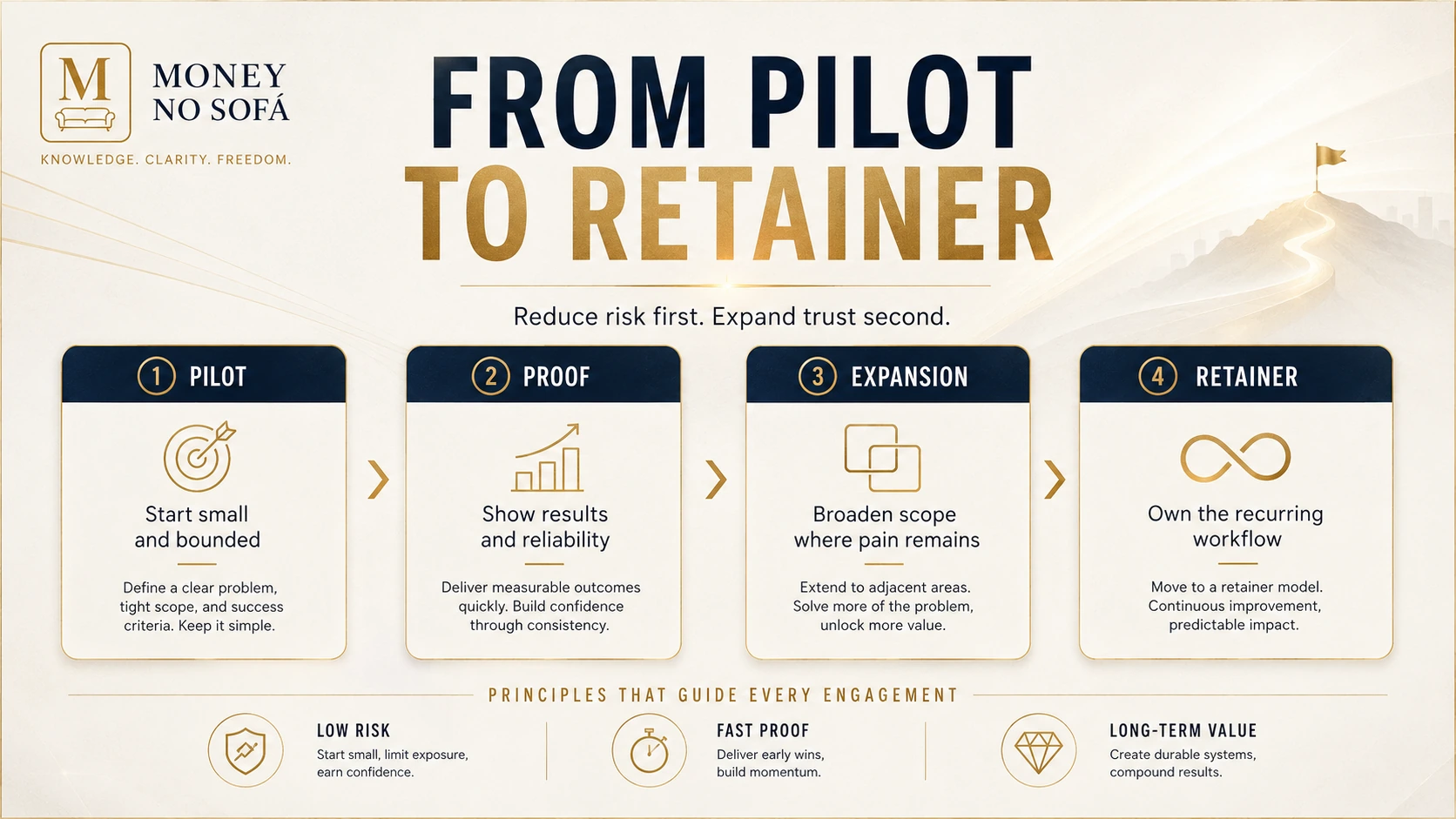
A buyer is more likely to try an unknown provider when the first engagement is bounded. Sell an audit, cleanup sprint or 30-day pilot before asking for a long contract.
The pilot should generate an asset even if the client does not continue: a cleaned dataset, an audit, a process map, a report or a documented baseline. That reduces perceived risk and gives you a natural conversation about ongoing maintenance.
At the end of the pilot, do not simply ask, “Do you want to continue?” Show what will degrade if nobody owns the process. If the CRM will become messy again, explain the weekly maintenance needed. If review response will slip, show the monthly volume. Recurring revenue should be the logical continuation of recurring work.
Watch for regulatory boundaries
Boring problems can sit near sensitive areas. Invoice follow-up can cross into debt-collection regulation. Employee files can contain protected personal information. Medical appointment systems may involve health data. Financial workflows can touch regulated advice or payment security.
Do not treat “boring” as “risk-free.” Define what you will not do. Use client-approved systems. Limit data access. Follow local laws and contractual requirements. Obtain professional advice when a workflow crosses legal, tax, privacy, healthcare or financial boundaries.
A clean boundary can be a selling point. “We prepare the aging report and approved reminder sequence; disputed accounts are returned to your manager” is better than quietly becoming responsible for activities you are not qualified to perform.
The moat is operational memory
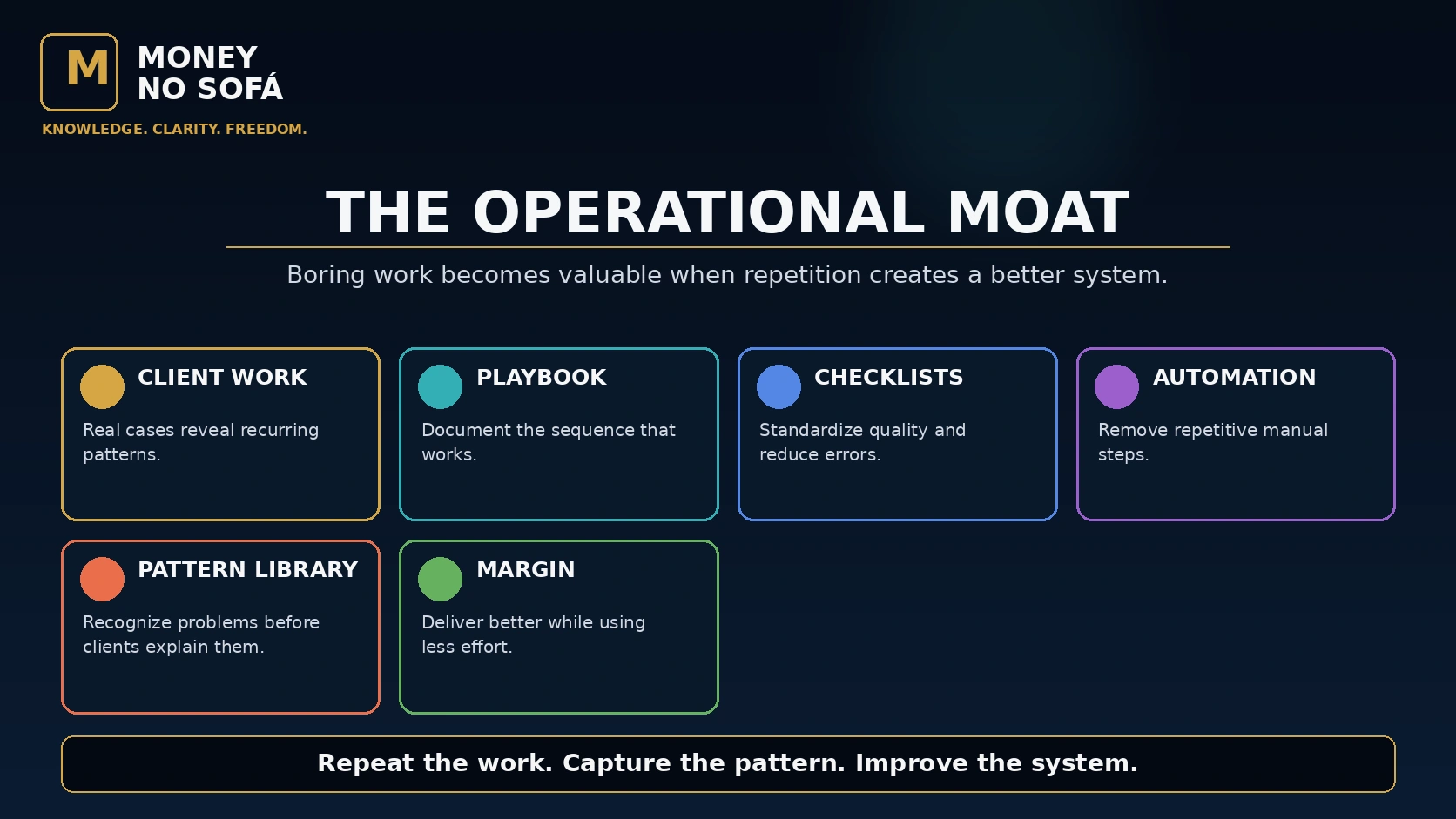
A simple service can look easy to copy. The defense is not secrecy. It is accumulated operational knowledge.
After serving ten dental groups, you know which review complaints require immediate escalation, which location data changes frequently, which appointment messages confuse patients and which reports managers actually read. After ten CRM cleanups for agencies, you know which fields are usually useless, which stages become graveyards and how to avoid damaging attribution.
That pattern recognition becomes your playbook. You can deliver faster, onboard staff more easily and create better automation because you understand the exceptions.
A 30-day path from annoyance to offer
Week 1: Interview five business owners or operators. Ask what work they delay every week, what spreadsheets they hate opening and what recurring problem falls between roles.
Week 2: Score ten problems using frequency, friction, consequence and outsourceability. Choose one niche and one workflow.
Week 3: Build a manual pilot. Define inputs, steps, escalation rules, output and price. Create one sample using public or synthetic data.
Week 4: Contact 30 relevant prospects with a problem-specific message. Aim for one paid pilot, not a perfect brand.
By day 30, the goal is not passive income. The goal is evidence: did someone pay to remove this annoyance?
The test that matters
A boring business is attractive when the client notices immediately if you stop doing the work.
If nobody misses the deliverable, the problem may not be important enough. If the business starts slipping—leads age, invoices stack up, records become messy, reviews go unanswered, renewals surprise the team—then you may have found something worth owning.
Entrepreneurship is often framed as creating desire. There is another path: remove dread.

What the client is really buying: continuity
There is another reason recurring operational problems make good businesses: the client is not only buying execution. The client is buying continuity. Small companies frequently depend on one owner or one overextended employee to remember what needs to happen. When that person gets busy, takes vacation or changes jobs, the process disappears.
A managed service can become the external memory of the workflow. The checklist still runs. The report still arrives. The exception still gets escalated. That reliability can be more valuable than performing the task itself.
This suggests a useful design question: What should happen automatically every week even when the owner is distracted? If your service can own that cadence, it becomes harder to replace with an occasional freelancer.
Continuity also creates better data. A one-time review audit tells the client what happened. Twelve months of structured review monitoring can show whether complaints are improving, which locations create recurring issues and which themes deserve operational attention. Repetition transforms a task into intelligence.
Know when to hire—and what to delegate first
Do not hire simply because revenue appears. Hire when a documented portion of delivery can be transferred without destroying quality.
The first tasks to delegate are usually the most standardized: data collection, checklist execution, formatting, first-pass classification, scheduling and routine status updates. Keep client diagnosis, sensitive exceptions, final quality review and process design closer to you until the system is mature.
A simple rule is to document a task three times before delegating it. Record the inputs, normal path, common exceptions, quality standard and what requires escalation. Then test the process with a small number of clients before expanding capacity.
This is where boring businesses can become attractive assets. A founder-dependent service is a job. A service with documented recurring workflows, trained operators, quality controls and predictable client retention begins to behave like a company.
Some hated problems should not be outsourced casually
The fact that people hate a task does not automatically make it a good beginner service. Some activities carry too much regulatory, security or reputational risk to handle without specialized controls.
Be cautious with direct access to bank accounts, payroll changes, medical records, legal filings, tax submissions, employee discipline, debt collection, credential resets and anything that lets you move money or impersonate the client. These may still support legitimate businesses, but they require the right qualifications, contracts, insurance, security and procedures.
A safer design often separates preparation from authorization. You can prepare the aging report without moving funds. You can draft a response without publishing it automatically. You can identify duplicate CRM records without deleting them until the client approves. You can prepare a vendor-renewal calendar without signing contracts.
This principle is commercially useful: automate and delegate the reversible work first. Keep irreversible actions behind explicit approval until the service has mature controls.
The best boring business is not merely annoying work that someone will pay to avoid. It is annoying work you can standardize, measure and deliver safely enough that the client sleeps better after outsourcing it.
One more filter helps: ask whether the client can explain the service to another owner in one sentence. If the value requires a ten-minute explanation, the offer is still too abstract. “They keep our location listings accurate every month” or “They keep our CRM clean every Friday” is strong because the benefit is concrete, recurring and easy to repeat.
Your first move
Write down ten tasks you hear business owners complain about. Score each one from 1 to 5 on frequency, friction, consequence and outsourceability. Choose the highest-scoring task and design a 30-day pilot around it.
Frequently asked questions
Are boring businesses easier than startups?
Not necessarily. They can be easier to explain because the problem already exists, but they still require sales, process discipline, client service and reliable delivery.
Should I automate from day one?
No. Automate after you understand the real exceptions. Early manual work is market research.
What makes a boring problem valuable?
High frequency, real consequence, clear ownership and the ability to delegate it safely.
Can I start with no employees?
Yes. Many of these services can begin as a solo operation with narrow scope. Hiring becomes useful after the workflow is documented and demand is repeatable.
How do I avoid competing only on price?
Specialize by niche, own a measurable recurring outcome, document your process and build expertise around exceptions rather than selling generic labor.
Selected sources
- U.S. Small Business Administration Office of Advocacy — Frequently Asked Questions About Small Business 2026.
- Upwork — In-Demand Skills 2025, covering automation, research, virtual assistance, lead generation, marketing automation and other service categories.
- Upwork — In-Demand Skills 2026, on growing AI-enabled demand alongside continued human expertise.
- Upwork — Future Workforce Index 2026, on the expansion of skilled independent work.
Editorial note: Service examples and pricing ranges are illustrative. Check local licensing, privacy, debt-collection, healthcare, financial and other regulations before handling sensitive workflows.
The headline is only the start.
Ask Nova what this story could change in your budget, savings, debt, investments or next purchase.