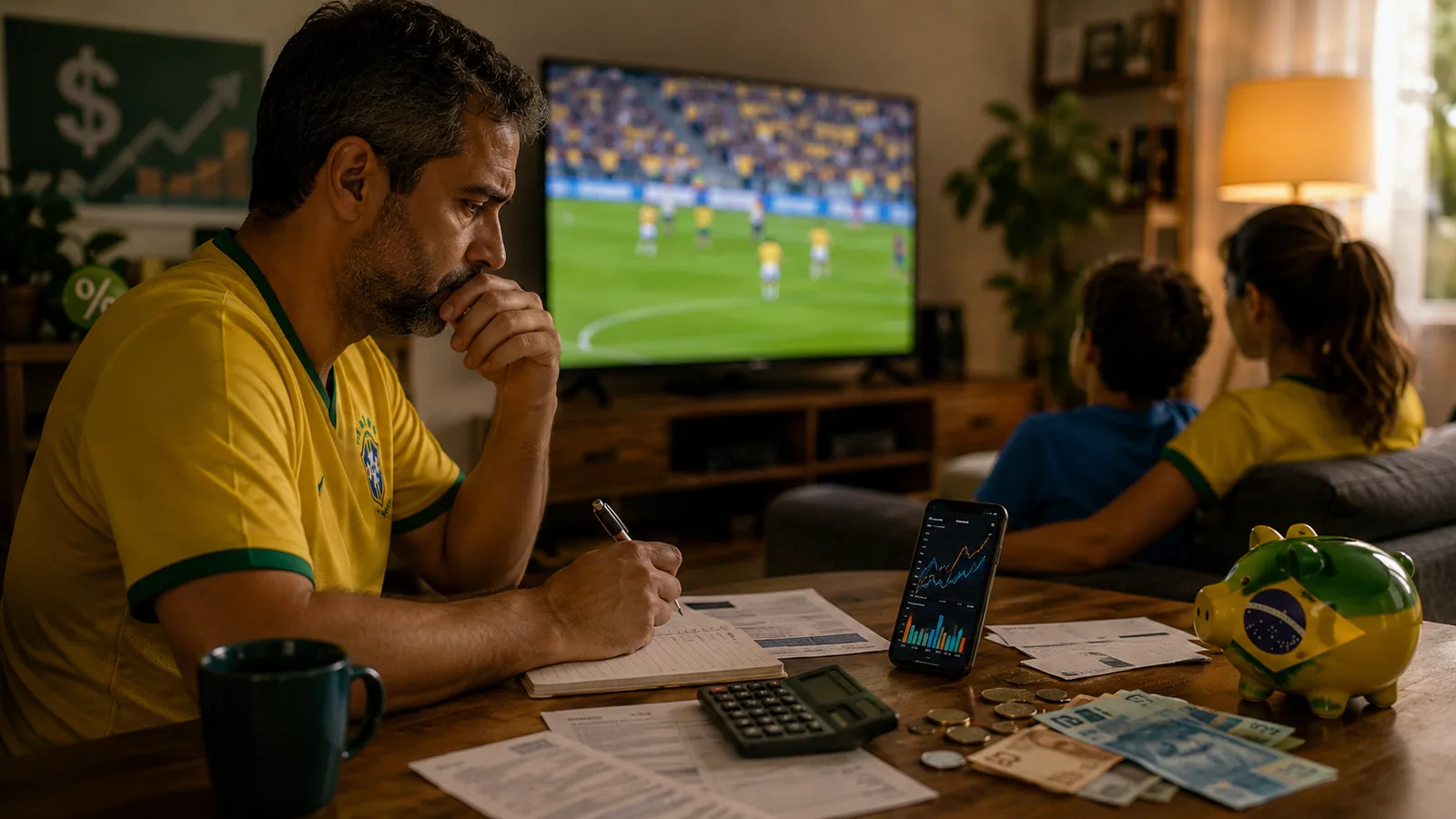
Dollar, Rates and the World Cup: Plan Spending with Less Stress starts from the Money no Sofa idea: money, home, technology and emotion are never separate. They meet in the living room, at the grocery store, on the phone, on the credit card statement and in the small rituals that make a family feel either in control or under pressure.
Economic news can feel distant, but it enters the home through fuel, food, imported products, interest rates, installments and the exchange rate. A family does not need to predict markets. It needs a practical routine that protects daily choices when the outside world becomes noisy.
Global news and the family budget
The wider news cycle matters because money at home reacts to what happens outside the home. The proposed U.S.-Iran agreement and the reopening of the Strait of Hormuz eased oil-market pressure, while new U.S. tariff proposals on Brazilian imports kept families alert to imported inflation, exchange rates and shopping prices. For a household, the practical answer is not panic. It is a calmer buying routine: compare, wait, negotiate and avoid turning headlines into rushed purchases.
Why headlines reach the cart
Tariffs, oil routes, war risk, the dollar and interest rates can change the cost of products long before a family understands the whole story. Coffee, electronics, clothing, delivery, travel and supermarket items can all feel the pressure. The mistake is to react to every headline as if it were an emergency.
The household protection rule
Separate purchases into three groups: necessary now, useful soon and emotional. Necessary now can move forward with comparison. Useful soon can wait for a better price. Emotional purchases should pause for at least one day. This simple rule is more powerful than trying to guess the perfect economic scenario.
How to buy during uncertainty
Prefer cash discounts only when they do not weaken emergency reserves. Use installments only when the monthly payment fits without hiding the real price. Compare delivery costs, return policies and energy consumption. In uncertain periods, the cheapest label is not always the lowest total cost.
The executive view for the home
Companies protect cash when visibility is low. Families should do the same. That means reducing waste, delaying nonessential upgrades and keeping room for surprises. Calm is a financial asset.
Money no Sofa recommendation
Build a thirty-day buying list. Anything that survives thirty days is probably closer to a real need. Anything forgotten after a week was likely only noise from the news cycle, the algorithm or the mood of the moment.