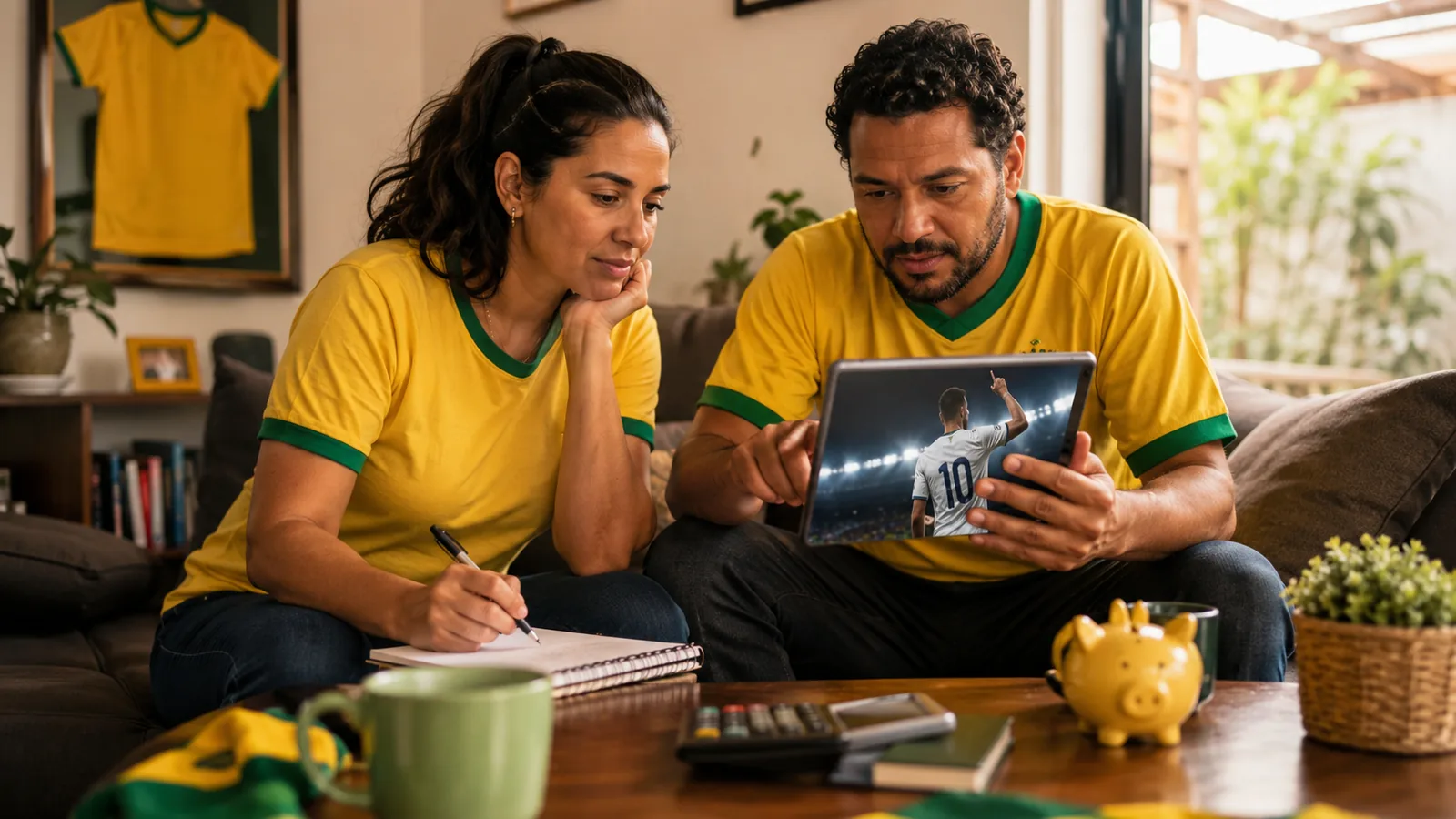
Brazil, Haiti and Scotland: Plan the Games Before Buying starts from the Money no Sofa idea: money, home, technology and emotion are never separate. They meet in the living room, at the grocery store, on the phone, on the credit card statement and in the small rituals that make a family feel either in control or under pressure.
The World Cup is not only a soccer event. It is a season of food, screens, jerseys, delivery apps, family gatherings and last-minute purchases. That is why the best way to enjoy the tournament is not to buy everything. It is to decide what actually improves the experience and what only adds noise.
2026 World Cup news update
Brazil’s 1-1 draw with Morocco changed the mood of the tournament right away. Morocco played with the order, patience and counterpunching confidence many people normally expect from Brazil. For long stretches, it felt as if Brazil became Morocco and Morocco became Brazil. Still, Brazil is Brazil: five stars on the chest, a World Cup memory no other country can copy, and enough individual talent to turn a difficult opener into a sharper campaign.
Ismael Saibari put Morocco ahead, and Vinícius Júnior brought Brazil back into the match. The result was not a disaster, but it was a warning: emotion cannot replace structure. For families watching from the sofa, the lesson is almost financial. Hope is powerful, but planning keeps the house calm.
Germany’s 7-1 win over Curaçao also entered the conversation. For Brazilians, any 7-1 score touches the old 2014 wound against Germany, but Curaçao’s first-ever World Cup goal gave the story a different meaning. Even in a heavy defeat, a new football nation created a memory. That is exactly why World Cup spending needs a limit: the emotion is real, but the bill arrives later.
What this means inside the home
When Brazil plays, the routine changes. Lunch becomes an event, the sofa becomes a small grandstand, and the television suddenly looks more important than it did last month. Retailers know this. They push bigger screens, faster delivery, team colors, snacks, speakers and anything that promises a better game day. Some purchases make sense. Many only feel urgent because the next match is close.
The smart spending filter
Before buying, ask three questions. Will this be used after the final whistle? Does it replace something that is already failing? Can the same experience be created with less money? A bigger TV can be a good investment if the family will use it for years. A pile of decorations, duplicate subscriptions and emotional checkout decisions usually fade faster than the excitement that created them.
How to build a better game day
Start with what the family already owns: the sofa, the table, the screen, a simple menu and a clear spending ceiling. Then add only what creates comfort or memory. A shared meal, organized seating, clean audio and a realistic grocery list often beat a rushed shopping cart. The goal is not to make the home look expensive. The goal is to make the moment feel good without creating regret.
Money lesson from the match
Brazil versus Morocco showed that reputation does not win by itself. The same is true for money. A famous brand, a big discount or a World Cup label does not automatically make a purchase smart. The family that pauses, compares and buys with a purpose usually enjoys more and pays less.
Money no Sofa recommendation
Set a World Cup envelope for food, streaming, small upgrades and gifts. Keep the number visible. If a purchase does not fit inside that envelope, wait 24 hours. The best fan is not the one who spends the most. It is the one who protects the house while still living the emotion of Brazil with pride.
Why Brazil, Haiti and Scotland should be planned as one home calendar
When a national team begins a World Cup campaign with tension, the next matches stop feeling like isolated fixtures. They become a sequence of decisions. Brazil, Haiti and Scotland should not be read only as names on a schedule. For the family watching from the sofa, they become dates that affect food, time, guests, streaming, work breaks, school routines, transportation, conversations and purchases. That is why planning the games before buying is more than a money tip. It is a way to keep the house calm while the tournament gets louder.
Brazil games have a special pull. They change the mood of the day, even for people who do not watch football every week. The television turns into a meeting point. Lunch moves earlier or later. Children ask about the players. Older relatives compare the current team with older ones. Friends send messages asking who is watching where. In that atmosphere, the market understands that emotion is open. Stores, delivery apps and streaming platforms all compete to turn that emotion into quick checkout.
The answer is not to refuse the Cup. The answer is to make the Cup easier to live. A family that knows which games will be full events does not need to improvise every time. A family that has a food plan does not need to pay for convenience three times in one week. A family that agrees on a spending limit can enjoy the match without someone quietly worrying about the card.
The first game changes expectations, not the whole plan
Brazil’s draw with Morocco created a very specific emotional risk: overcorrection. When fans feel that the team did not look comfortable, they often try to compensate at home. They invite more people for the next match, buy more food, add more decoration, watch more analysis, and make the next game feel like a test that requires a bigger ritual. That reaction is natural, but it can be expensive.
A better response is to separate football adjustment from household adjustment. The team may need to improve structure, timing and confidence. The family does not need to spend more because the team needs to play better. If anything, an uncertain tournament makes planning more important. The less predictable the football becomes, the more predictable the household budget should be.
This is the Money no Sofa rule for Brazil after a tense opener: do not let anxiety set the shopping list. A nervous fan buys twice. A prepared fan buys once and enjoys more.
Haiti as a reminder not to underestimate the simple game
A match involving Haiti may look easier to some fans on paper, but that is exactly where emotional mistakes begin. The World Cup has a way of punishing people who plan only around reputation. A game that looks simple can become complicated. A favorite can struggle to break pressure. A smaller team can defend with pride and turn one moment into drama. That is why the home plan should not depend on assumptions about the result.
For the household, the Haiti match can be the perfect place to practice moderation. It may not need the biggest gathering. It may not need the largest food order. It may be a good match for a simple menu, a clean sofa, a calm viewing experience and a smaller budget. Not every Brazil game needs to become a party of the same size. The smartest families scale the event according to the real moment.
This is especially useful when there are several matches close together. A family that spends heavily on every Brazil game will feel pressure by the knockout rounds. A family that alternates full events with simple watch days keeps energy and money for the matches that truly deserve more.
Scotland and the cost of the decisive feeling
Scotland brings a different kind of risk: the decisive feeling. Depending on the group situation, a match can feel like the one that defines everything. That feeling increases spending because people want the day to be memorable before they even know the result. A decisive game can justify guests, food, team colors and a stronger ritual. But it still needs a limit.
When a match feels decisive, make the plan two days earlier. Decide who is coming. Decide what each person brings. Decide whether the family cooks, orders or mixes both. Decide if the screen, audio and seating are good enough. The earlier the plan is made, the less likely the family is to pay emergency prices.
Decisive matches also create merchandise pressure. A jersey, flag or decoration can feel like part of the faith. But faith is not measured by the cart. If the item will be used after the tournament, consider it calmly. If it only feels important because of one match, the better purchase may be no purchase at all.
The home budget should have match categories
A practical World Cup budget can divide games into three categories. The first is the full-house game: guests, food, drinks and shared attention. The second is the family-only game: simple snacks, existing subscriptions and no extra shopping. The third is the background game: the match is on, but the home routine continues. Brazil may have more full-house games than other teams, but even Brazil does not need every match to cost the same.
This category system prevents the tournament from becoming financially flat. Without categories, every game tries to become special. When everything is special, the budget gets tired. With categories, the family spends more where memory is likely to be stronger and saves where the moment can remain simple.
The same system works for upgrades. A television, soundbar, streaming plan or new chair should be treated as a durable decision, not a match decision. If the product will improve many months of home life, compare and plan. If it only appears urgent because Brazil plays soon, wait until after the game.
What to buy before the games and what to avoid
The best pre-game purchases are boring and useful: groceries that can serve more than one match, drinks bought in advance, simple ingredients, extra napkins, comfortable seating adjustments and a confirmed way to watch the game. These things reduce friction. They help the family enjoy the match without spending energy on logistics.
The weakest purchases are the ones that depend on the mood of the result: duplicate subscriptions, last-minute electronics, expensive decorations, impulse jerseys and delivery orders that replace food already in the house. These purchases often feel exciting before kickoff and unnecessary afterward.
A good filter is to ask whether the purchase will still make sense if Brazil draws or loses. If the answer is no, the purchase is probably tied to emotional expectation rather than real value. Buy for the home, not only for the fantasy of a perfect result.
A Brazil game-day operating system
- Choose the match category before making the grocery list.
- Use one weekly World Cup food budget instead of one emotional order per game.
- Confirm the streaming or TV access the day before the match.
- Decide who is responsible for food, drinks and cleanup when guests come.
- Keep delivery apps closed until the family checks what is already available.
- Apply a 24-hour pause to jerseys, electronics and decoration purchases.
- Use simple traditions, such as a fixed sofa setup or family prediction board, instead of buying new items every time.
- Save larger spending for the matches that truly carry family meaning.
The emotional side of planning
Some people resist planning because they think it makes the World Cup less spontaneous. In reality, planning makes spontaneity easier. When food is ready, access is confirmed and the budget is clear, the family has more emotional space for the match. Nobody needs to worry about what to order, whether the subscription works or how much the day is costing.
This is especially important for older audiences and families with fixed routines. A calm plan protects energy. It turns the game into a shared experience rather than a sequence of small emergencies. The goal is not to make the home perfect. The goal is to remove the avoidable stress that competes with the match.
FAQ
Should every Brazil World Cup game become a big home event?
No. The smarter strategy is to classify games. Some deserve guests and a larger meal. Others can be watched simply with the family and what is already in the house.
What is the safest World Cup purchase?
The safest purchases are those used beyond one match: food that serves more than one day, a streaming plan truly needed for the whole tournament, or a durable upgrade that was already planned.
How can families avoid impulse spending before Brazil plays?
Make the plan at least one day earlier, set a spending ceiling and apply a 24-hour pause to nonessential purchases. Emotion should not be the only reason to buy.
Final thought from the sofa
Brazil, Haiti and Scotland are more than fixtures. They are appointments with memory, identity and family routine. The house can honor that without surrendering the budget. Plan the games, choose the right size for each event, keep the spending visible and let the football carry the emotion. The best World Cup month is the one that feels alive while the home stays financially steady.
The week-after-week discipline of a long tournament
A World Cup is not financially dangerous because of one single match. It becomes difficult because the emotion repeats. One game asks for snacks. The next asks for guests. The third asks for a shirt. The fourth asks for delivery. Then a decisive match asks for a larger screen, a better sound system or a last-minute subscription. None of these decisions seems absurd alone. Together, they can create a month that feels heavier than expected.
That is why the Brazil, Haiti and Scotland sequence should be treated as a weekly operating plan. Decide which expenses repeat and which ones are exceptional. Repeating expenses need a cap. Exceptional expenses need a reason. If the family wants one larger gathering, choose it and enjoy it fully. If every match becomes a larger gathering, the house may lose the difference between celebration and routine.
One useful technique is the after-match review. The day after each Brazil game, ask what was actually used. Did people eat all the food? Did the subscription matter? Did the decoration change the memory? Did the delivery order feel worth it? What can be reduced next time? This review should be practical, not guilty. The goal is to improve the next match-day plan while the experience is still fresh.
How to protect the final rounds before they arrive
Many families spend too much early and then feel limited when the tournament becomes more exciting. The smarter move is to protect money for the matches that may carry more weight later. Even if nobody knows exactly how far Brazil will go, the household can assume that later games may deserve more attention. That means the group stage should not consume the entire World Cup envelope.
Think like a coach managing energy across a tournament. Not every player can press for ninety minutes in every match. Not every household can spend heavily on every game. The strongest strategy is pacing. Spend lightly when the match is simpler. Spend intentionally when the moment is larger. Keep enough room for surprise because the Cup always creates it.
This is not about predicting Brazil’s path perfectly. It is about avoiding a common family mistake: using all the emotional budget before the emotional peak. A calm plan lets the family enjoy the group stage and still have space for the games that may define the memory of the tournament.