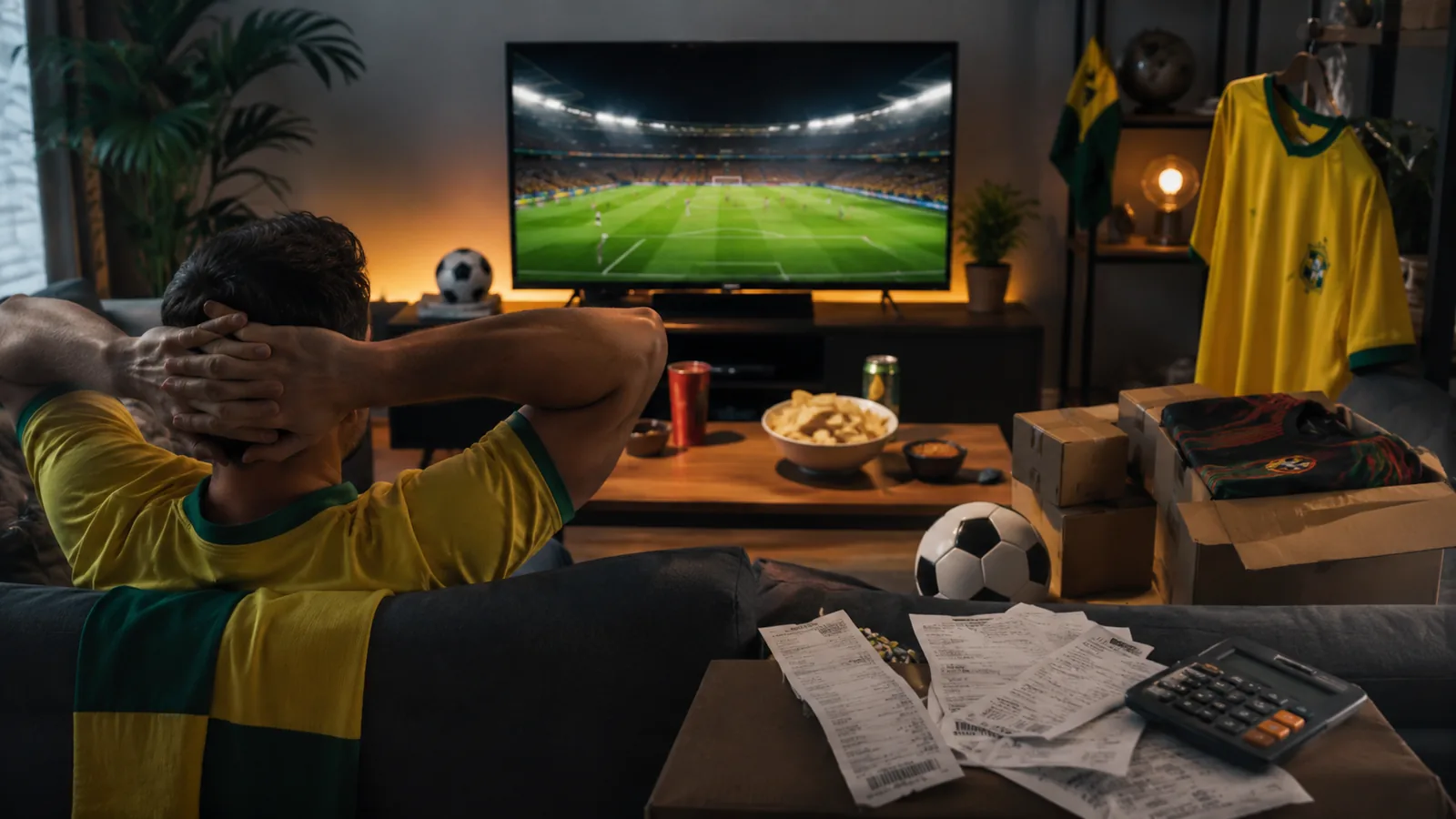
How Brazilians Cheer and Decide to Buy with Clarity starts from the Money no Sofa idea: money, home, technology and emotion are never separate. They meet in the living room, at the grocery store, on the phone, on the credit card statement and in the small rituals that make a family feel either in control or under pressure.
The World Cup is not only a soccer event. It is a season of food, screens, jerseys, delivery apps, family gatherings and last-minute purchases. That is why the best way to enjoy the tournament is not to buy everything. It is to decide what actually improves the experience and what only adds noise.
2026 World Cup news update
Brazil’s 1-1 draw with Morocco changed the mood of the tournament right away. Morocco played with the order, patience and counterpunching confidence many people normally expect from Brazil. For long stretches, it felt as if Brazil became Morocco and Morocco became Brazil. Still, Brazil is Brazil: five stars on the chest, a World Cup memory no other country can copy, and enough individual talent to turn a difficult opener into a sharper campaign.
Ismael Saibari put Morocco ahead, and Vinícius Júnior brought Brazil back into the match. The result was not a disaster, but it was a warning: emotion cannot replace structure. For families watching from the sofa, the lesson is almost financial. Hope is powerful, but planning keeps the house calm.
Germany’s 7-1 win over Curaçao also entered the conversation. For Brazilians, any 7-1 score touches the old 2014 wound against Germany, but Curaçao’s first-ever World Cup goal gave the story a different meaning. Even in a heavy defeat, a new football nation created a memory. That is exactly why World Cup spending needs a limit: the emotion is real, but the bill arrives later.
What this means inside the home
When Brazil plays, the routine changes. Lunch becomes an event, the sofa becomes a small grandstand, and the television suddenly looks more important than it did last month. Retailers know this. They push bigger screens, faster delivery, team colors, snacks, speakers and anything that promises a better game day. Some purchases make sense. Many only feel urgent because the next match is close.
The smart spending filter
Before buying, ask three questions. Will this be used after the final whistle? Does it replace something that is already failing? Can the same experience be created with less money? A bigger TV can be a good investment if the family will use it for years. A pile of decorations, duplicate subscriptions and emotional checkout decisions usually fade faster than the excitement that created them.
How to build a better game day
Start with what the family already owns: the sofa, the table, the screen, a simple menu and a clear spending ceiling. Then add only what creates comfort or memory. A shared meal, organized seating, clean audio and a realistic grocery list often beat a rushed shopping cart. The goal is not to make the home look expensive. The goal is to make the moment feel good without creating regret.
Money lesson from the match
Brazil versus Morocco showed that reputation does not win by itself. The same is true for money. A famous brand, a big discount or a World Cup label does not automatically make a purchase smart. The family that pauses, compares and buys with a purpose usually enjoys more and pays less.
Money no Sofa recommendation
Set a World Cup envelope for food, streaming, small upgrades and gifts. Keep the number visible. If a purchase does not fit inside that envelope, wait 24 hours. The best fan is not the one who spends the most. It is the one who protects the house while still living the emotion of Brazil with pride.
Brazilian cheering is emotional, but it can still be organized
Brazil does not watch the World Cup like a neutral consumer. Brazil watches with memory. The national team enters the home with old goals, old disappointments, family stories, childhood afternoons, workplace pauses and the feeling that the country has a shared appointment. That makes Brazilian cheering beautiful. It also makes Brazilian spending vulnerable, because the more emotional the ritual becomes, the easier it is for brands and apps to turn it into urgency.
Clarity is the word that protects the house. It does not reduce passion. It simply gives passion a boundary. A family can cheer, cook, invite people, decorate the room and wear yellow without losing the month. The difference is whether the decisions were made before the match or during the emotional rush around it.
The Brazil-Morocco draw is a perfect example. A tense result creates discussion. Discussion creates anxiety. Anxiety creates the feeling that the next match must be bigger, louder and better prepared. That feeling is understandable, but it should not automatically change the household budget. The team may need tactical adjustment. The family needs financial clarity.
The Brazilian home as a small stadium
When Brazil plays, the home becomes more than a home. The sofa is the stands. The coffee table becomes the snack bar. The television becomes the field. The group chat becomes the crowd. This transformation is powerful because it makes people feel connected even when they are not inside a stadium. It is also affordable when planned well.
A small stadium at home needs three things: visibility, comfort and rhythm. Visibility means everyone can watch without friction. Comfort means people can sit, eat and talk without turning the room into chaos. Rhythm means the family knows when to prepare food, when guests arrive, when cleanup happens and when normal life returns. None of these requires luxury. They require intention.
Many families try to solve match-day pressure by buying more. More food, more decor, more accessories, more screens, more subscriptions. Sometimes more helps. Often, better organization helps more. A clean setup, simple menu and agreed budget can beat a bigger cart.
How to decide what deserves money
The simplest way to buy with clarity is to ask what the purchase improves. Does it improve comfort? Does it reduce work? Does it serve more than one match? Does it create a memory the family truly values? If the answer is yes, compare prices and decide calmly. If the answer is only that it makes the room look more like a commercial, wait.
Brazilian fans are targeted heavily during the World Cup because enthusiasm is visible. A yellow product feels more relevant. A delivery coupon feels more useful. A screen promotion feels more urgent. The fan should not feel guilty for wanting a better experience. The fan should simply remember that relevance is not the same as necessity.
One strong rule is to buy for repeated use. A product used during several matches or after the tournament deserves more consideration than something useful for only one afternoon. The more temporary the item, the smaller the budget should be.
The food plan is where most families can save
Food is the emotional center of many Brazil games. People gather around the table before they gather around the television. That is why food deserves a plan. Delivery can be convenient, but if every match becomes a delivery night, the total cost climbs quickly. A smarter approach is to combine a weekly grocery plan with one or two chosen delivery moments.
Create a base menu that works for most games: sandwiches, fruit, popcorn, homemade snacks, coffee, simple drinks and one dish that can feed more people. Then choose the special matches for larger food. This keeps the ritual alive without making every game expensive.
Ask guests to participate when the gathering grows. A World Cup watch party does not need one person to carry the whole cost. Shared food often creates a better atmosphere because everyone contributes to the memory.
The clarity checklist for Brazilian fans
- Which Brazil games are full events and which are simple family watches?
- What is the total World Cup food budget for the week?
- Who is coming, and what can each guest bring?
- Do we already have access to the broadcast or streaming service?
- Is any planned purchase useful after the tournament?
- Are we buying because Brazil plays or because the home truly needs it?
- Can we wait 24 hours before buying nonessential items?
- What memory do we want from this match besides the result?
Cheering without comparison
One hidden cost of Brazilian World Cup culture is comparison. Someone always has a bigger television, a louder barbecue, a better shirt, a prettier decoration or a larger group. Social media turns private cheering into a public display. That can make a normal family feel that its celebration is not enough.
Money no Sofa rejects that idea. A good Brazil game at home is not judged by how it looks online. It is judged by how it feels in the room and how the family feels afterward. If the people are together, the match is visible and the budget is respected, the celebration is already strong.
Comparison is expensive because it changes the standard. Clarity is cheaper because it brings the standard back to the household. What matters for this home? What fits this month? What will be remembered? Those questions protect both the fan and the family.
FAQ
How can Brazilian fans enjoy the World Cup without overspending?
They can classify games, plan food weekly, share costs with guests and pause before buying jerseys, electronics or decorations.
What is the biggest match-day spending trap?
Repeated small costs: delivery fees, extra snacks, duplicate subscriptions and impulse accessories. They look harmless alone but become heavy together.
Does planning make cheering less emotional?
No. Planning removes stress so the family can focus on the match. A calm budget gives the emotion more space.
Final thought from the sofa
Brazilians know how to cheer. The next step is knowing how to cheer with clarity. The World Cup should fill the home with conversation, memory and hope, not with regret. Spend where the value is real, keep the rest simple and let the football be the main event.
The emotional rhythm of a Brazilian match day
A Brazil match day has its own rhythm. The morning begins with messages, predictions and memories. The afternoon or evening brings food decisions, traffic concerns, work interruptions, school adjustments and the search for the best place to watch. By kickoff, the house is already emotionally invested. That is why the money plan needs to exist before the rhythm begins. If the family waits until the emotion is already moving, decisions become weaker.
The most important question is what kind of day the match should be. A big gathering needs planning. A family-only match needs simplicity. A weekday game may need speed and routine. A weekend game may allow a slower meal. When the day has a defined shape, purchases become easier to control. The family stops buying a vague feeling and starts supporting a clear plan.
How clarity protects older fans and fixed budgets
For many 50+ readers, the World Cup arrives inside a life with responsibilities already defined. There may be fixed income, health costs, children, grandchildren, housing expenses, pets, school support, debt, retirement planning or family members who need help. A tournament can be joyful, but it should not disturb the foundation of the month.
Clarity protects this audience because it respects real life. It says that the match matters, but so does the electricity bill. It says the family can gather, but the host does not need to carry every cost alone. It says a good television can be valuable, but only if the purchase fits a longer plan. This is not a smaller way to cheer. It is a wiser way to cheer.
The older a household gets, the more it understands that the best memories are rarely the most expensive ones. They are the ones that feel honest, repeated and shared. A simple Brazil tradition can outlast any promotion.
How to create traditions that do not depend on spending
A family can create small traditions for every Brazil match. One person writes predictions before kickoff. Another prepares the same simple snack. Children draw the score. Grandparents tell a memory from another Cup. The family takes the same sofa photo. After the match, everyone chooses the player who gave the most hope and the lesson for the next game. These rituals cost little and create continuity.
Traditions are financially powerful because they reduce the need to reinvent the event. When the family knows what it does every time, it does not need to buy novelty. The match brings the novelty. The tradition brings the stability. That combination is ideal for a long tournament.
When spending more is acceptable
There are moments when spending more makes sense. A rare family gathering, a decisive Brazil match, a planned barbecue, a television replacement that was already necessary, or a subscription that covers the entire tournament can all be reasonable. The key is that the decision should be intentional and affordable. Spending more is not the problem. Spending automatically is the problem.
The family should ask: what are we choosing not to spend on so this match can be special? That question creates trade-offs. A special Brazil day may replace two smaller delivery nights. A planned jersey may replace several impulse items. A larger gathering may be shared by guests instead of paid by one person. Clarity turns generosity into a plan.
The Brazilian fan’s financial playbook
- Create a fixed match-day ritual that does not require new purchases.
- Use bigger spending only for the matches with real family meaning.
- Turn guests into contributors, not spectators of the host’s credit card.
- Keep a visible World Cup envelope for the whole household.
- Review what was left over after each match and reduce the next list.
- Do not let social media define what a proper Brazil celebration looks like.
- Protect monthly obligations before adding tournament extras.
Brazilian cheering already has enough soul. It does not need financial confusion to feel complete. With clarity, the family can keep the sound, the color and the hope while removing the stress that usually appears after the final whistle.