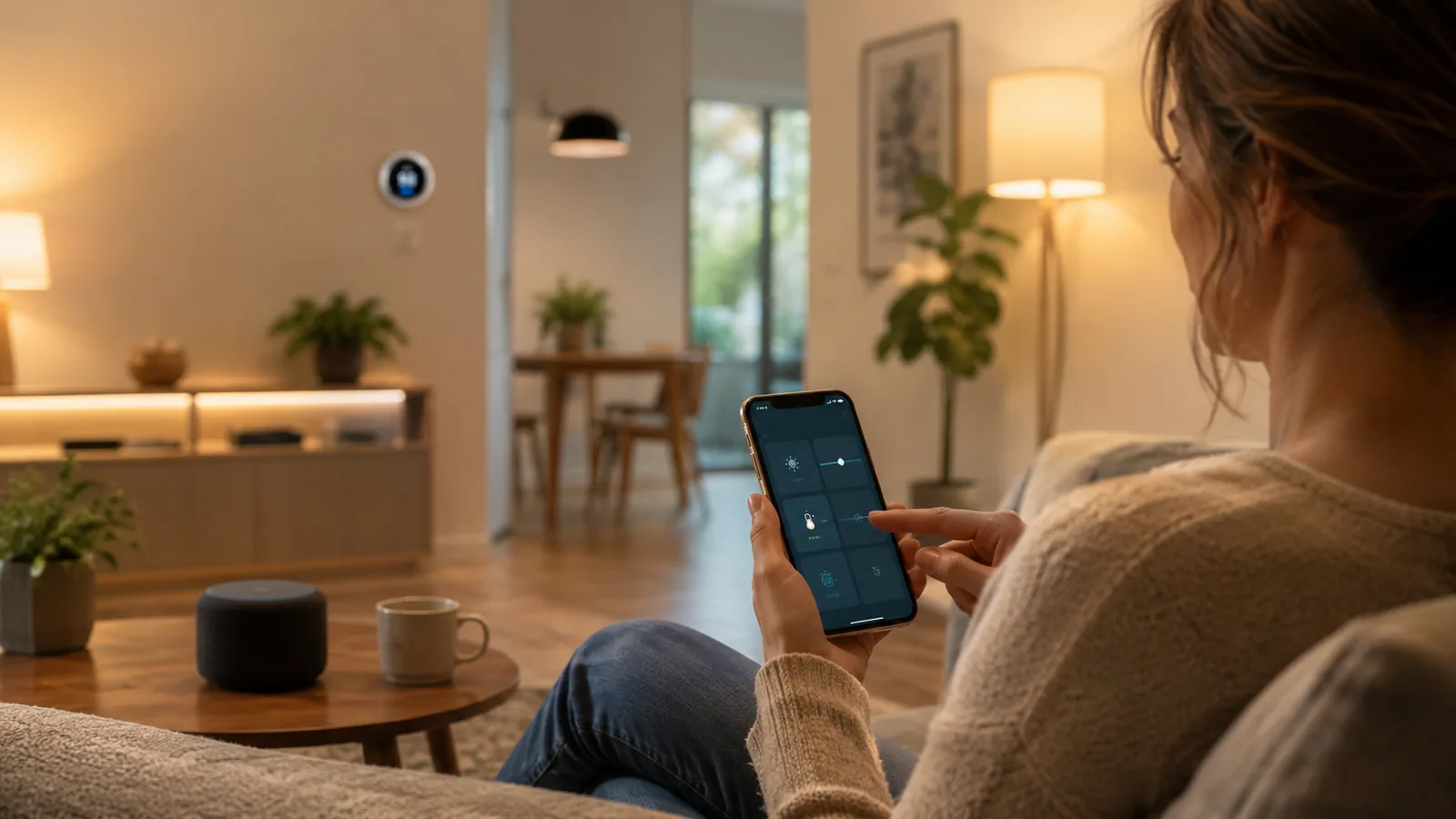
Smart Home: Where Technology Actually Saves with Clarity starts from the Money no Sofa idea: money, home, technology and emotion are never separate. They meet in the living room, at the grocery store, on the phone, on the credit card statement and in the small rituals that make a family feel either in control or under pressure.
Technology is useful when it reduces confusion. It becomes expensive when it creates urgency, comparison anxiety or the feeling that the newest option is always necessary. At home, the best digital choice is the one that saves time, prevents mistakes or helps the family spend with more clarity.
The practical value test
Before adopting a tool, app, device or subscription, define the problem it must solve. Does it help compare prices, avoid fees, protect passwords, organize bills or improve a daily routine? If the benefit is only curiosity, wait. Curiosity is not a budget category.
Where technology can save money
Price alerts, bank notifications, budgeting apps, safer passwords, streaming reviews and AI-assisted comparison can all help. The gain is not magic. The gain comes from better timing and fewer impulsive decisions. A family that checks prices over a few days often sees that the first offer was not the best offer.
Where technology can cost more
The same phone that helps you compare prices also makes it easy to buy in ten seconds. One-click checkout, sponsored recommendations and limited-time banners are built to shorten your thinking. The antidote is a simple rule: never buy an upgrade, subscription or gadget while tired, angry or excited by a match, a headline or a social post.
A calm home system
Keep a short list of approved tools: one app for bills, one for notes, one for price comparison and one secure place for passwords. More tools do not mean more control. Control comes from consistency.
Money no Sofa recommendation
Use technology as a filter, not as a trigger. If a tool helps the family wait, compare and choose with confidence, it deserves space. If it only creates desire, delete the notification and return to the sofa before spending.
What a smart home should actually do
A smart home is not a house full of gadgets. It is a home where technology removes friction from daily life. The best tools are often quiet. They remind the family of bills before fees appear. They warn when a subscription renews. They help compare supermarket prices. They protect passwords. They reduce wasted electricity. They make routines more visible. A device or app becomes smart only when it creates better behavior.
The problem is that the technology market sells novelty better than usefulness. A product can look modern and still add no value. A subscription can feel convenient and still become another forgotten monthly cost. An app can promise control and still create more notifications than clarity. The smart home needs a filter before it needs another device.
The three types of useful home technology
The first type saves money directly. Price comparison tools, bank alerts, energy monitors, automatic bill reminders and subscription trackers belong here. They are valuable because they help the family avoid overpaying, missing dates or repeating purchases. Their return is practical and measurable.
The second type saves time. Shared calendars, grocery lists, password managers, note apps and home routines can reduce mental load. Time saved has financial value because it prevents rushed buying. A family that knows what is missing in the kitchen is less likely to order expensive delivery. A family that tracks renewals is less likely to pay for services it no longer uses.
The third type improves comfort. Lighting, audio, security cameras, better routers and streaming setups can make the home more enjoyable. Comfort matters, but it should be planned carefully because comfort products are often sold with strong emotional appeal. The question is whether the improvement will be felt every week or only during the excitement of buying.
Where smart home spending goes wrong
Smart home regret usually begins when the family buys a solution before naming the problem. A person sees a video, a promotion or a beautiful setup and imagines a better home. The image is appealing, but it may not match the real need. If the Wi-Fi is already stable, a new router may not change much. If nobody uses voice commands, a smart speaker may become decoration. If the family does not review energy use, a smart plug may not save anything.
The other mistake is stacking subscriptions. A smart camera, storage plan, streaming service, cloud backup, premium app and delivery membership can each look small. Together, they behave like a quiet tax on the household. The home becomes more digital but not necessarily more efficient.
The value test before buying technology
- What problem does this technology solve?
- How often will the family use it?
- Does it replace something, or only add another layer?
- Does it require a monthly subscription?
- Can it reduce waste, fees, time or stress?
- Will it still matter after the first week?
- Is the family prepared to maintain it?
- Would a simpler habit solve the same problem?
AI as a home decision assistant
Artificial intelligence can be useful at home when it helps the family think, compare and organize. It can summarize product differences, build grocery lists, compare warranties, create a monthly checklist or explain confusing terms in a contract. But AI should not become another excuse to buy faster. The best use of AI is to slow down decisions with better information.
For example, before buying a television, the family can ask for a comparison of screen sizes, energy use, warranty points and real needs based on room size. Before choosing a subscription, it can list what the family already pays for. Before replacing an appliance, it can compare repair versus replacement. This is technology serving judgment, not replacing it.
A calm digital routine for the household
Choose one day per week for a digital check. Review bank alerts, upcoming bills, subscriptions, grocery needs and any product on the wait list. Keep the routine short. The goal is not to turn the family into analysts. The goal is to prevent avoidable spending from hiding in apps.
Notifications should also be managed. Keep alerts for money, security and calendar reminders. Remove alerts that create desire without improving decisions. A smart home is not one that talks all day. It is one that speaks only when the information helps.
Final thought from the sofa
The smartest technology in the home is not always the newest. It is the one that helps the family wait, compare, remember and choose with less stress. If a tool protects attention and money, it deserves a place. If it only creates another reason to spend, the smartest decision may be to leave it outside the house.
The room-by-room smart home audit
A useful smart home begins with an audit, not a shopping cart. Start in the living room. What causes friction there? Maybe the Wi-Fi drops during streaming. Maybe the remote controls are confusing. Maybe the family pays for too many services. Maybe the sound is hard for older people to hear. Each problem suggests a different solution. A better router, a simplified streaming plan, a soundbar, subtitles, or simply canceling unused subscriptions may do more than buying a trendy device.
Move to the kitchen. Food is one of the strongest places where technology can save. Shared grocery lists, price comparison, meal planning and reminder apps can reduce waste. A smart appliance is useful only if it changes behavior. If the family throws less food away, cooks more often or avoids repeated emergency delivery, the technology may pay for itself. If it only looks modern, it may not.
In the bedroom, technology should protect rest. Not every smart device belongs there. Notifications, bright screens and constant alerts can reduce sleep quality and increase late-night shopping. A truly smart bedroom may use fewer devices, not more. Charging the phone away from the bed can be more valuable than another connected object.
In the office or work corner, technology should support focus and income. A stable connection, secure passwords, backup systems, a clear calendar and good lighting can be worth more than decorative upgrades. The best work technology reduces mistakes and protects time.
Subscriptions are the hidden smart home bill
Modern homes often do not notice how many small digital costs they carry. Streaming, cloud storage, security plans, premium apps, delivery memberships, sports packages, music, games and learning platforms can each feel reasonable. Together, they can become one of the most flexible and least reviewed parts of the budget.
Review subscriptions every month during a fixed household check. Keep the ones used often. Pause seasonal ones. Cancel duplicates. Rotate entertainment services instead of paying for all of them at once. During the World Cup, this matters even more because sports access can push families into adding services quickly. The question should be: will this service be used after the tournament, or is it only a temporary need?
A smart home is not the home with the most subscriptions. It is the home where every subscription has a job.
Energy, comfort and the quiet savings
Some of the best smart home savings are not dramatic. Timers, efficient bulbs, better power habits, appliance maintenance and conscious air conditioning use can reduce waste quietly. The savings may look small monthly, but they create discipline. More important, they make the family aware that comfort has a cost and that small routines can protect it.
Before buying a new device to save energy, check the old habits. Are lights left on? Is the air conditioner used with doors open? Are chargers and devices running unnecessarily? Is the refrigerator maintained? A habit may be cheaper than a gadget. Technology should support the habit, not replace responsibility.
Security technology without fear buying
Home security products are often sold through fear. Cameras, alarms, locks and sensors can be useful, but fear can make families overbuy. Start with the actual risk. Does the home need better lighting? A stronger lock? A camera at the entrance? A password update? A safer Wi-Fi network? The right solution depends on the real weakness.
Digital security matters too. A password manager, two-factor authentication and safer sharing of family accounts can prevent stress and financial loss. These tools are not glamorous, but they are genuinely smart. They protect the household from problems that can become expensive quickly.
The best smart home budget
Divide technology spending into three lines: protection, efficiency and comfort. Protection includes security, backup and password safety. Efficiency includes tools that save time, energy or money. Comfort includes entertainment, lighting, audio and convenience. This division helps the family avoid spending everything on comfort while ignoring protection and efficiency.
Each month, choose one priority. Do not try to transform the whole home at once. A gradual smart home is usually better than an impulsive one. The family learns what works, avoids clutter and keeps money available for more important needs.
FAQ
What is the first smart home purchase most families should consider?
Often it is not a device, but a review of subscriptions, passwords, Wi-Fi stability and bill reminders. The best first step is the one that removes the most friction.
Can AI help with home spending?
Yes, when used to compare options, organize lists, explain costs and slow down decisions. AI should help the family think better, not buy faster.
How do I know if a gadget is worth it?
Ask how often it will be used, what problem it solves, whether it adds a subscription and whether a simpler habit could create the same benefit.
The smart home should feel calmer after technology enters. If it feels noisier, more expensive or harder to manage, the technology is not serving the family yet.